

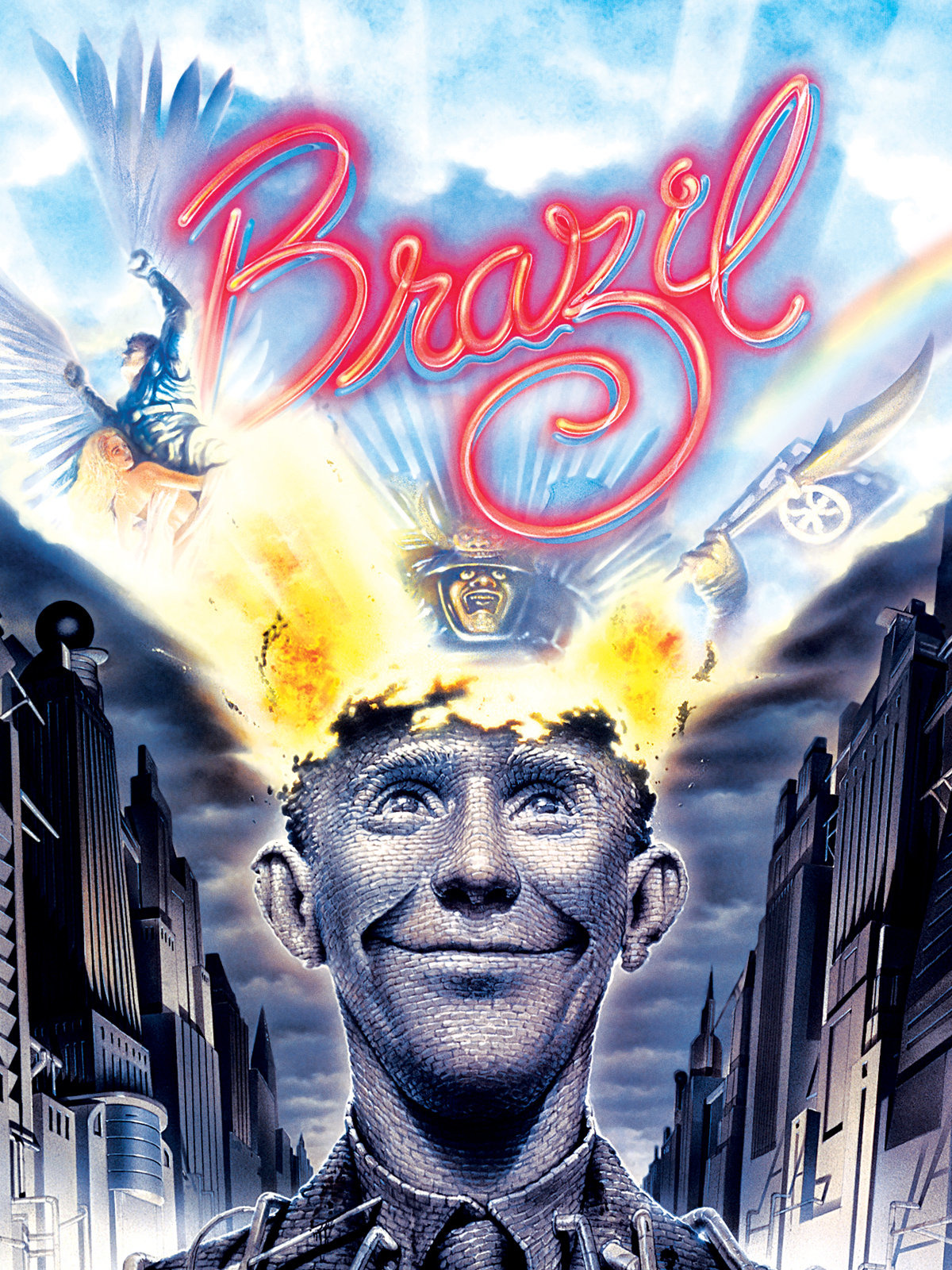
Synopsis- In a retro-future world, Sam Lowry, a clerk in the ministry department, is given the task of rectifying an administrative error. However, in the process, he becomes the enemy of the state.
Director- Terry Gilliam
Starring- Robert De Niro, Jonathan Pryce, Michael Palin
Genre- Science Fiction | Comedy
Released- 1985
Brazil, directed by Terry Gilliam, is a dystopian satire that takes viewers on a surreal and visually stunning journey through a bureaucratic nightmare. Set in a bleak, bureaucratic future reminiscent of a darkly comedic Orwellian world, the film follows Sam Lowry, played by Jonathan Pryce, as he becomes entangled in a series of absurd events.
The film’s strengths lie in its imaginative world-building and Gilliam’s unique directorial vision. The dystopian setting is brought to life with intricate set designs and creative visual effects that blend a retro-futuristic aesthetic with a nightmarish bureaucracy. The film’s dark humour, reminiscent of Monty Python (of which Gilliam was a member), is evident throughout, offering a satirical take on the absurdities of bureaucracy and authoritarianism.

Pryce delivers a compelling performance as Sam Lowry, a low-level government employee caught up in a bureaucratic mess. His portrayal captures the frustration and confusion of navigating a system that seems designed to crush individuality. The supporting cast, including Robert De Niro and Michael Palin, adds depth to the ensemble, contributing to the film’s overall eccentric atmosphere.
Despite its strengths, “Brazil” has its share of weaknesses that prevent me from rating it higher. The film’s narrative is often convoluted and meandering, making it challenging for some viewers to fully engage with the story. The complex blend of fantasy and reality can be disorienting, and the film’s pacing occasionally feels uneven.

Additionally, the film’s tone may not resonate with everyone. While the dark humour is a highlight for fans of Gilliam’s style, it can be an acquired taste for those expecting a more straightforward narrative. The film’s satire is at times heavy-handed, with its social commentary overshadowing character development.
The production of “Brazil” faced its own bureaucratic struggles, with conflicts between Gilliam and the studio over the final cut. This tumultuous behind-the-scenes process is reflected in the film’s occasionally disjointed narrative and tonal shifts. While some appreciate the film’s chaotic charm, others may find it distracting.

In conclusion, “Brazil” is a visually striking and thought-provoking film that showcases Gilliam’s unique directorial style. Its imaginative world and dark humour make it a cult classic for fans of dystopian satire. However, its convoluted narrative and polarizing tone may limit its appeal to a broader audience. With its strengths and weaknesses, “Brazil” lands squarely in the middle ground. It’s a film worth exploring for those who appreciate unconventional storytelling and visual creativity but may leave some viewers perplexed or disenchanted.

 Roses Have Thoughts
Leave a comment