
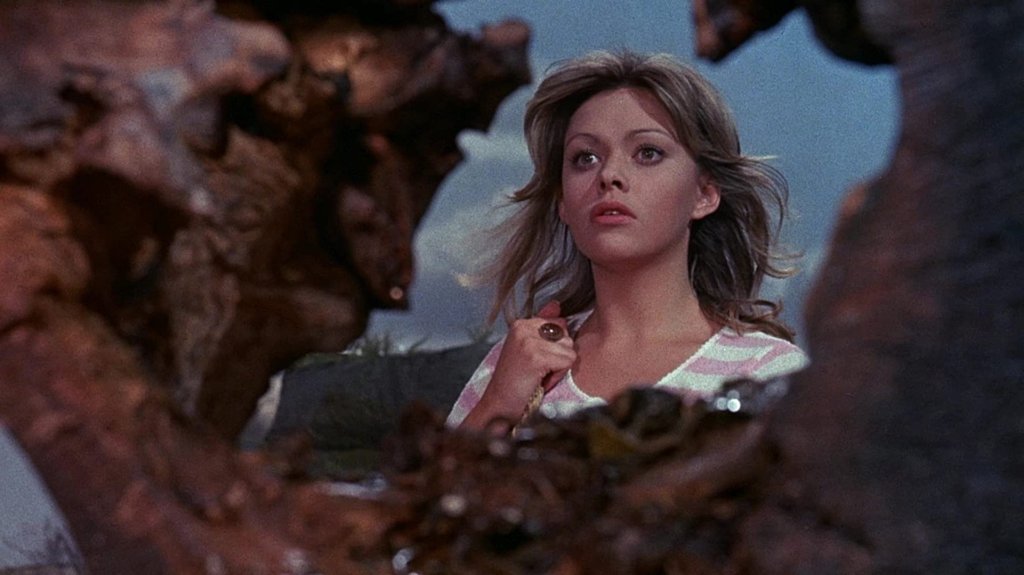

Synopsis – When a local fisherman (Jack Watson) discovers the bodies of three murdered teenagers, private detective Evan Brent (Bryant Haliday) is sent to the remote island to investigate.
Director – Jim O’Connolly
Starring – Jill Haworth, Bryant Haliday, Anna Palk
Genre – Horror
Released – 1972
“Tower of Evil” is a film that tantalizingly balances on the precipice of greatness, yet ultimately falls short of reaching its full potential. Directed by Jim O’Connolly and released in 1972, this British horror movie offers a mix of atmospheric tension and classic horror elements that may leave audiences both intrigued and somewhat unsatisfied.
One of the film’s strongest attributes is its eerie setting – an isolated, desolate island with a foreboding lighthouse that becomes the focal point of the narrative. The cinematography captures the stark beauty of the landscape, enhancing the overall sense of isolation and dread. The use of shadow and light within the tower itself creates a palpable atmosphere, contributing to the film’s unsettling tone.
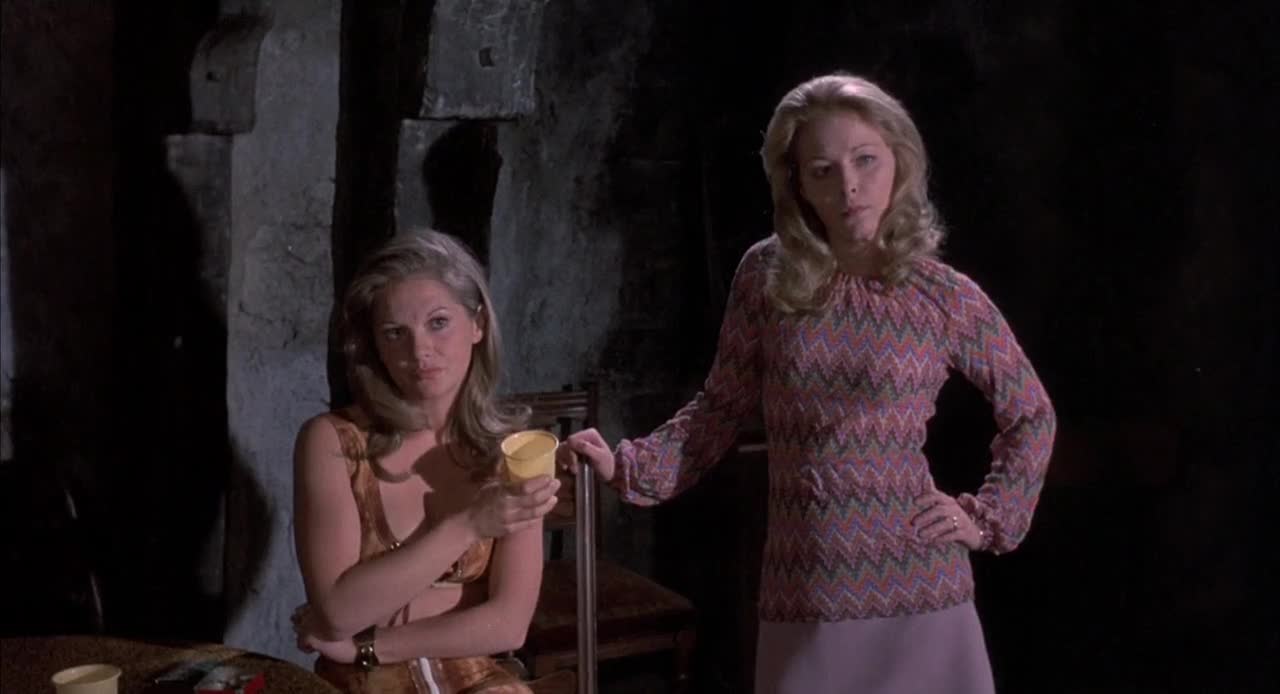
The plot revolves around a group of characters who find themselves stranded on the island due to a boating mishap. As they explore the mysterious lighthouse, they uncover a dark history of ritualistic murders that took place decades earlier. The film employs a non-linear storytelling approach, revealing the gruesome events through a series of flashbacks. While this technique adds complexity to the narrative, it occasionally disrupts the pacing, leaving the audience grappling to piece together the timeline.
The performances from the cast are a mixed bag. The characters lack depth, and some of the acting feels wooden and unconvincing. However, there are moments when the cast succeeds in conveying genuine fear and tension, particularly in scenes where the supernatural elements come to the forefront.
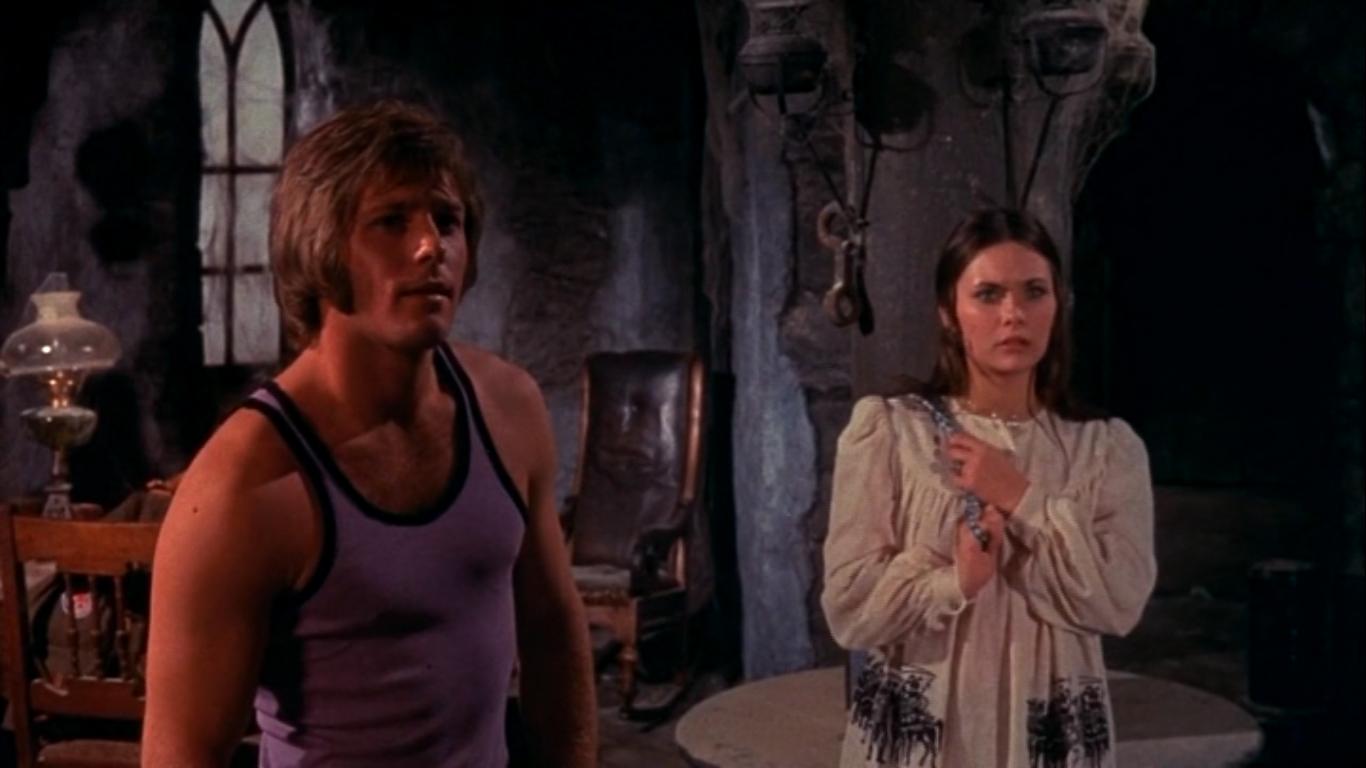
Where “Tower of Evil” stumbles is in its execution of the horror elements. While the film builds a sense of unease and suspense, it often relies on conventional scares that feel more dated than genuinely terrifying. The makeup effects, though ambitious for its time, may come across as more campy than horrifying to contemporary audiences.
Additionally, the film’s conclusion may leave viewers with a sense of ambiguity that borders on frustration. While some ambiguity can enhance a horror film, “Tower of Evil” leaves too many unanswered questions, leading to a conclusion that feels more like a narrative cop-out than a thought-provoking resolution.
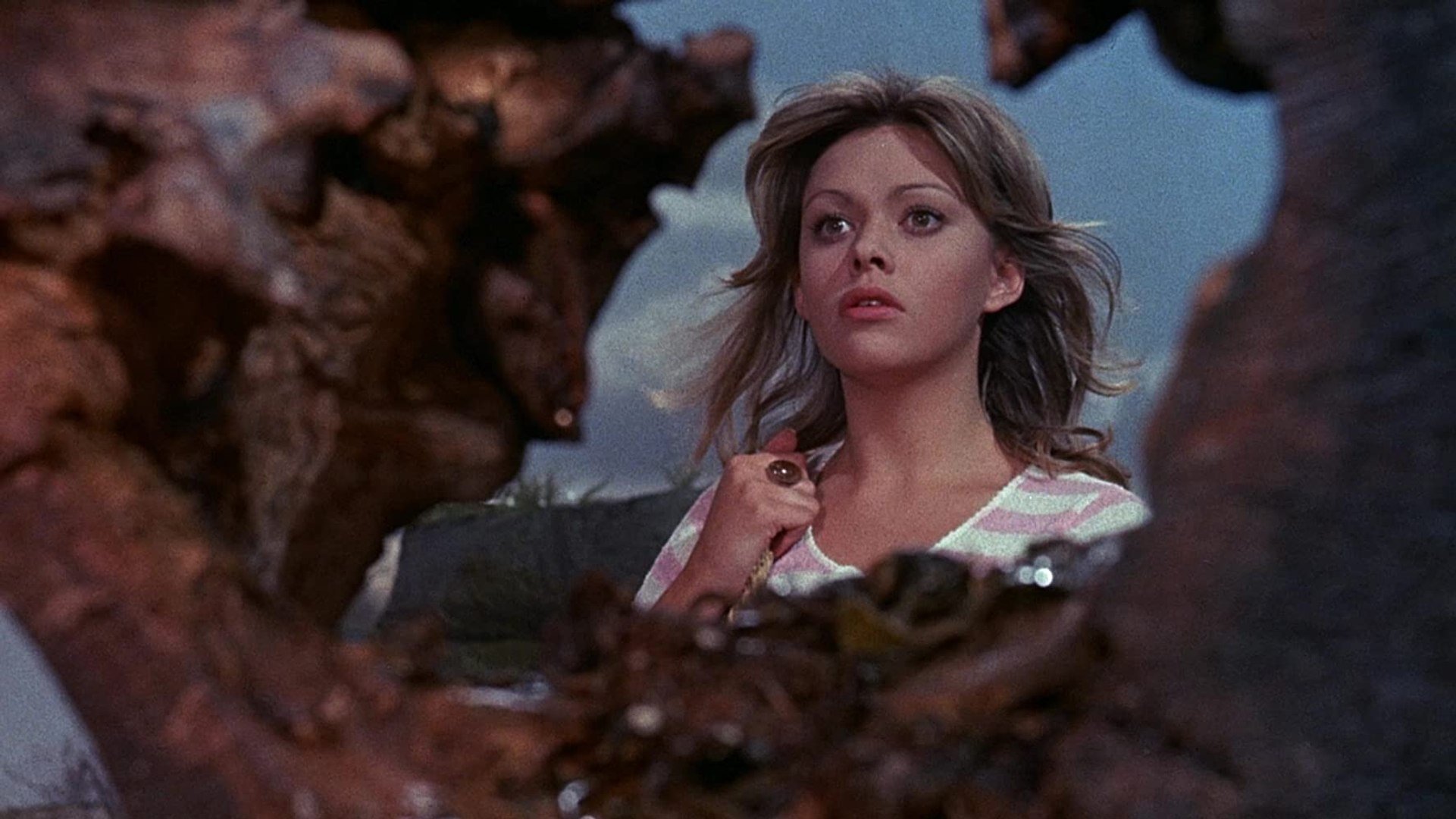
In summary, “Tower of Evil” is a film that showcases moments of brilliance, particularly in its atmospheric setting and cinematography. However, uneven performances, a convoluted narrative structure, and reliance on dated horror tropes prevent it from ascending to the heights of the genre’s classics. For fans of 1970s horror, it’s worth a watch, but those seeking a more cohesive and satisfying experience may find themselves wanting.
 Roses Have Thoughts
Leave a comment