
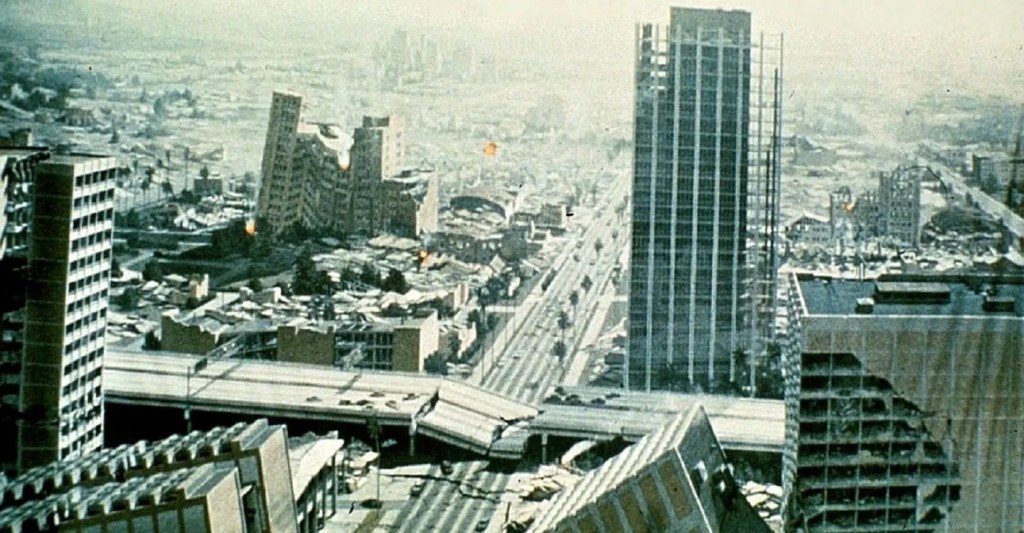
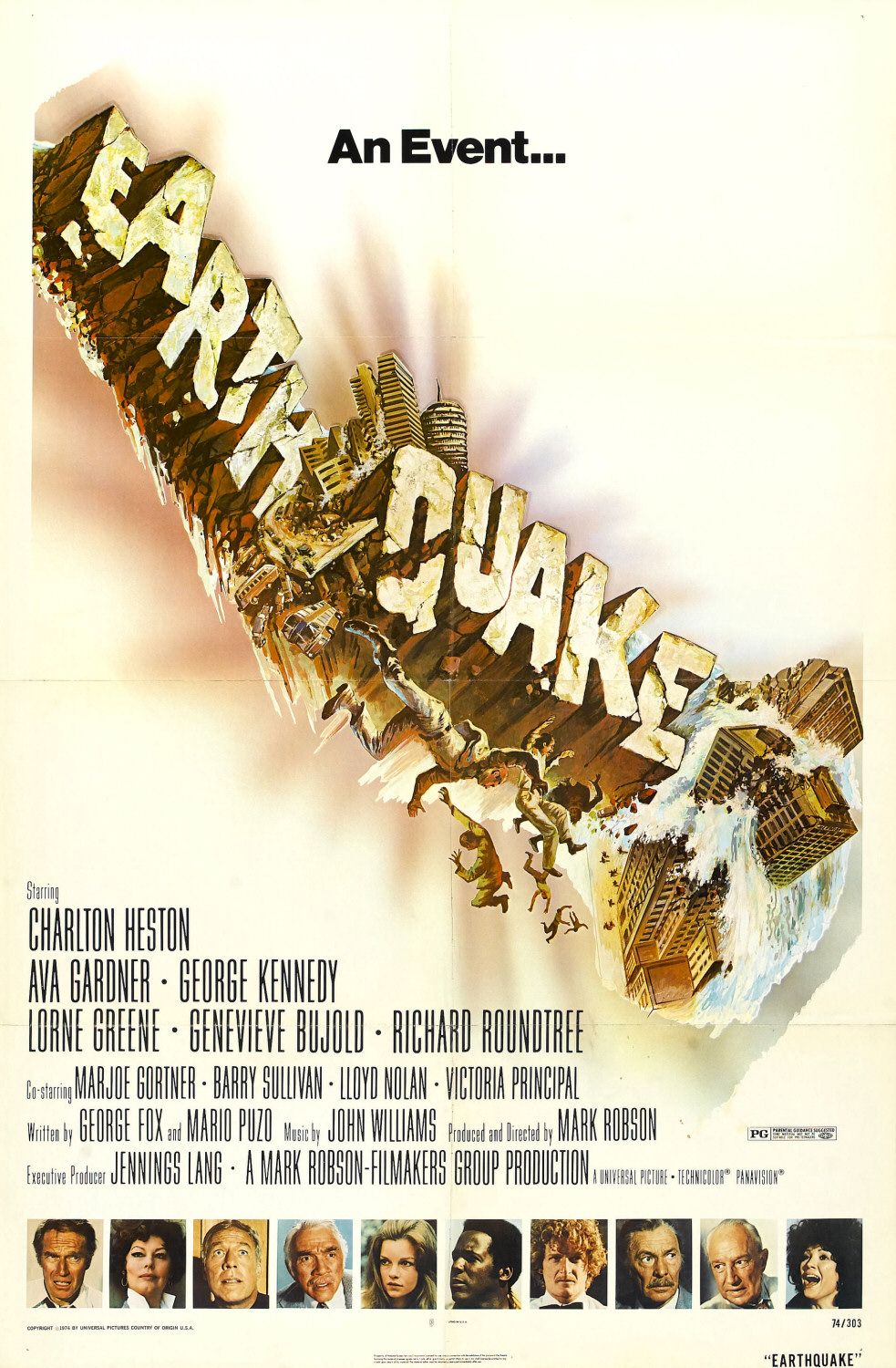
Synopsis- An earthquake occurs while a couple is fighting over their marriage. The lives of all the residents of Los Angeles are tragically hit by the largest earthquake that the city has ever witnessed.
Director- Mark Robson
Cast- Charlton Heston, Ava Gardner, Richard Roundtree
Released- 1974
Released in 1974, “Earthquake” is a disaster film that shook the cinematic landscape of its time, both literally and figuratively. Directed by Mark Robson, the film boasts a star-studded cast, including Charlton Heston, Ava Gardner, George Kennedy, and Lorne Greene. With groundbreaking special effects for its era and a gripping narrative, “Earthquake” delivers a seismic experience that keeps audiences on the edge of their seats.
One of the standout features of “Earthquake” is its innovative use of Sensurround technology, which aims to simulate the sensation of an actual earthquake for moviegoers. The low-frequency sounds and vibrations added a visceral layer to the viewing experience, enhancing the impact of the disaster sequences. The technical achievements in sound and practical effects were ahead of their time, creating an immersive atmosphere that set a new standard for disaster films.
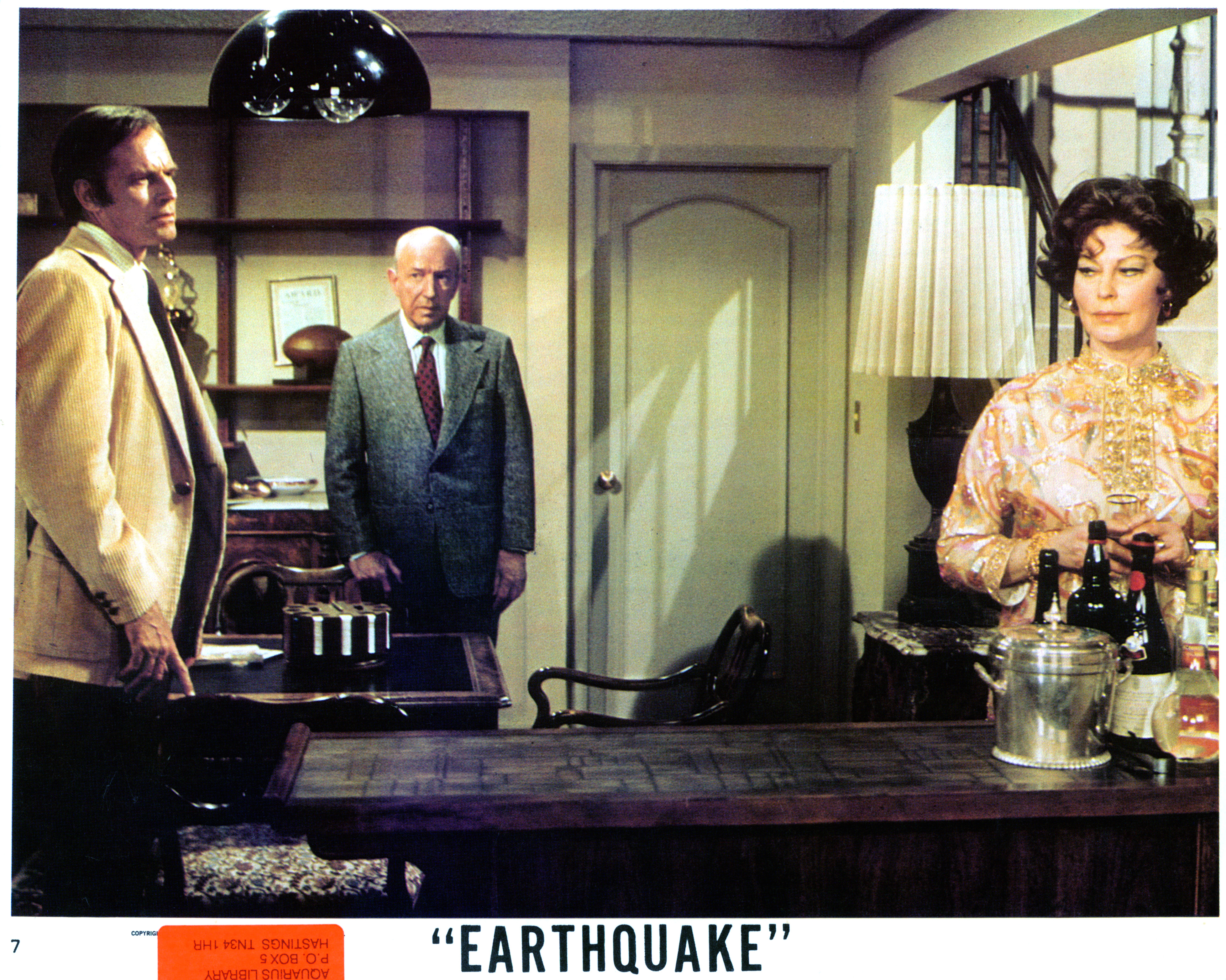
The ensemble cast delivers solid performances, with Charlton Heston anchoring the film as Stewart Graff, a construction engineer facing personal and professional challenges in the wake of the earthquake. Ava Gardner brings depth to her role as Remy Royce-Graff, Stewart’s estranged wife, while George Kennedy adds gravitas as the city’s chief of emergency services. The chemistry among the cast members adds emotional weight to the film, making the audience care about the characters amidst the chaos.
The narrative skillfully weaves personal dramas into the disaster plot, offering a human perspective on the catastrophic events. The film explores themes of resilience, survival, and the unpredictability of life in the face of natural disasters. While some character arcs may feel formulaic, the film succeeds in creating empathy for those affected by the earthquake, elevating it beyond a mere spectacle of destruction.
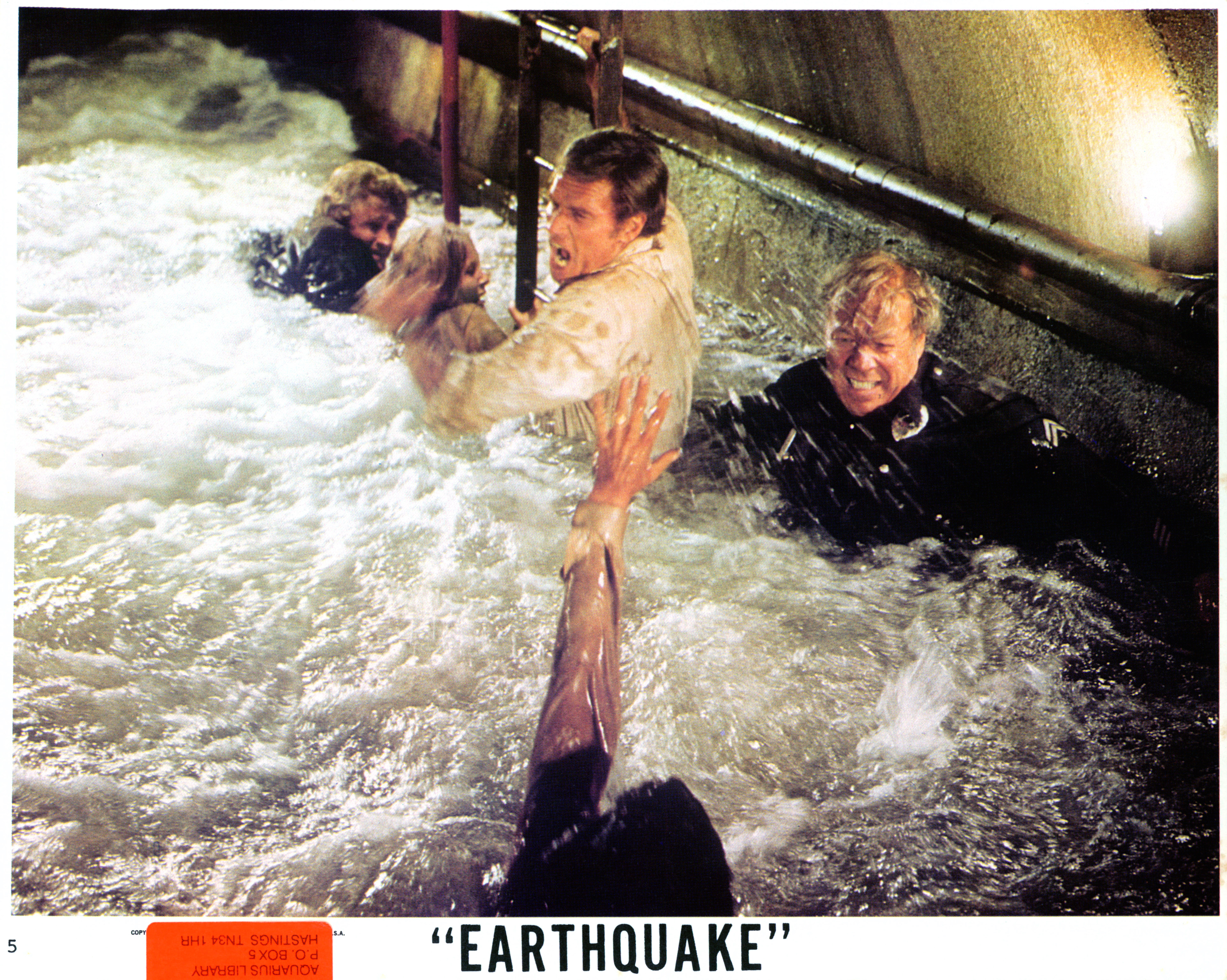
“Earthquake” benefits from a well-paced screenplay that steadily builds tension, leading to a climactic and visually stunning finale. The destruction of iconic Los Angeles landmarks, depicted with impressive practical effects, remains a memorable highlight. The filmmakers skillfully balance the spectacle of disaster with intimate character moments, preventing the film from becoming a hollow showcase of destruction.
However, the film is not without its flaws. Some of the dialogue can feel clichéd, and certain character decisions may stretch believability. Additionally, the pacing in the middle act occasionally falters as the film juggles multiple storylines.
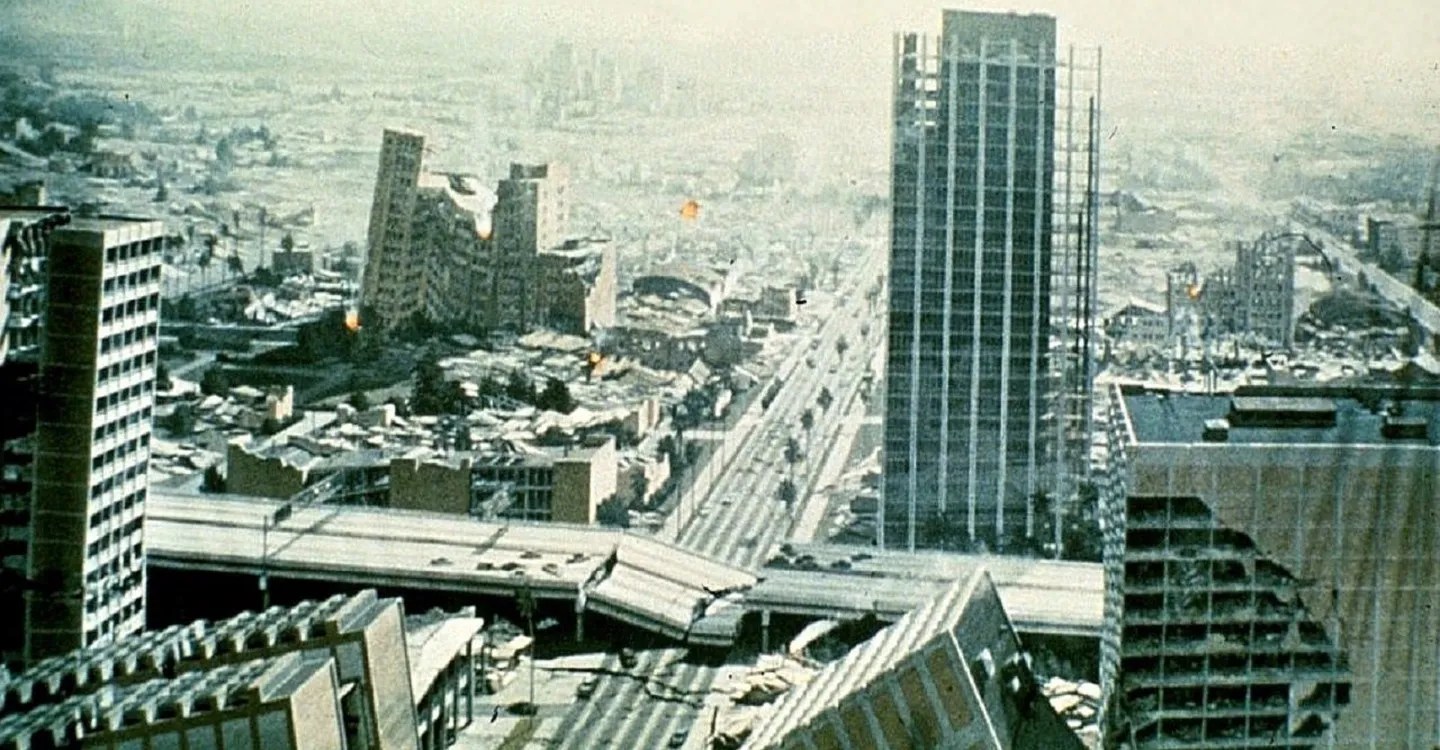
In conclusion, “Earthquake” (1974) stands as a landmark in disaster cinema, offering a thrilling blend of technical innovation, star power, and emotional storytelling. While it may not be free from genre tropes and occasional pacing issues, its impact on the disaster film genre is undeniable. For fans of classic cinema and those interested in the evolution of special effects, “Earthquake” remains a seismic achievement that shook the foundations of filmmaking in its time.
 Roses Have Thoughts
Leave a comment