

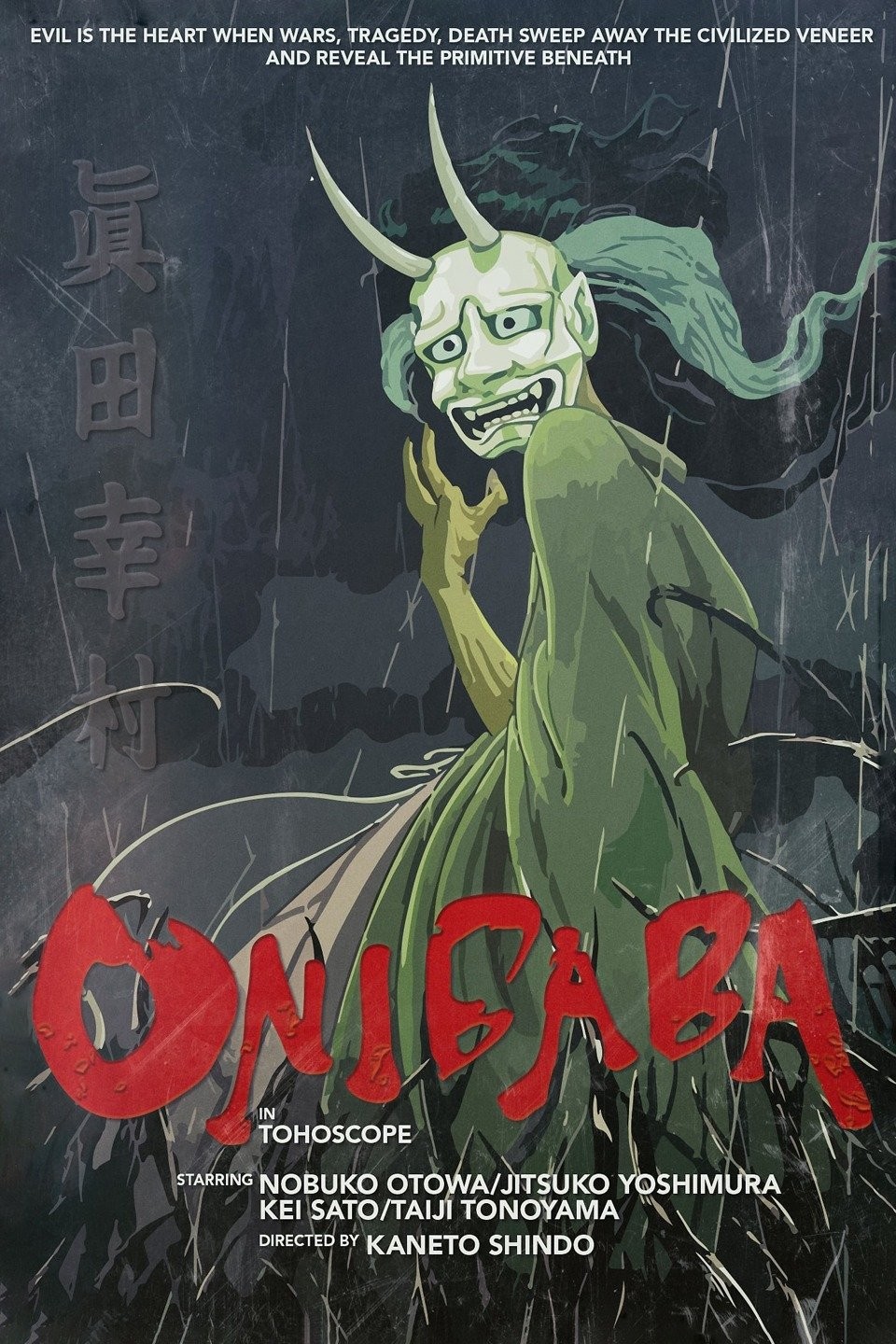
Synopsis- An impoverished mother and daughter-in-law kill soldiers and steal their belongings. After the mother learns of the son’s death, she dons a mask to scare her daughter-in-law into staying with her.
Director- Kaneto Shindo
Starring-Jitsuko Yoshimura, Nobuko Otowa, Kei Sato
Released-1964
“Onibaba” (1964) is a haunting and atmospheric masterpiece directed by Kaneto Shindo that delves into the depths of human desperation and the moral consequences of survival in a time of war. Set against the backdrop of feudal Japan, the film weaves a chilling tale that transcends its historical context to explore timeless themes.

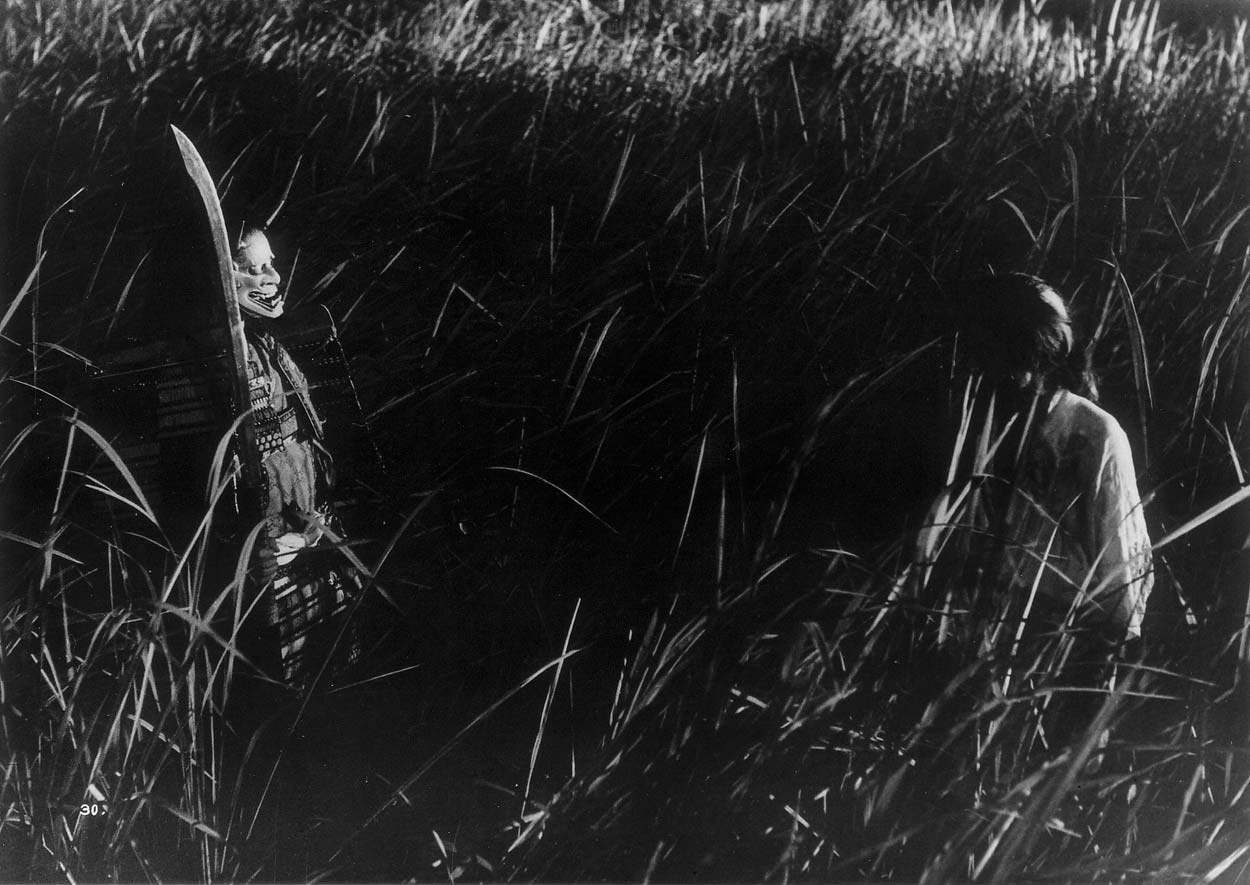
The cinematography in “Onibaba” is nothing short of mesmerizing. Shindo, who also wrote the screenplay, demonstrates a keen understanding of visual storytelling. The black-and-white cinematography captures the starkness of the landscape and the characters’ struggles, creating an unsettling atmosphere that permeates every frame. The use of long takes and natural lighting adds to the film’s authenticity, immersing the audience in the harsh realities of the characters’ lives.
The narrative unfolds with a deliberate and methodical pace, allowing the tension to build gradually. The plot centres on two women, a mother and her daughter-in-law, who resort to desperate measures to survive in the midst of a civil war. The barren fields and oppressive heat become metaphors for the characters’ emotional and psychological states. As the women navigate the treacherous landscape, the film explores the moral complexities of their actions, blurring the lines between right and wrong.
The performances in “Onibaba” are exceptional, particularly from Nobuko Otowa and Jitsuko Yoshimura, who play the two lead characters. Otowa’s portrayal of the mother is a tour de force, capturing the character’s internal conflict and descent into moral ambiguity. The absence of a traditional musical score enhances the film’s impact, relying instead on ambient sounds and the characters’ eerie chants, adding to the overall sense of unease.
The thematic depth of “Onibaba” extends beyond its surface narrative. The film explores the dehumanizing effects of war and the lengths individuals go to survive in the face of adversity. It raises questions about the nature of morality and the thin line between good and evil when pushed to the limits. The symbolic use of masks and the constant presence of the tall, swaying susuki grass contribute to the film’s rich allegorical tapestry.

While “Onibaba” may not be for everyone due to its deliberate pacing and stark portrayal of human desperation, those willing to engage with its challenging themes will find a cinematic experience that lingers long after the credits roll. Shindo’s exploration of the human condition, coupled with the film’s striking visuals and haunting performances, solidifies “Onibaba” as a classic that continues to resonate with audiences, transcending its specific historical and cultural context.
 Roses Have Thoughts
Leave a comment