
Synopsis: Construction workers battle an unmanned bulldozer powered by an alien force.
Director – Jerry London
Cast – Clint Walker, James Wainwright, Robert Urich
Genre– Science Fiction | Horror
Released – 1974
This 1974 made-for-TV film, directed by Jerry London and based on a novella by Theodore Sturgeon, emerges as a thrilling and surprisingly poignant exploration of man versus machine, imbued with a unique blend of horror and existentialism. In this gripping cinematic endeavour, Jerry London deftly navigates the fine line between suspenseful action and introspective drama, offering audiences an unforgettable journey into the heart of human frailty and the relentless power of nature on a clearly small budget.
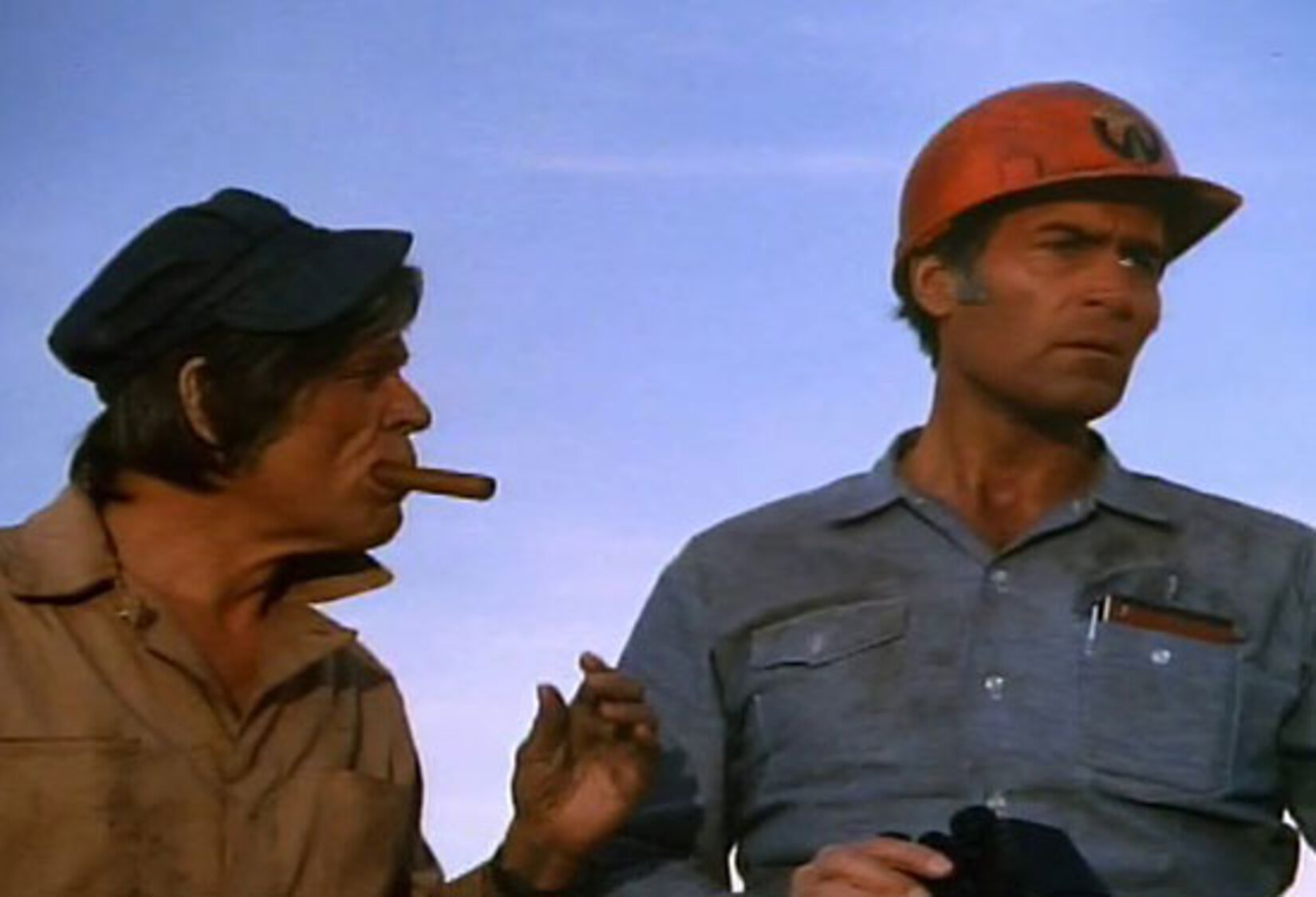
At its core, “Killdozer” is a cautionary tale about mankind’s hubris and the consequences of tampering with forces beyond our control. Set against the desolate backdrop of a remote construction site on a barren island, the film follows a group of blue-collar workers who unwittingly awaken an ancient alien force dormant within a colossal bulldozer. As the sentient machine wreaks havoc upon the unsuspecting crew, London masterfully crafts an atmosphere of palpable dread and suspense, keeping viewers on the edge of their seats from start to finish.
What elevates “Killdozer” beyond mere B-movie fare is its unexpected depth and thematic resonance. Through the escalating chaos and carnage, London delves into profound questions about humanity’s place in the universe and the fragility of our existence. As the characters grapple with their own mortality in the face of an unstoppable mechanical menace, the film invites viewers to confront their own fears and insecurities, tapping into primal anxieties about the unknown and the uncontrollable.

Central to the film’s success is its ensemble cast, led by the charismatic Clint Walker as Kelly, the no-nonsense construction foreman. Walker brings a rugged authenticity to the role, grounding the film’s more outlandish elements in a relatable human dimension. His portrayal of Kelly as a reluctant hero forced to confront his own demons lends the film an emotional weight that resonates long after the credits roll.
In addition to its strong performances, “Killdozer” boasts impressive practical effects that still hold up remarkably well decades later. From the ominous rumble of the titular machine to the relentless pursuit of its human prey, every aspect of the film’s design contributes to its atmosphere of creeping terror. London’s judicious use of shadow and sound enhances the sense of foreboding, creating a chilling ambience that permeates every frame.

While “Killdozer” may not be as gory as other creature features of the time, its unapologetic embrace of genre conventions makes it a standout example of 1970s horror cinema. By blending elements of science fiction, thriller, and psychological drama, London crafts a film that transcends its pulpy premise to deliver a genuinely thought-provoking experience similar to Steven Spielberg’s Duel (1971).
In conclusion, “Killdozer” stands as a testament to the enduring power of low-budget filmmaking to captivate and provoke audiences. With its potent blend of suspense, spectacle, and existential inquiry, Jerry London’s directorial effort remains a must-see for fans of classic horror and science fiction alike. Whether viewed as a campy relic of its time or a timeless meditation on the human condition, “Killdozer” continues to leave an indelible mark on the cinematic landscape.


Leave a Reply