

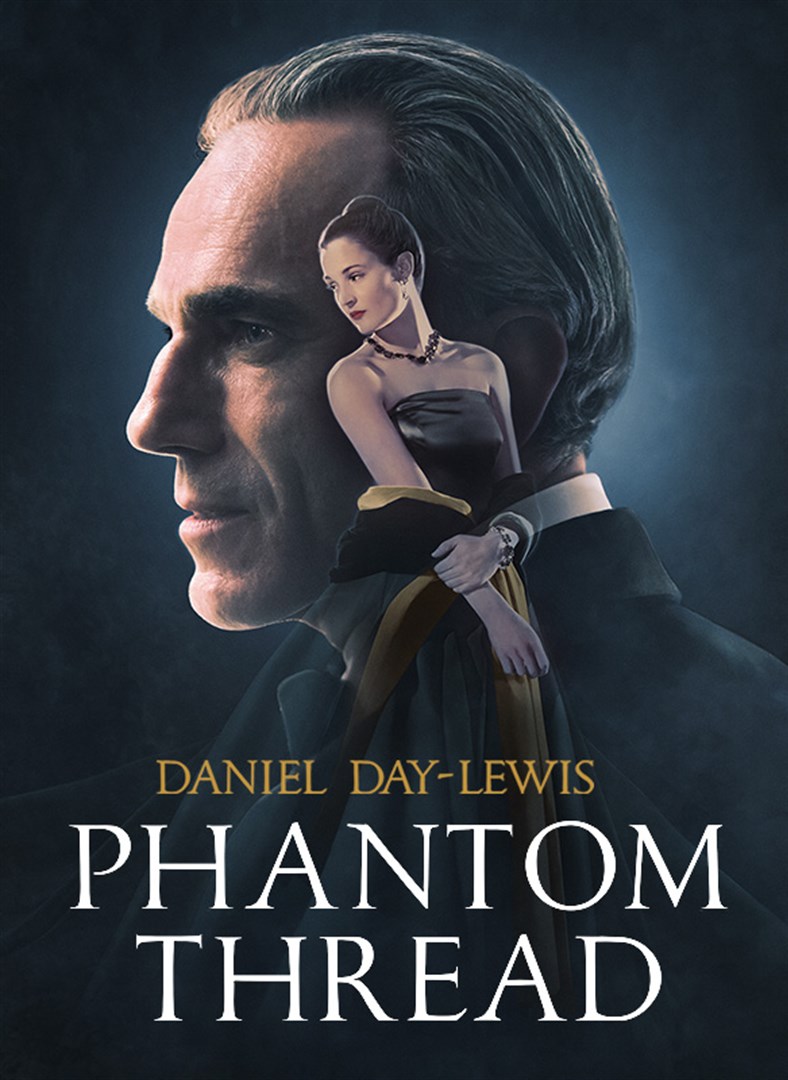
Synopsis- Reynolds Woodcock is a celebrated dress designer whose meticulous lifestyle undergoes a drastic change when he falls for Alma, a waitress who later becomes his muse and lover.
Director- Paul Thomas Anderson
Cast- Daniel Day-Lewis, Vicky Krieps, Lesley Manville
Released- 2017
Phantom Thread, directed by Paul Thomas Anderson, is a visually stunning and meticulously crafted film that immerses its audience in the world of 1950s haute couture. At the centre of this cinematic experience is Daniel Day-Lewis, who delivers a mesmerizing performance as Reynolds Woodcock, a renowned dressmaker with a penchant for perfection. The film explores themes of love, control, and artistic obsession, weaving a narrative that is both intriguing and complex.
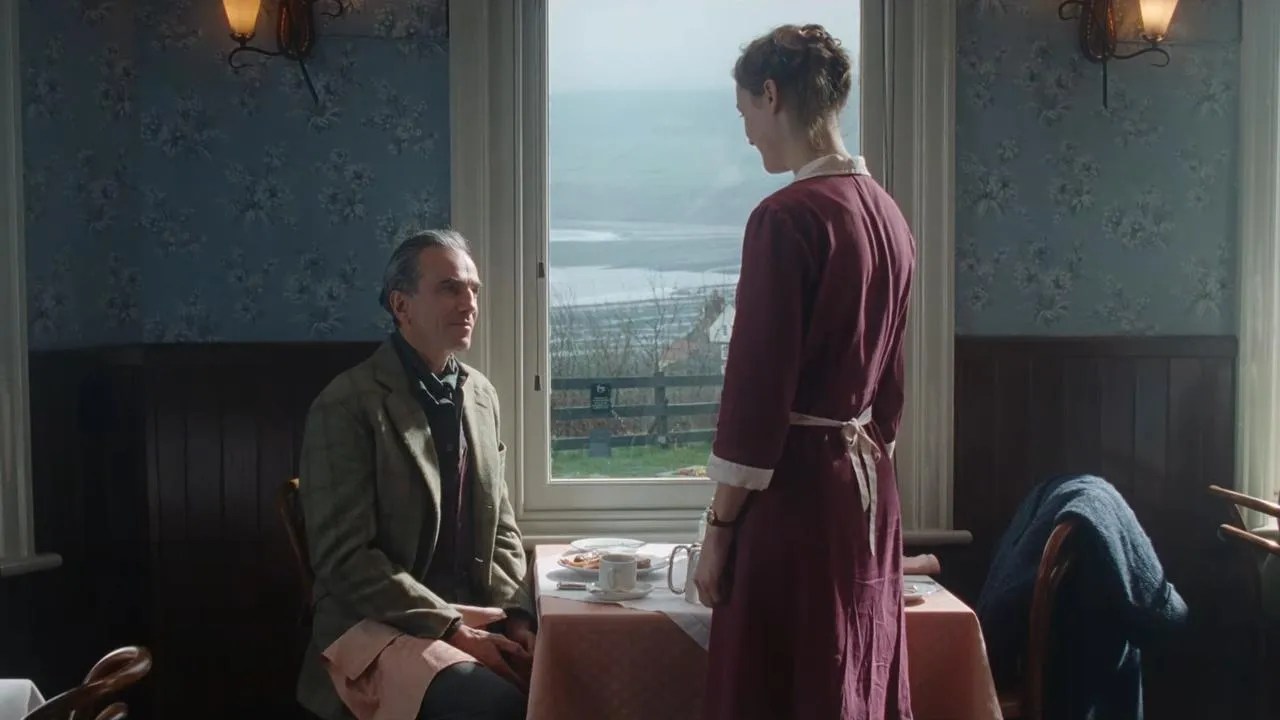
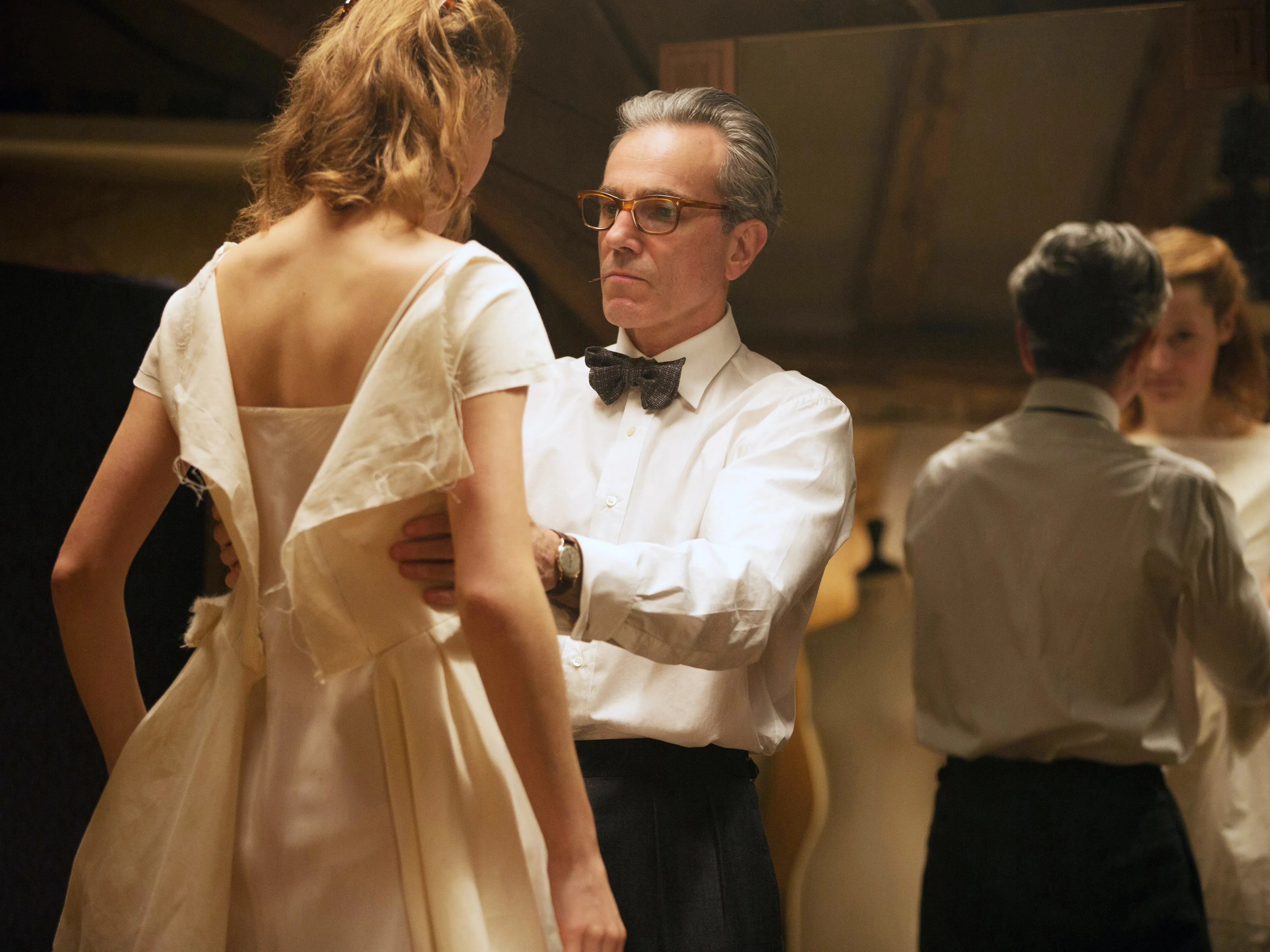
One of the standout features of “Phantom Thread” is its exquisite cinematography. Anderson, serving as principle cinematographer himself, captures the elegance of the fashion world with sweeping shots of intricately designed dresses and luxurious fabrics. The attention to detail is impeccable, and every frame feels like a carefully composed work of art. The use of natural light adds a timeless quality to the visuals, enhancing the overall aesthetic beauty of the film.

The performances in “Phantom Thread” are nothing short of exceptional. Daniel Day-Lewis, in what he has claimed to be his final acting role, disappears into the character of Reynolds Woodcock. His portrayal is nuanced and captivating, conveying the character’s complexity and inner struggles. Vicky Krieps, who plays Alma, the young woman who becomes entangled in Woodcock’s life, is equally impressive. The chemistry between Day-Lewis and Krieps is palpable, adding depth to the film’s exploration of relationships and power dynamics.
The film’s narrative, however, may not resonate with everyone. The pacing is deliberate, and the story unfolds at a leisurely pace, allowing the audience to immerse themselves in the characters’ world. While some viewers may appreciate the methodical approach, others might find it slow or even meandering. Additionally, the film’s resolution takes an unexpected turn, which could leave some audiences divided. The ambiguity in the ending might frustrate those seeking a more conventional or conclusive resolution.
The score, composed by frequent Anderson collaborator Jonny Greenwood, complements the film’s atmosphere beautifully. The haunting melodies and orchestral arrangements enhance the emotional impact of key scenes, contributing to the overall mood and tone of the film. Greenwood’s score is an integral part of the viewing experience, creating a sensory feast that resonates long after the credits roll.
Despite its merits, “Phantom Thread” may not be to everyone’s tastes. The film’s focus on the idiosyncrasies of its characters and the meticulous world of high fashion might alienate some viewers who prefer more straightforward narratives and a main character who is less frustrating. Additionally, the themes of control and manipulation explored in the film may be unsettling for some, making it a challenging watch for those seeking a more light-hearted or straightforward cinematic experience.
In conclusion, “Phantom Thread” is a masterfully crafted film that showcases the talents of its cast and crew. The meticulous attention to detail, coupled with outstanding performances, makes it a visual and auditory delight. However, its deliberate pacing and unconventional narrative choices may not appeal to everyone. For those who appreciate artful storytelling and are willing to engage with a more contemplative cinematic experience, “Phantom Thread” offers a unique and thought-provoking journey into the world of fashion, love, and obsession.
 Roses Have Thoughts
Leave a comment