


Synopsis- After a mysterious death in a Benedictine Abbey, the monks are convinced that the apocalypse is coming. William of Baskerville,is asked to assist in determining the cause of the untimely death.
Director- Jean-Jacques Annaud
Cast- Sean Connery, Christian Slater, Valentina Vargas, Ron Perlman
Genre- Historical | Mystery
Released- 1986
In “The Name of the Rose,” director Jean-Jacques Annaud orchestrates an intriguing adaptation of Umberto Eco’s labyrinthine novel, albeit with mixed results. Set against the backdrop of a medieval monastery plagued by a series of mysterious deaths, the film delves into the depths of religious fervour, intellectual pursuit, and the shadowy corridors of power.
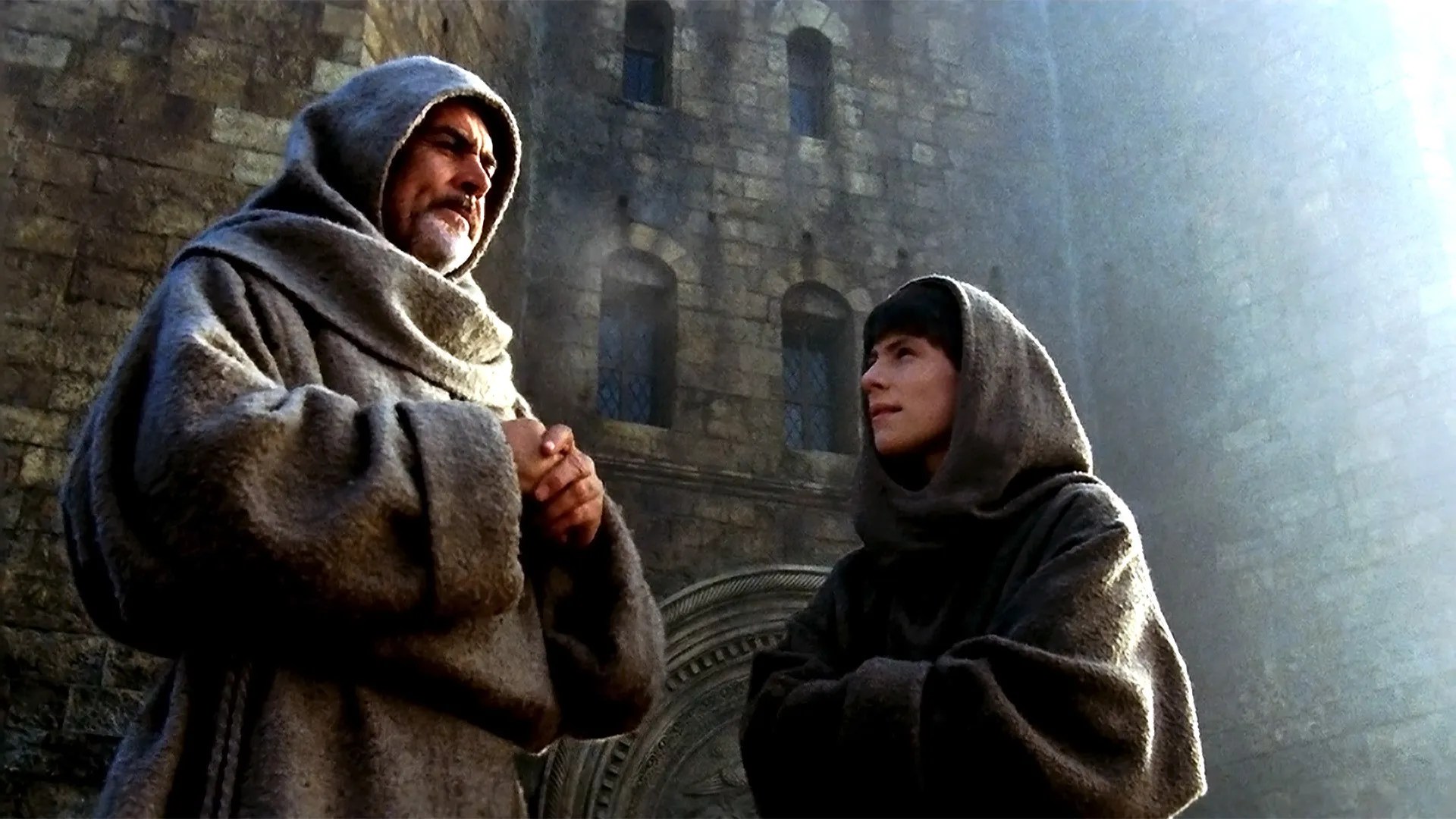
At its core, “The Name of the Rose” is a gripping murder mystery wrapped in layers of theological discourse and philosophical inquiry. Sean Connery delivers a robust performance as William of Baskerville, a Franciscan friar tasked with unravelling the enigma behind the deaths. His portrayal exudes wisdom and charisma, anchoring the narrative with a sense of gravitas.
Opposite Connery, Christian Slater’s portrayal of Adso of Melk adds a youthful energy to the proceedings, though at times his performance feels slightly overshadowed by the weight of Connery’s presence. However, their dynamic offers a compelling juxtaposition between experience and innocence, driving the investigation forward with palpable tension.

Visually, Annaud captures the oppressive atmosphere of the monastery with meticulous detail. From the dimly lit corridors to the ornate manuscripts, each frame is steeped in medieval authenticity, immersing the audience in a world of religious austerity and intellectual fervour. The cinematography, while occasionally indulgent in its sweeping vistas, effectively conveys the claustrophobia and intrigue that permeate the monastery’s walls.
Where “The Name of the Rose” stumbles, however, is in its pacing and narrative cohesion. At over two hours in length, the film meanders through a labyrinth of subplots and theological debates, occasionally losing sight of its central mystery. While this approach may mirror the dense, multi-layered narrative of Eco’s novel, it results in a somewhat disjointed viewing experience, leaving some audiences feeling adrift amidst the sea of theological exposition.

Additionally, the film’s climax feels somewhat rushed and anticlimactic, lacking the narrative payoff that one might expect after such a protracted build-up. Certain plot threads are left dangling, leaving viewers craving a more satisfying resolution to the mystery at hand.
In conclusion, “The Name of the Rose” is a visually stunning and intellectually engaging adaptation that falls short of its full potential. While Connery’s commanding presence and Annaud’s meticulous attention to detail elevate the film above mere historical drama, its pacing issues and narrative shortcomings prevent it from reaching the heights of cinematic greatness. Nevertheless, for fans of medieval mysteries and philosophical discourse, “The Name of the Rose” offers a compelling journey into the heart of darkness within the cloistered halls of faith and reason.
 Roses Have Thoughts
Leave a comment