
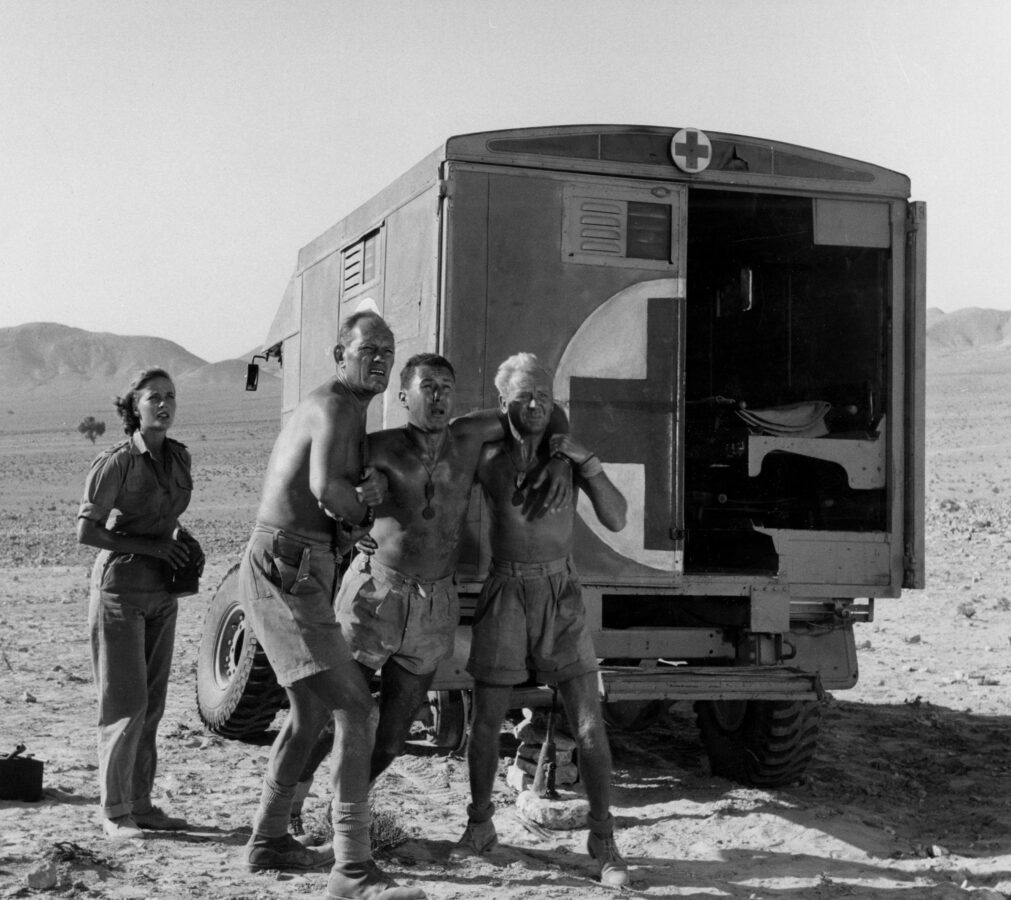
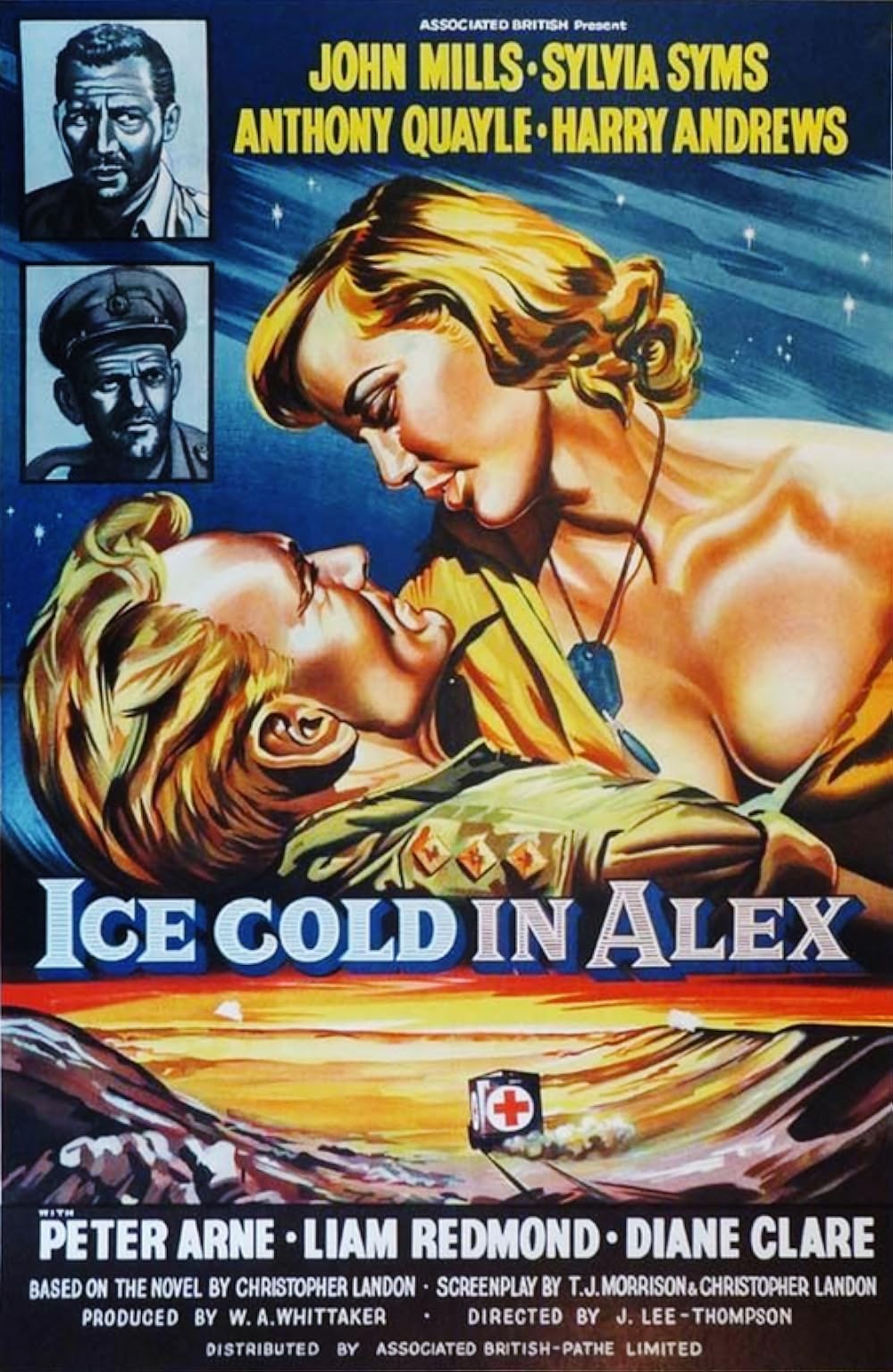
Synopsis- Captain Anson and what’s left of his unit plan to cross the African desert to reach the British lines during WWII. They are joined by a South African officer, who arouses the captain’s suspicion.
Director- J. Lee Thompson
Cast- John Mills, Sylvia Syms, Anthony Quayle
Released- 1958
Directed by J. Lee Thompson, is a gripping World War II drama that transcends its era, delivering a tale of survival, camaraderie, and human endurance. This 1958 British classic, adapted from the novel by Christopher Landon, is a masterful blend of tension, character study, and stark desert landscapes. With stellar performances by John Mills, Sylvia Syms, and Anthony Quayle, this film is a compelling watch for both history buffs and lovers of classic cinema.
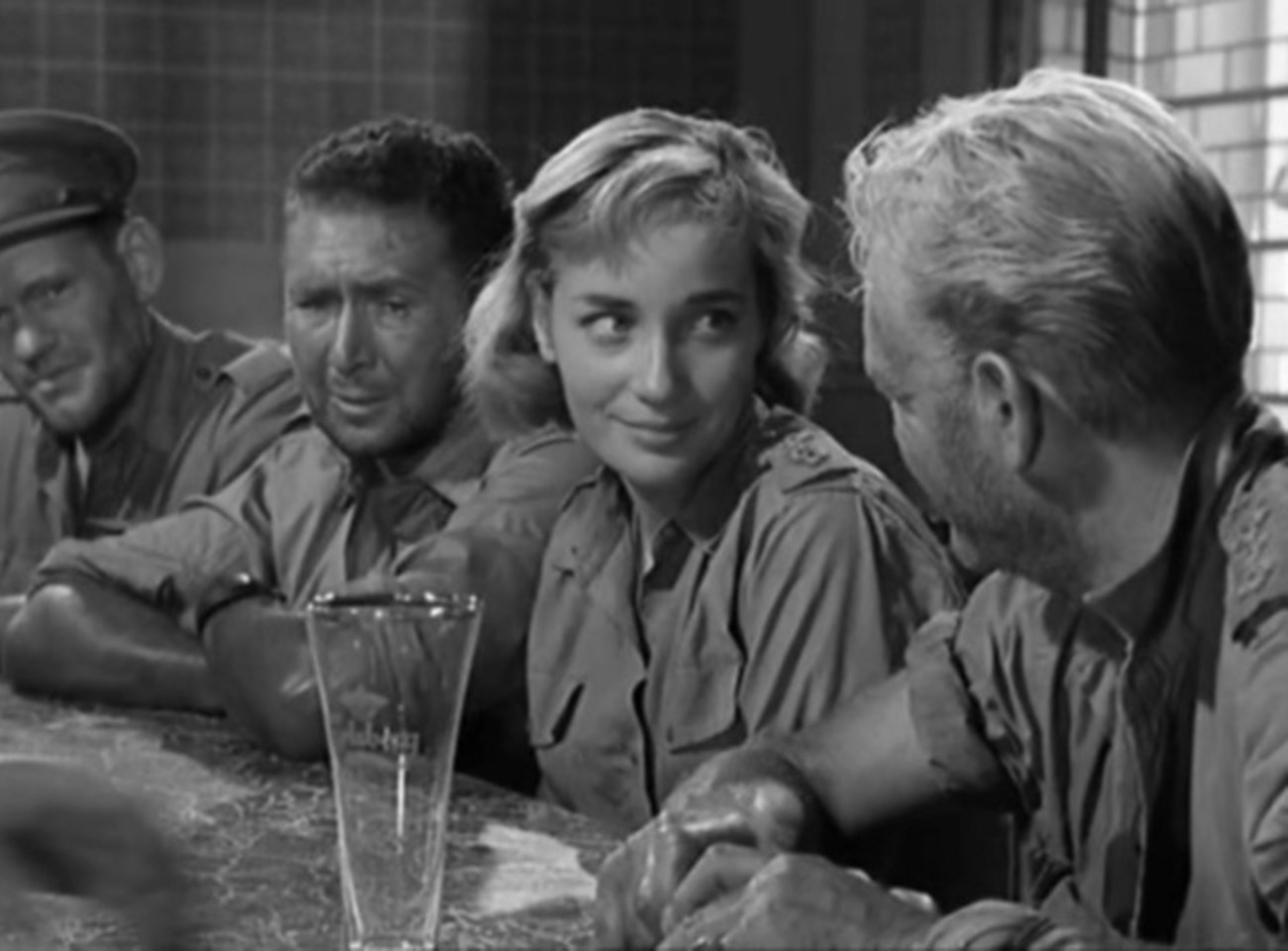
Set in the sweltering heat of North Africa during World War II, “Ice Cold in Alex” follows the harrowing journey of a group of British soldiers and nurses who must traverse the vast, enemy-infested desert to reach the safety of Alexandria. The film’s title refers to the longed-for ice-cold beer that Captain Anson (Mills) promises himself upon reaching their destination, a promise that becomes a symbol of hope and perseverance.
Thompson’s direction is taut and unyielding, much like the desert itself. He skillfully captures the oppressive heat and the omnipresent threat of the enemy, creating an atmosphere that is as tense as it is oppressive. The desert is not merely a backdrop but a character in itself, its vast emptiness mirroring the internal struggles of the characters. This is a film that thrives on its setting, using it to enhance the narrative’s psychological depth and physical challenges.

John Mills delivers a standout performance as Captain Anson, a man grappling with the physical and emotional scars of war. Mills’ portrayal is nuanced, capturing Anson’s vulnerability and determination in equal measure. His relationship with the other characters, particularly with the nurse Diana Murdoch (Syms), is portrayed with a delicate balance of professionalism and burgeoning respect, adding layers to the story’s interpersonal dynamics.
Sylvia Syms is equally compelling as Diana, providing a strong and steady counterpoint to Anson’s fraying resolve. Her performance is marked by resilience and understated strength, making her a memorable presence in a predominantly male cast. Anthony Quayle, as the enigmatic South African officer Captain van der Poel, adds further intrigue and complexity, his motivations and loyalties are questioned throughout the journey.
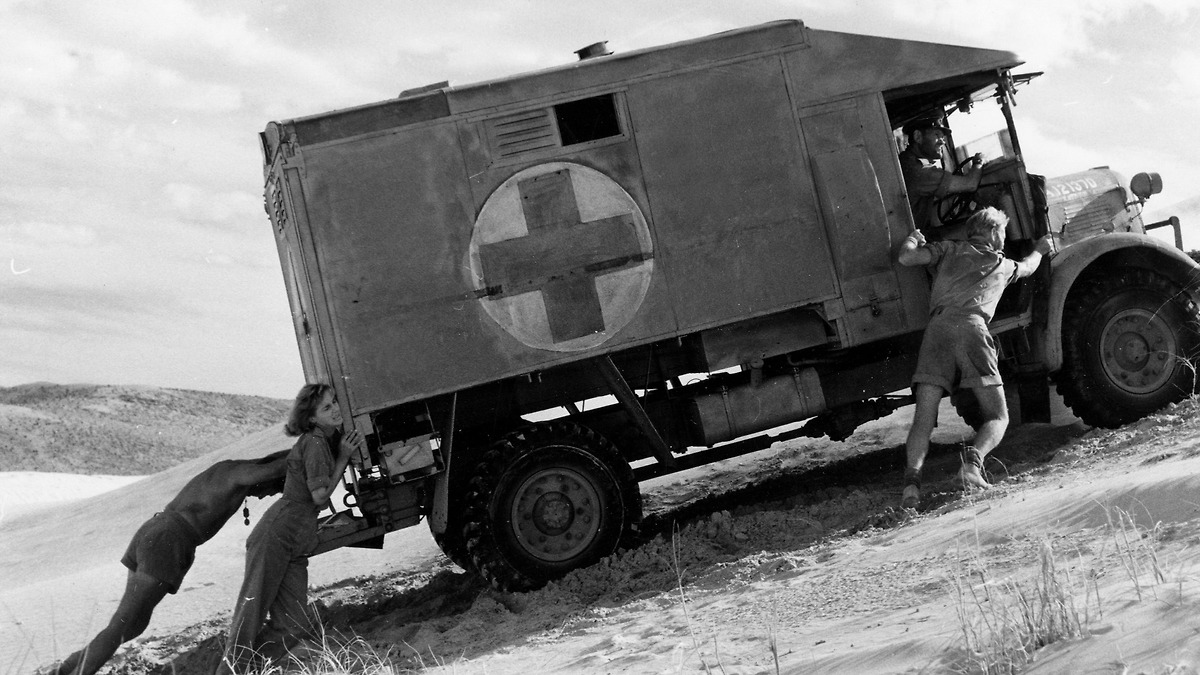
The film’s pacing is deliberate, allowing for moments of introspection amidst the relentless march toward Alexandria. This rhythm mirrors the exhausting trek through the desert, making the viewer feel the weight of each step and the uncertainty of their survival. The climactic sequences, particularly the nerve-wracking minefield crossing, are executed with precision and suspense, showcasing Thompson’s ability to blend action with psychological tension.
“Ice Cold in Alex” also excels in its technical aspects. The cinematography by Gilbert Taylor beautifully captures the stark beauty and danger of the desert, while the score by Leighton Lucas adds an evocative layer to the film’s emotional landscape. The sound design, from the crunch of sand underfoot to the distant rumble of enemy tanks, immerses the viewer in the harsh environment.
In summary, “Ice Cold in Alex” is a powerful wartime drama that resonates beyond its historical setting. It’s a testament to human endurance, the complexities of leadership, and the bonds forged in adversity. While some may find the pacing slow by contemporary standards, it’s this very deliberateness that underscores the film’s themes and enhances its impact. For those willing to journey into the desert with these characters, “Ice Cold in Alex” offers a rewarding and unforgettable experience. This is a film that deserves its place in the pantheon of war cinema.
 Roses Have Thoughts
Leave a comment