


Synopsis- Deacon, a priest, Gray, a technology expert, and Amidon, a minister, visit a church in the English country on the Vatican’s request as there are reports of strange occurrences.
Director- Elliot Goldner
Cast- Gordon Kennedy, Robin Hill, Luke Neal
Genre- Horror
Released- 2013
The Borderlands, directed by Elliot Goldner, is a film that slyly creeps under your skin, slowly tightening its grip until you’re left breathless. You may write this off as another found-footage horror movie that came out in the post-Paranormal Activity boom, however, this isn’t your standard copy and paste cliche filled mess, but rather, a standout example of how to blend atmosphere, character, and dread into a near-perfect symphony of fear. It’s a film that understands the essence of horror, delivering a chilling experience that lingers long after the credits roll.

The premise is deceptively simple. A team of Vatican investigators is dispatched to a remote English church to look into reports of supernatural occurrences. The team comprises Deacon (Kennedy), a grizzled veteran of the supernatural; Gray (Hill), the tech-savvy sceptic; and Father Crellick (Neal), whose faith is tested by the escalating horrors they encounter. Their mission is to debunk—or confirm—the unsettling events reported by the church’s priest.
“The Borderlands” excels in its use of the found-footage format, a genre often criticized for its limitations. Goldner turns these limitations into strengths, using handheld cameras and fixed CCTV to create a palpable sense of immediacy and intimacy. The setting—a dilapidated church and its surrounding countryside—is captured with an eye for detail, immersing the viewer in a world that feels both real and otherworldly.
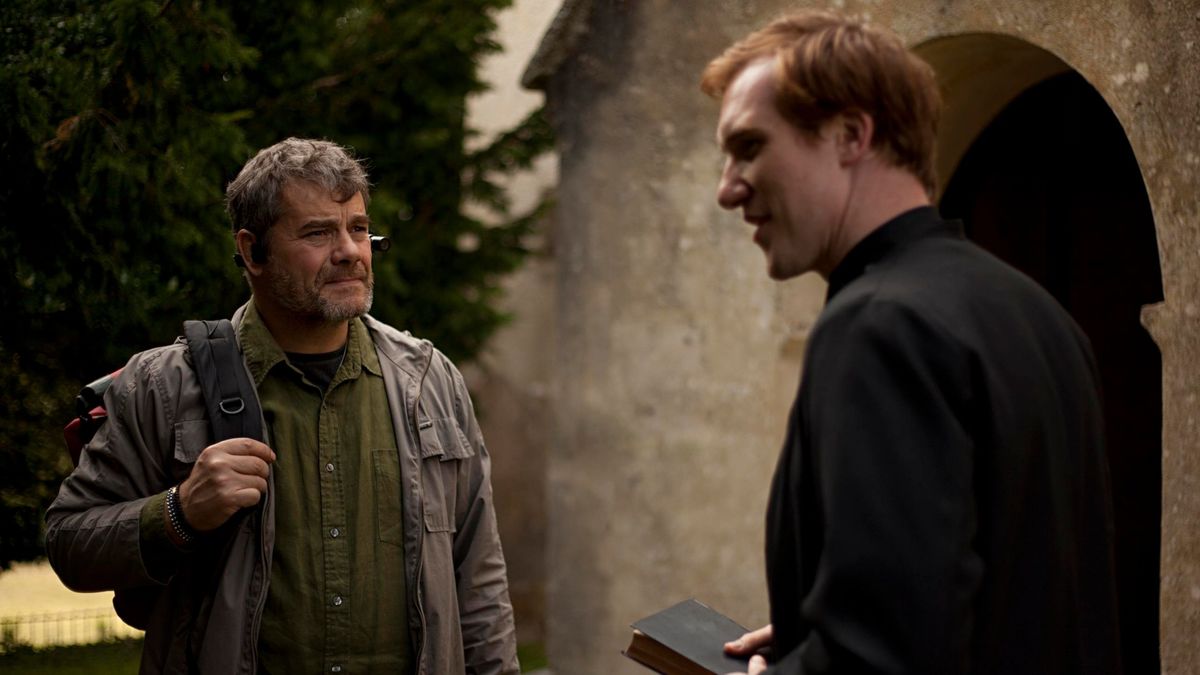
The film’s strength lies in its atmosphere. Goldner crafts an environment that is at once mundane and deeply unsettling. The church, with its ancient walls and hidden catacombs, becomes a character in its own right, a silent witness to the horrors that unfold. The sound design is particularly noteworthy, using subtle, almost subliminal audio cues to build tension. The creaks, whispers, and distant cries are more effective than any jump scare, creating an ambience of creeping dread.
Performances are uniformly strong, with Kennedy and Hill bringing a believable camaraderie to their roles. Kennedy’s Deacon is a man haunted by his past, his scepticism clashing with his underlying fear. Hill’s Gray provides a counterbalance, his rational explanations growing increasingly strained as the supernatural encroaches. Their dynamic is central to the film’s success, grounding the supernatural in a deeply human context.
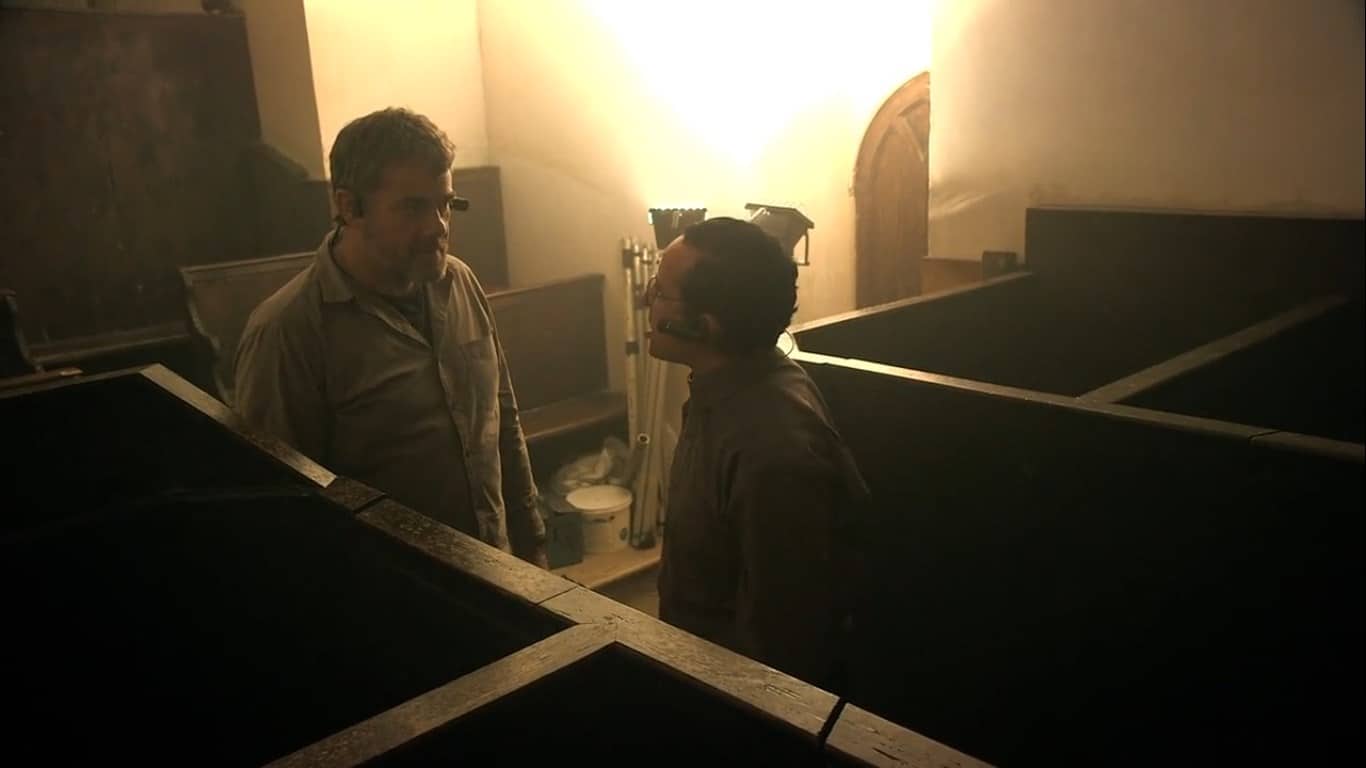
“The Borderlands” is not a film that relies on gore or shock value. Its horror is psychological, built on the slow accumulation of unsettling details. The narrative unfolds with a deliberate pace, each revelation adding to the mounting sense of unease. When the climax arrives, it is both inevitable and shocking, a masterful payoff that is as terrifying as it is satisfying.
Goldner’s direction is assured, and his control over the film’s tone and pacing is impeccable. The script, co-written by Goldner and Alan Rowe Kelly, is tight and focused, eschewing unnecessary exposition for a more organic unfolding of the plot. The film’s themes—faith, scepticism, and the unknown—are explored with a deft touch, adding depth to the scares.
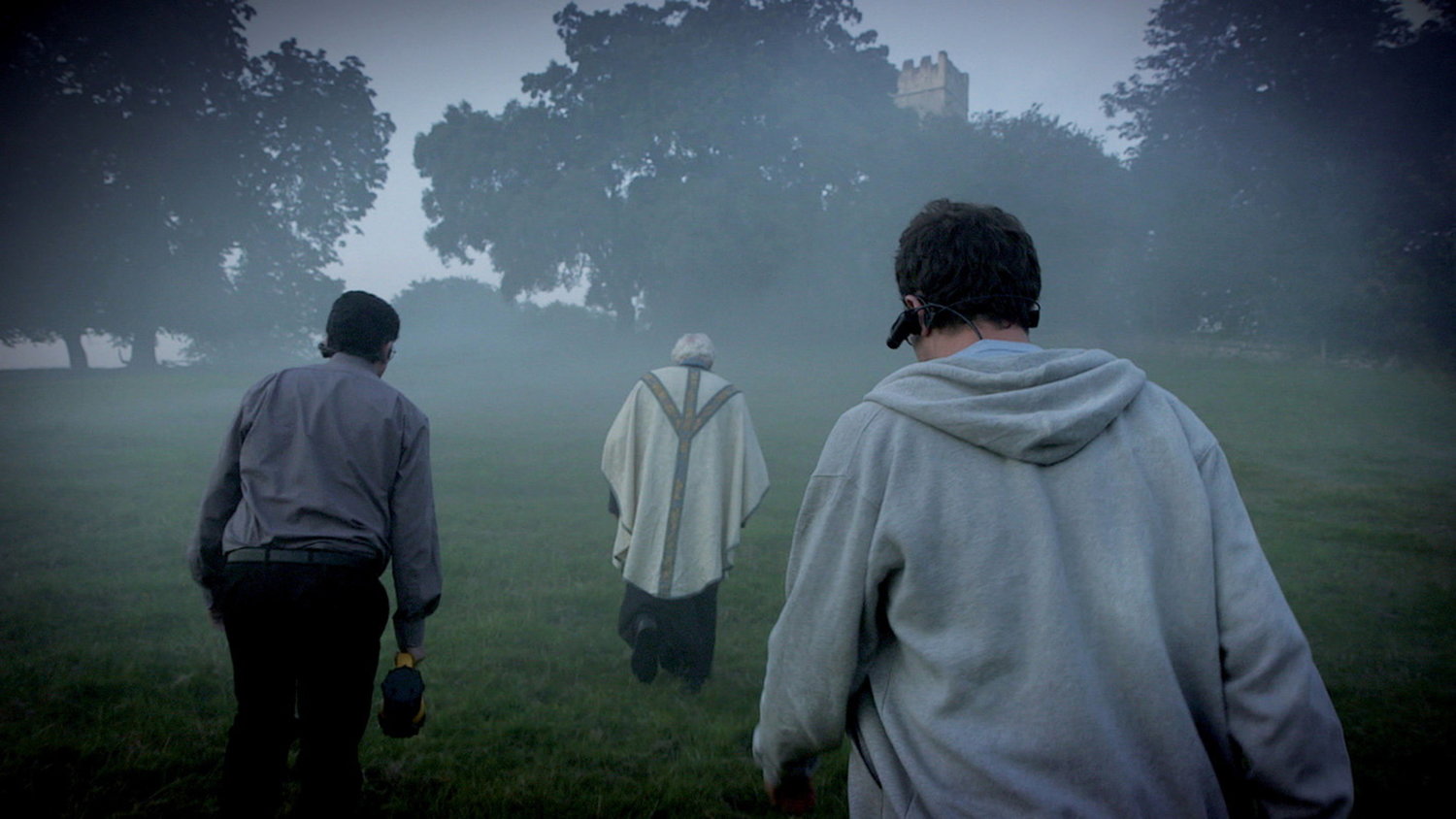
In summary, “The Borderlands” is a triumph of atmospheric horror, a film that understands the power of suggestion and the terror of the unseen. It’s a meticulously crafted experience that earns its scares through a slow, relentless build-up of tension. For those willing to immerse themselves in its eerie world, it offers an enjoyable journey into the heart of darkness, a film that proves true horror lies not in what we see, but in what we fear and that ending… Gulp.
 Roses Have Thoughts
Leave a comment