
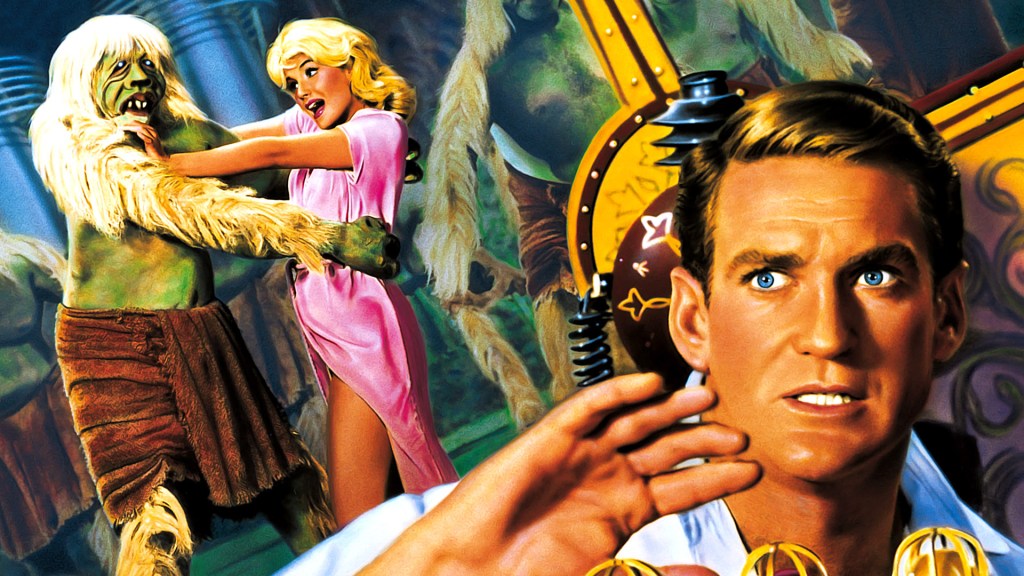
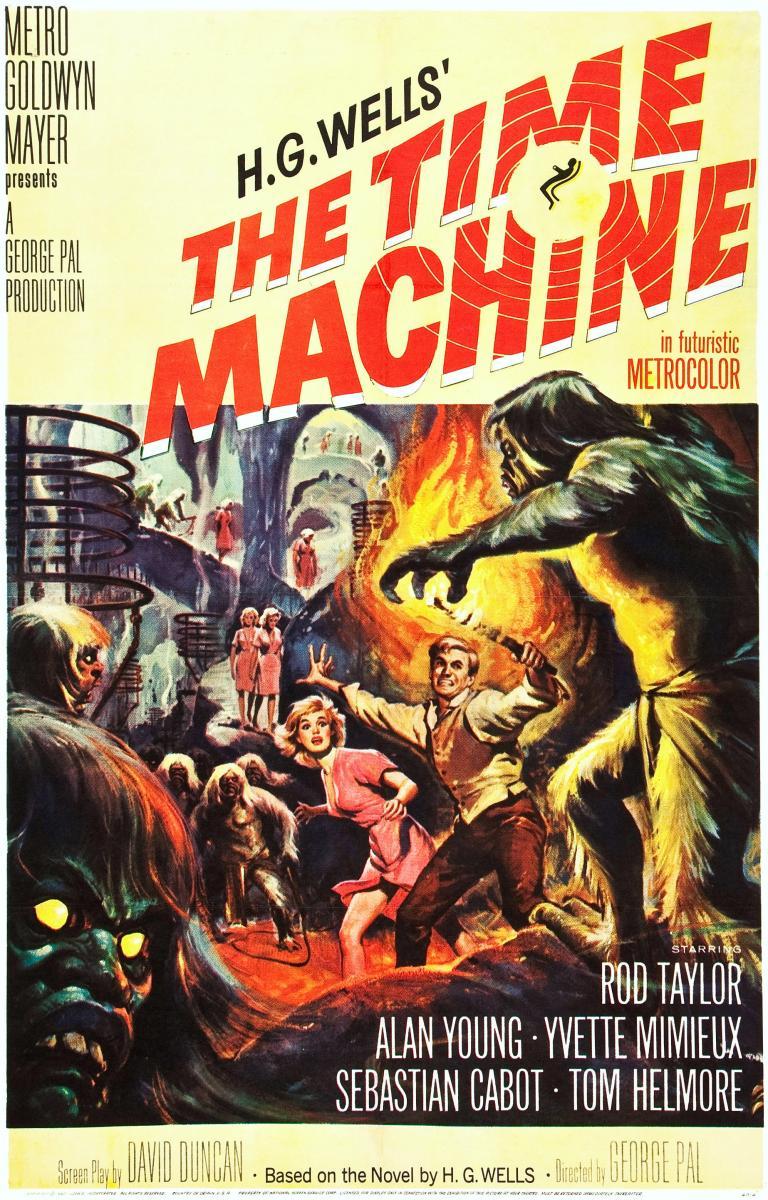
Synopsis- George, a scientist, invents a time machine and uses it to explore the distant future. However, as he travels forward into time, he gets taken aback after discovering some shocking aspects of society.
Director- George Pal
Cast- Rod Taylor, Yvette Mimieux, Alan Young
Genre- Science Fiction | Adventure
Released- 1960
The Time Machine, directed by George Pal, is a captivating cinematic adaptation of H.G. Wells’ classic novel. While it doesn’t fully achieve the profound depth of its source material, the film offers a visually compelling exploration of time travel that captures the imagination. As a piece of mid-century science fiction, it holds a particular charm, though not without some notable flaws.
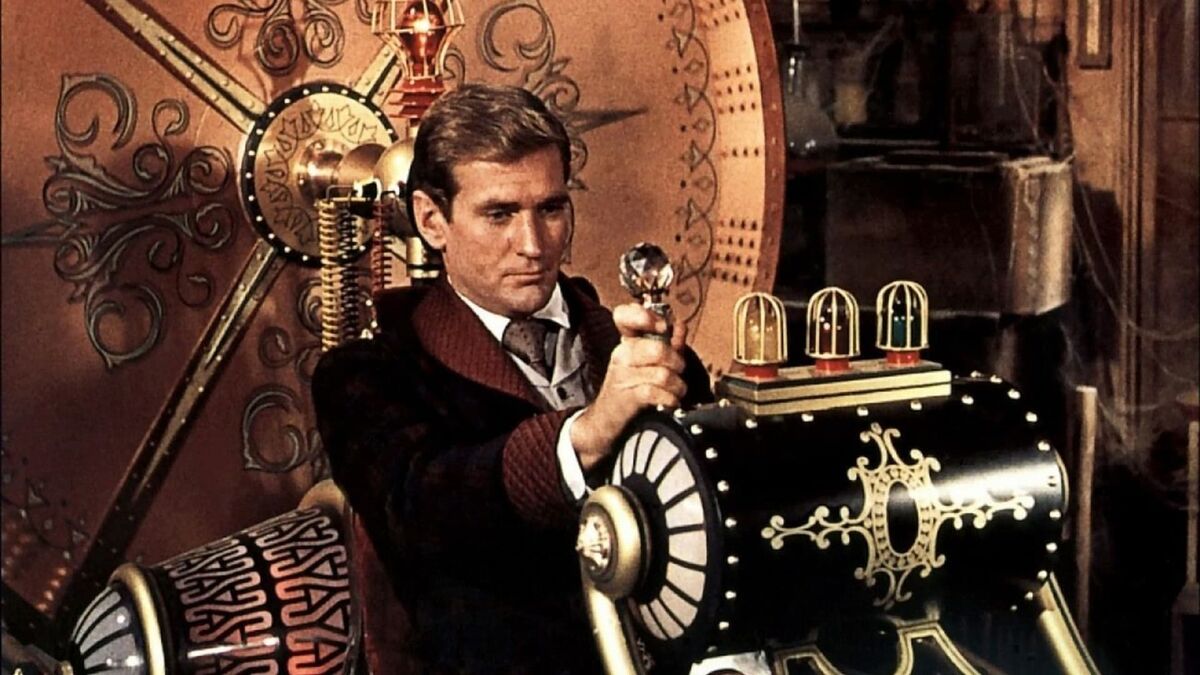
The film stars Rod Taylor as the Time Traveller, a Victorian scientist who builds a machine capable of traversing the fourth dimension. Taylor’s portrayal is both charismatic and earnest, embodying the blend of curiosity and determination that drives his character. However, the script doesn’t fully flesh out his motivations, leaving the audience wanting more in terms of character development.
The film’s opening is strong, with a richly detailed period setting that immerses viewers in the turn-of-the-century atmosphere. The initial scenes, which focus on the Time Traveller’s conversations with his sceptical peers, effectively build tension and intrigue. The slow reveal of the time machine itself is handled with a sense of wonder and awe, showcasing Pal’s talent for creating spectacle.

As the Time Traveller embarks on his journey, the film’s special effects, though dated by today’s standards, were groundbreaking for their time. The transition from the Victorian era to the far-flung future is beautifully depicted through clever use of stop-motion photography and imaginative set design. The scenes of rapidly changing landscapes and evolving civilizations are visually striking, evoking a sense of both wonder and melancholy as the world transforms before our eyes.
However, once the protagonist reaches the distant future, the narrative begins to falter. The depiction of the Eloi, a passive and childlike race, lacks depth, and their interactions with the Time Traveller feel stilted. The film’s portrayal of the Morlocks, the subterranean creatures that prey on the Eloi, is more successful, injecting a sense of horror and urgency into the story. Yet, the simplistic characterization of both races undermines the film’s exploration of the themes of evolution and social decay, which are more nuanced in Wells’ original novel.

The film’s pacing also suffers in its second half, with extended sequences that feel repetitive and fail to sustain the initial momentum. The climax, while visually exciting, resolves the central conflict too neatly, leaving little room for reflection on the broader implications of time travel.
In conclusion, “The Time Machine” is a visually inventive and entertaining film that offers a nostalgic look at the possibilities of science fiction. However, its lack of depth and uneven pacing prevent it from achieving greatness. While it remains a classic of its genre, the film ultimately serves as a reminder of the challenges inherent in adapting complex literary works to the screen.

 Roses Have Thoughts
Leave a comment