

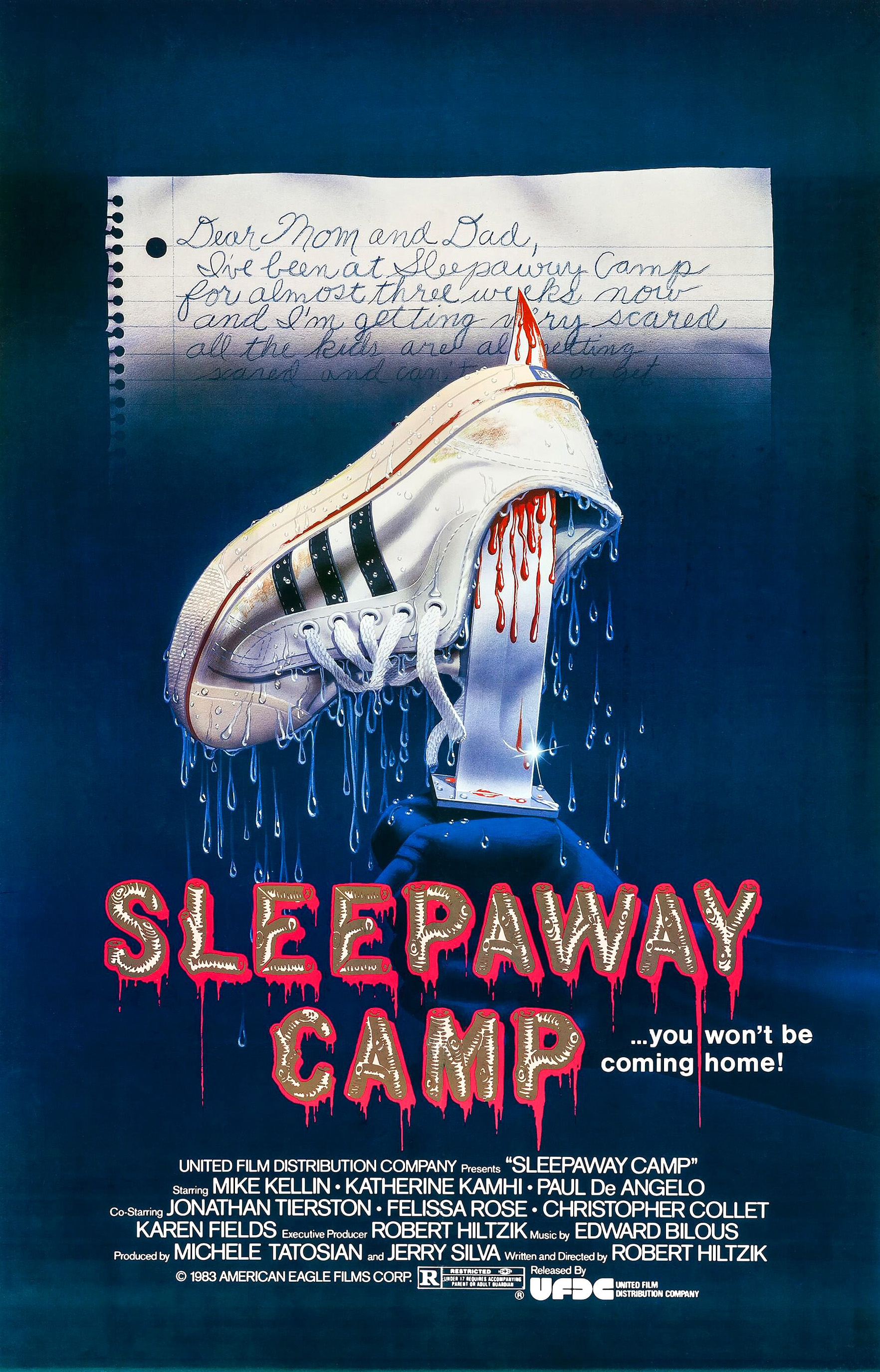
Synopsis- Bunks and the showers are a mad stabber’s beat at a summer camp strictly for teens.
Director- Robert Hiltzik
Cast- Felissa Rose, Jonathan Tiersten, Karen Fields
Released- 1983
Sleepaway Camp, directed by Robert Hiltzik, is an audacious entry into the 80s slasher craze, one that sets itself apart with its bizarre tone, unsettling themes, and one of the most memorable twists in horror cinema. Released in 1983, the film feels at once typical of the era’s formula—murderous stalkers preying on teenagers at summer camp—and a subversive piece of genre filmmaking that dares to venture into uncomfortable, even taboo, territory. It’s a film that earns its cult status, deserving a solid 4 out of 5 stars for its sheer audacity, disarming weirdness, and its genuinely shocking final twist.

Following shy, withdrawn Angela (Felissa Rose) and her cousin Ricky (Jonathan Tiersten) as they head to Camp Arawak, a seemingly idyllic summer retreat that soon becomes a killing ground. It’s your standard setup, populated by the usual stereotypes of camp counsellors and rowdy teens. Yet “Sleepaway Camp” is far from a typical slasher. From its early scenes, the film establishes a tone that wavers between kitschy melodrama and unsettling dread, playing its hand with a kind of awkward, low-budget charm that only deepens its impact as the story unfolds.
Felissa Rose’s performance as Angela is pivotal. She delivers an eerily subdued portrayal of a girl who never quite fits into her surroundings. Rose’s wide-eyed silence and timid posture make Angela an enigmatic presence throughout, building a sense of unease. There’s something off about her, something that sets her apart from the other campers beyond her shy demeanour. As the murders mount, and the camp’s darker undercurrents bubble to the surface, the film’s slow-burn tension keeps us guessing about who the killer might be.

What distinguishes “Sleepaway Camp” from its slasher peers is not just its kill scenes (which are gruesome and inventive in their own right) but the palpable weirdness that infuses the whole film. The camp setting is a familiar one for horror, but here it feels off-kilter, almost grotesque. From the creepy camp cook to the strange, overbearing presence of Angela’s aunt in the film’s opening flashback, there’s a feeling that something is fundamentally wrong in this world, far beyond the typical summer camp hijinks.
The film’s treatment of gender, sexuality, and identity, though dated and at times problematic by today’s standards, is what makes it uniquely disconcerting. It taps into anxieties about adolescence, the body, and social roles in ways that other slasher films of the era never dared to touch. The infamous final reveal, which I won’t spoil for those who haven’t seen it, is a jaw-dropping moment—both shocking and deeply disturbing. It’s a twist that feels both out of left field and somehow inevitable, leaving an indelible mark on the viewer.

At times, “Sleepaway Camp” can feel clunky, with uneven acting and an oddball script that teeters between the absurd and the grotesque. But it’s these very qualities that make it such a fascinating watch. The film revels in its campiness (no pun intended), while simultaneously delivering genuine tension and psychological horror. It’s an odd mix that works because Hiltzik refuses to shy away from the uncomfortable or the bizarre, right up until its startling conclusion.
In the world of 80s slashers, “Sleepaway Camp” stands out not just for its shocks but for its willingness to go to places most horror films of the time wouldn’t. It’s a film that defies easy categorization—equal parts schlocky fun and deeply unsettling horror. Its rawness and refusal to conform make it a film that continues to provoke strong reactions, long after the credits roll.
 Roses Have Thoughts
Leave a comment