
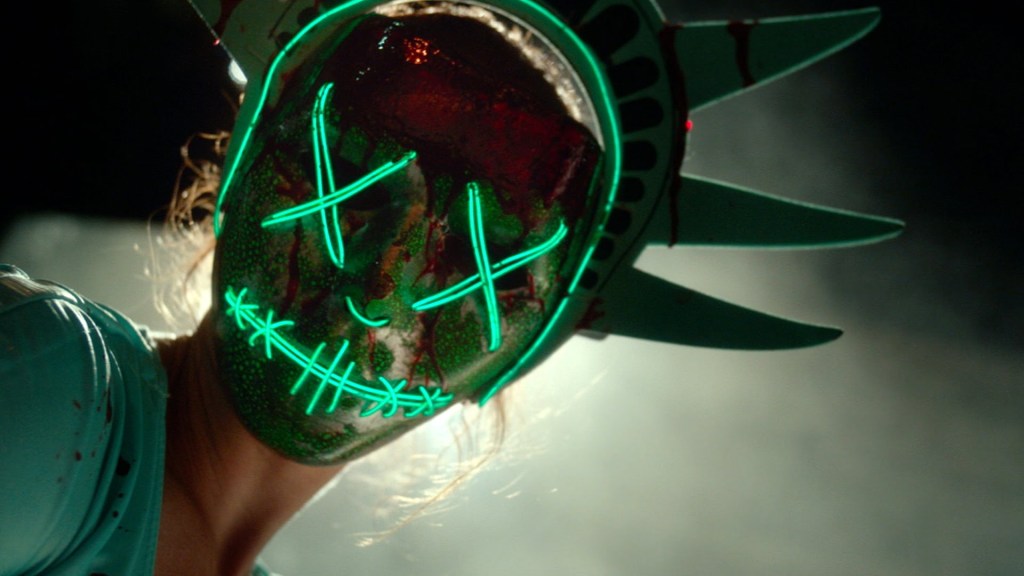

Synopsis- Police Sergeant Leo Barnes is tasked with protecting the presidential candidate Charlie Roan after she is targeted for death on Purge night.
Director- James DeMonaco
Cast- Frank Grillo, Elizabeth Mitchell, Betty Gabriel
Released- 2016
In The Purge: Election Year (2016), director James DeMonaco continues his dystopian saga with a sharper political edge, pushing the familiar concept of a 12-hour lawless night into the unsettling arena of an election-year thriller. While it’s undeniably timely and manages to escalate the tension and stakes for the series, the film also falls victim to its own ambitions, occasionally sacrificing depth for blunt-force commentary.
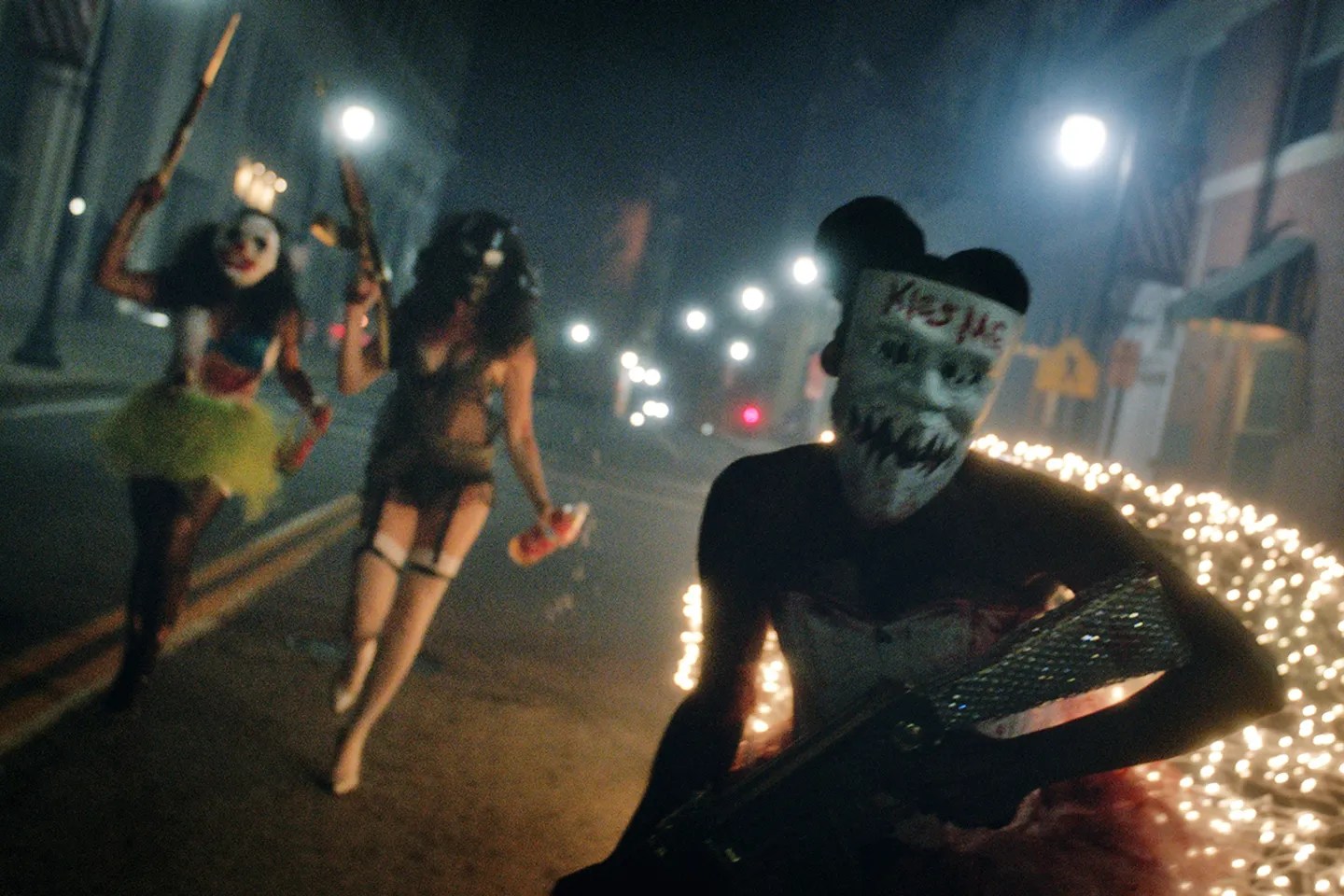
The story follows Senator Charlie Roan (Elizabeth Mitchell), a presidential candidate running on an anti-Purge platform after witnessing her family’s murder in a Purge years earlier. As Election Day nears, the sinister “New Founding Fathers of America” see Roan as a threat to their violent institution and place her in the crosshairs, hoping her demise will silence the anti-Purge movement. Leo Barnes (Frank Grillo), a character reprised from The Purge: Anarchy, returns as Roan’s loyal protector, navigating the treacherous night to shield her from ruthless mercenaries.
DeMonaco’s direction, though not subtle, is effective in stirring up a palpable sense of dread and urgency. The portrayal of Washington, D.C., during the annual Purge, is as bleak as it is chaotic, with DeMonaco presenting twisted visuals of American iconography that underscore the themes of patriotism gone awry. While previous instalments focused on the survival of individuals, Election Year ventures into a political arena, painting a broader picture of a society’s descent into barbarism under the guise of national stability.

Mitchell brings a grounded sincerity to Senator Roan, who stands as a beacon of hope amidst the horrors unfolding around her. Grillo’s hardened, gritty portrayal of Barnes serves as the ideal counterbalance to Roan’s idealism, adding a touch of reluctant heroism to the chaos. The film’s supporting characters, however, are less nuanced, often coming across as caricatures rather than real people caught in the Purge’s horror.
Despite its strengths, The Purge: Election Year falls short in its execution of deeper themes. The social commentary, while timely, is often overplayed, leaving little room for subtlety. DeMonaco’s attempts at addressing class disparity, political corruption, and systemic violence are too on-the-nose, making the narrative feel more like a blunt sermon than a nuanced critique.
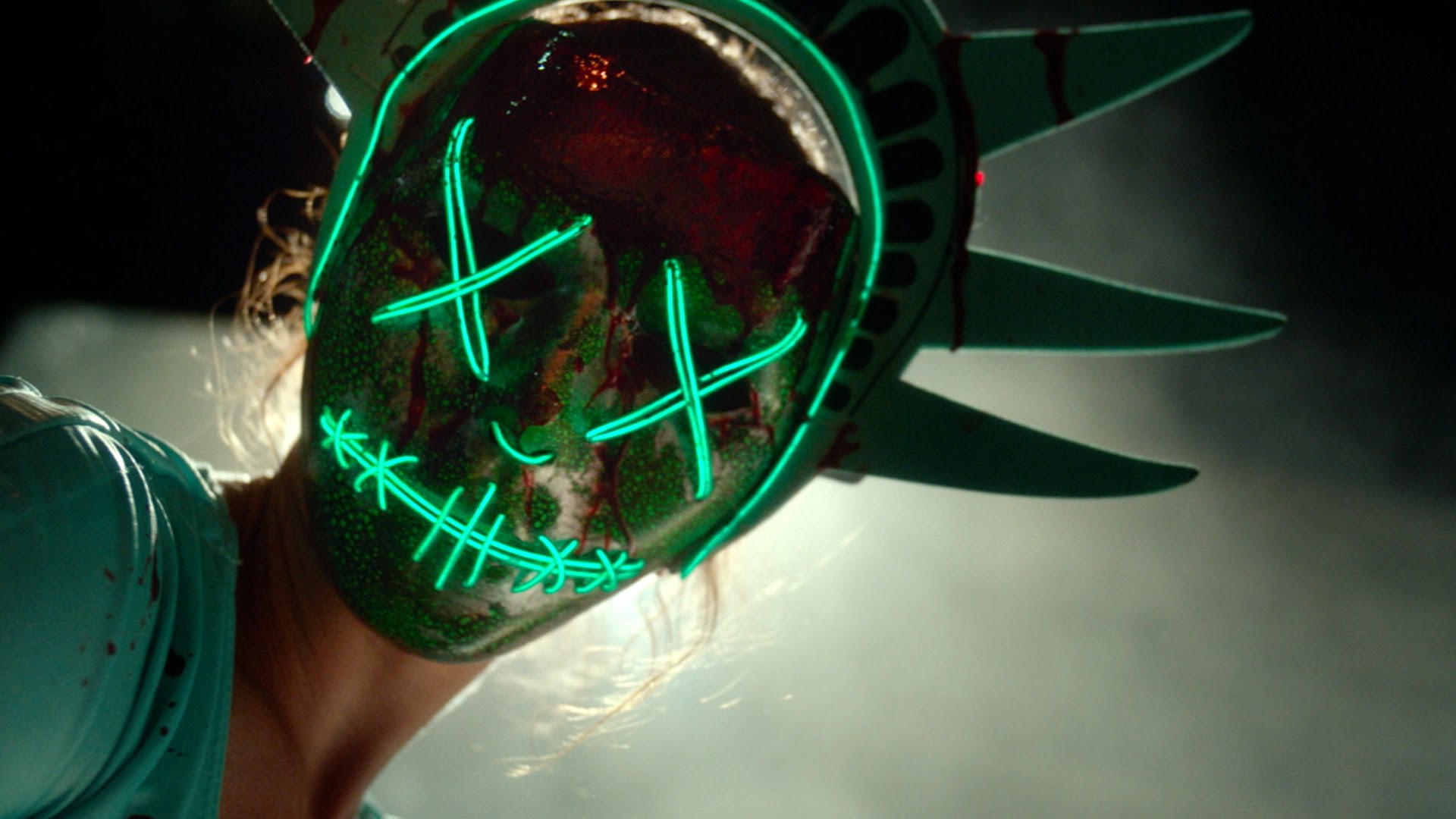
Nevertheless, The Purge: Election Year remains an intriguing, if heavy-handed, instalment. It may not provide a sophisticated examination of its themes, but its visceral portrayal of a society unravelling under its own policies makes for a thrilling if unsettling watch.
 Roses Have Thoughts
Leave a comment