
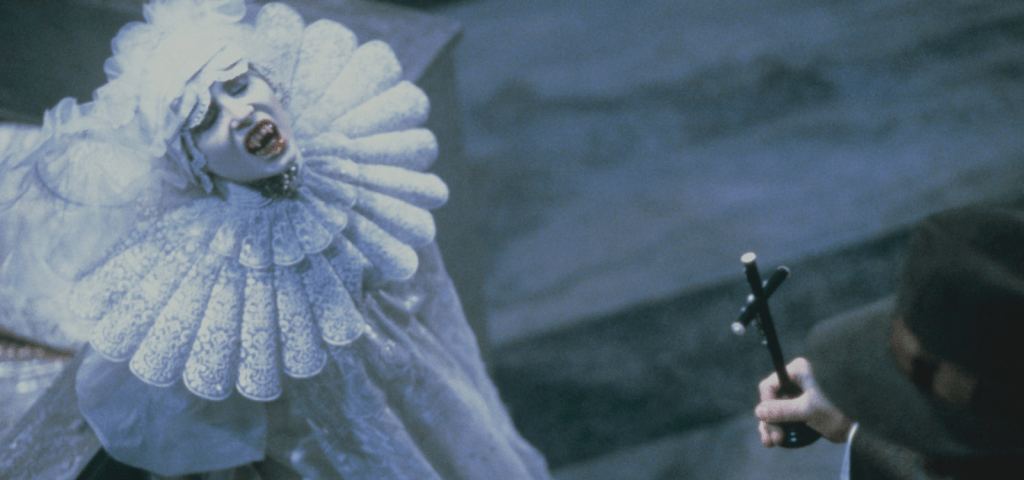
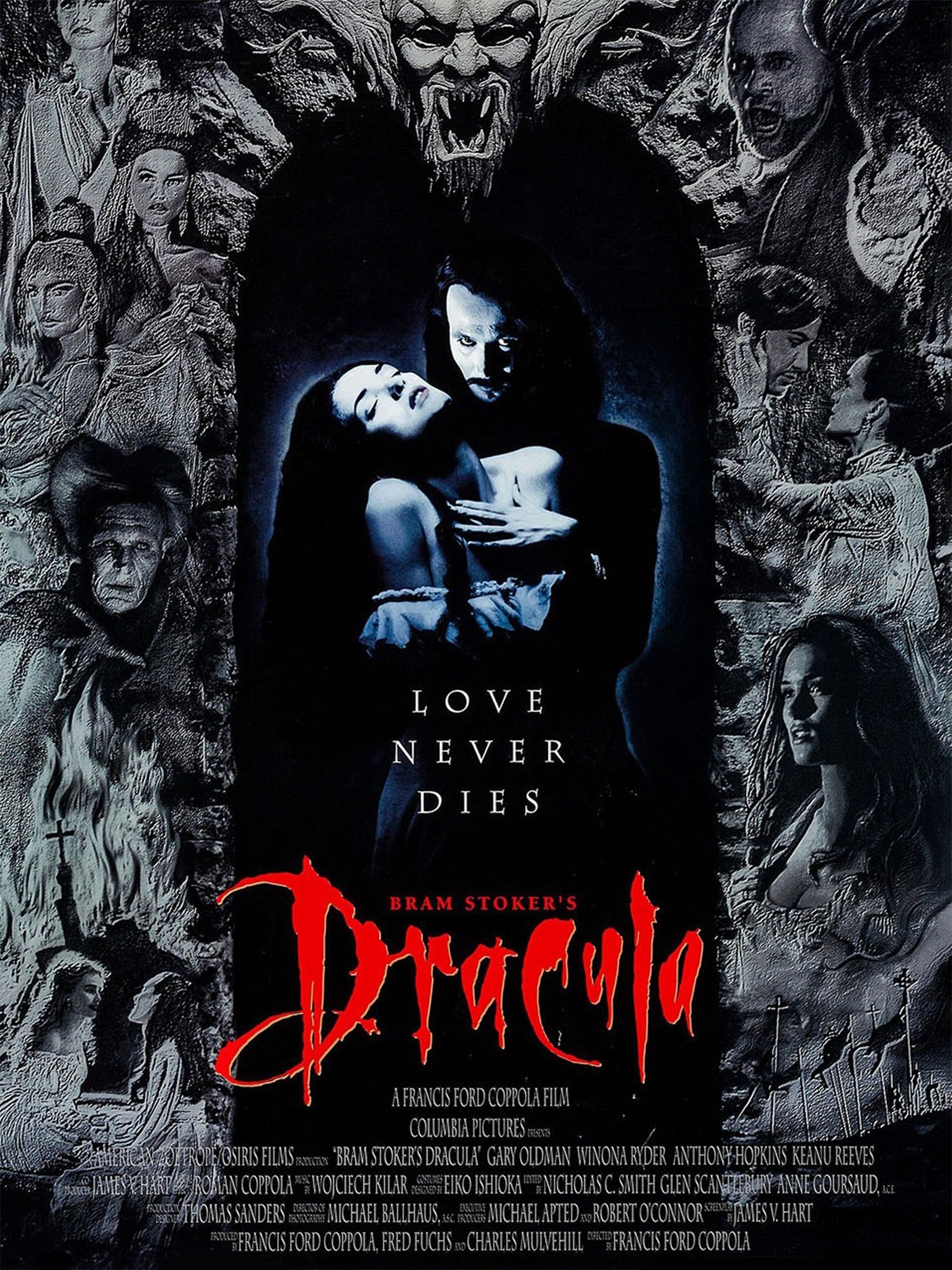
Synopsis- When Elisabeta commits suicide, an enraged Vlad Dracula swears to avenge her death. Things take a turn when he meets Mina and takes her to be the reincarnation of Elisabeta.
Director- Francis Ford Coppola
Cast- Gary Oldman, Winona Ryder, Keanu Reeves
Released- 1992
Francis Ford Coppola’s Bram Stoker’s Dracula (1992) is a rare cinematic creation, a lavish, richly atmospheric adaptation that takes on the Dracula myth with both reverence and audacity. Coppola’s approach is bold, weaving romance, horror, and visual opulence into a nearly operatic rendition of Stoker’s novel. This is no ordinary vampire film; it celebrates excess, a baroque fantasy where love and horror entwine with every frame.
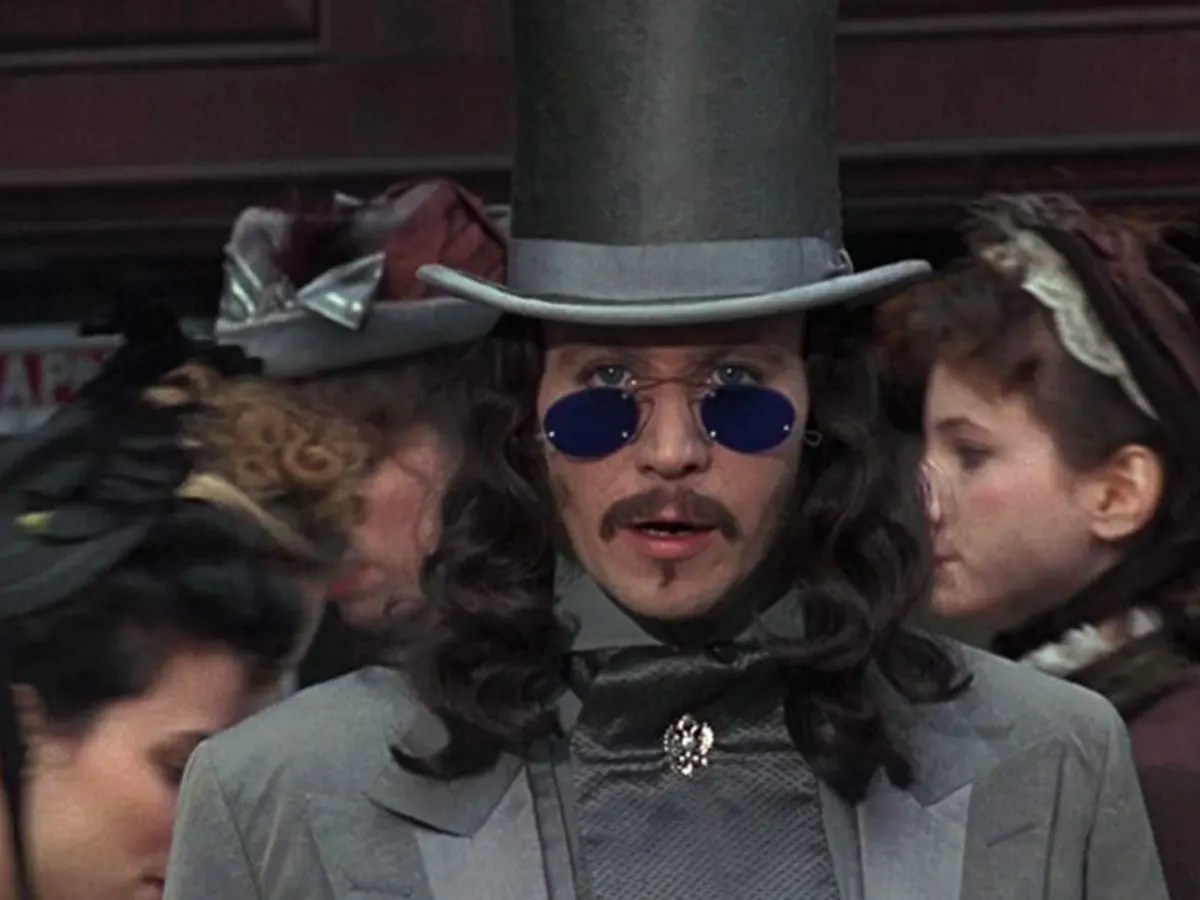
The film opens with the origins of Dracula (Gary Oldman) in a historical, bloody prologue that sets the stage for his tragic immortality. Oldman’s Count is by turns monstrous and heartbreakingly human, a layered portrayal that infuses the character with a seductive depth not often seen. He is not simply a predator but a tortured soul seeking redemption through love, hauntingly drawn to Mina (Winona Ryder) as the reincarnation of his lost love, Elisabeta. Oldman’s performance is mesmerizing, shifting effortlessly from monstrous to vulnerable, and his chemistry with Ryder’s Mina is electric, driving the emotional heart of the film.
Coppola’s direction here is as daring as it is meticulous, making deliberate stylistic choices that bring an old-world gothic aesthetic into bold, modern life. Dracula is filled with eye-popping visuals, vivid reds, dramatic shadows, and breathtaking costuming by Eiko Ishioka, who dresses each character in a style as distinct as their personality. The set design, echoing silent films and classical paintings, brings an immersive, almost theatrical quality to each scene. Coppola foregoes modern CGI in favour of in-camera effects and old-school film tricks, which lends the film a timeless, almost surreal quality.
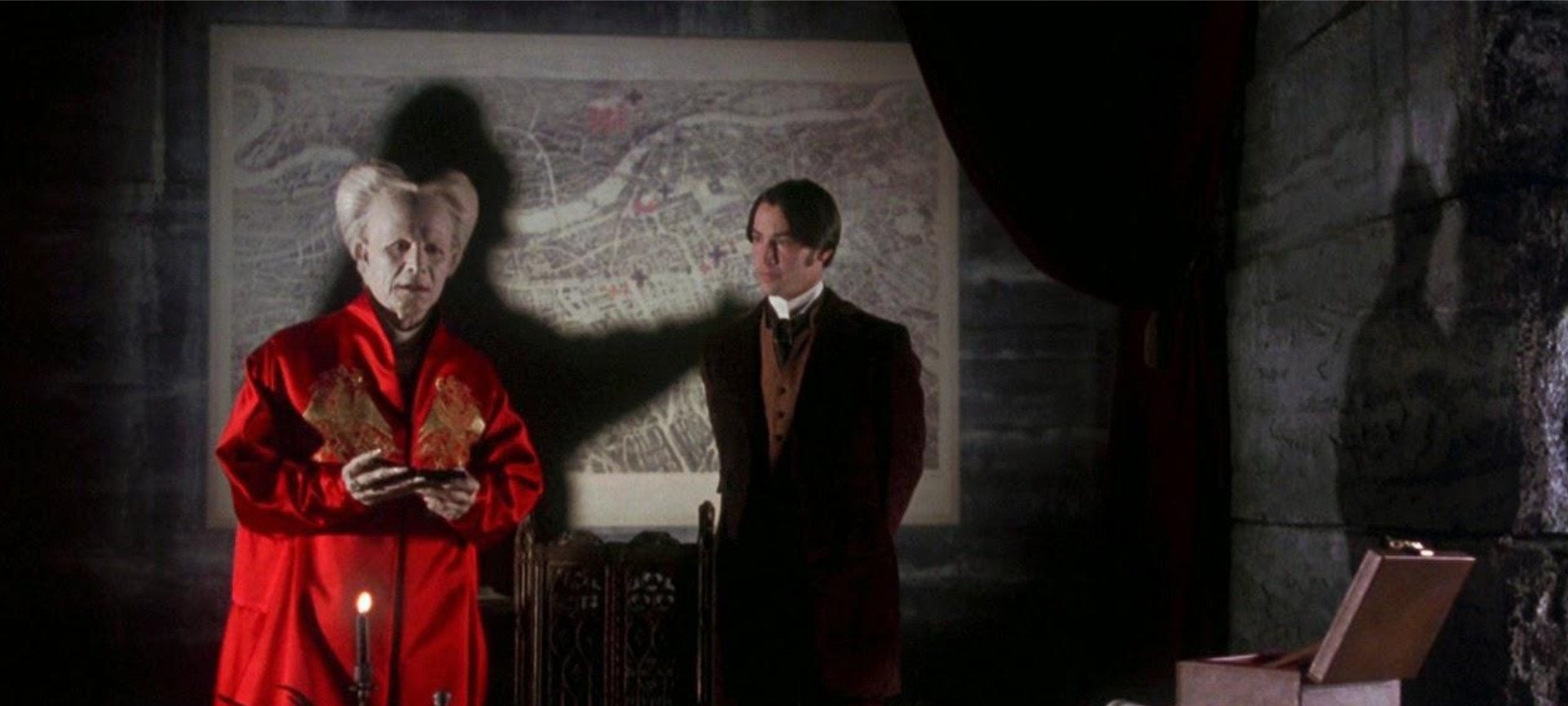
The supporting cast, including Anthony Hopkins as Van Helsing and Keanu Reeves as the earnest Jonathan Harker, rounds out the film’s ensemble. Hopkins adds a touch of dry wit and eccentricity to his vampire-hunting doctor, while Reeves’s earnest, if occasionally stiff, performance highlights the Victorian propriety against which Dracula’s forbidden passions play.
The film’s pacing and tonal shifts may jar some viewers, but Bram Stoker’s Dracula thrives in its contrasts, balancing sensual romance and brutal horror. Coppola’s adaptation is not just a vampire film; it’s an exploration of love, obsession, and damnation—one that transforms horror into high art. Bram Stoker’s Dracula is a masterpiece of gothic cinema, a bold adaptation that celebrates the monstrous and the beautiful with equal fervour. A feast for the senses, it’s an unforgettable cinematic experience.

 Roses Have Thoughts
Leave a comment