


Synopsis- A daring filmmaker leads an expedition to Skull Island, capturing a colossal ape, King Kong. Brought to New York, Kong’s tragic battle against captivity unfolds in a timeless story of beauty and the beast.
Directors- Merian C. Cooper and Ernest B. Schoedsack
Cast- Robert Armstrong, Fay Wray, Bruce Cabot
Released – 1933
Few films have left as enduring a legacy as Merian C. Cooper and Ernest B. Schoedsack’s King Kong. This pioneering classic is a dazzling blend of adventure, romance, and tragedy, underscored by ground-breaking visual effects that forever changed the cinematic landscape. Despite the decades that have passed, King Kong retains its ability to thrill and move, standing tall as a testament to the power of storytelling and spectacle.
The film begins with Carl Denham (Robert Armstrong), an intrepid filmmaker, assembling a crew to shoot his next picture in the uncharted waters of Skull Island. Along for the journey is Ann Darrow (Fay Wray), a struggling actress plucked from obscurity to be the film’s leading lady. When they arrive, they discover a primordial world ruled by a colossal ape, King Kong, who becomes captivated by Ann’s beauty. What unfolds is a harrowing tale of survival, exploitation, and the poignant consequences of humanity’s hubris.
Fay Wray delivers an iconic performance as Ann Darrow, her screams and vulnerability embodying the terror and wonder of Kong’s world. Robert Armstrong’s Denham is a larger-than-life figure, blending charm with a relentless ambition that drives the narrative forward. The true star, however, is Kong himself.
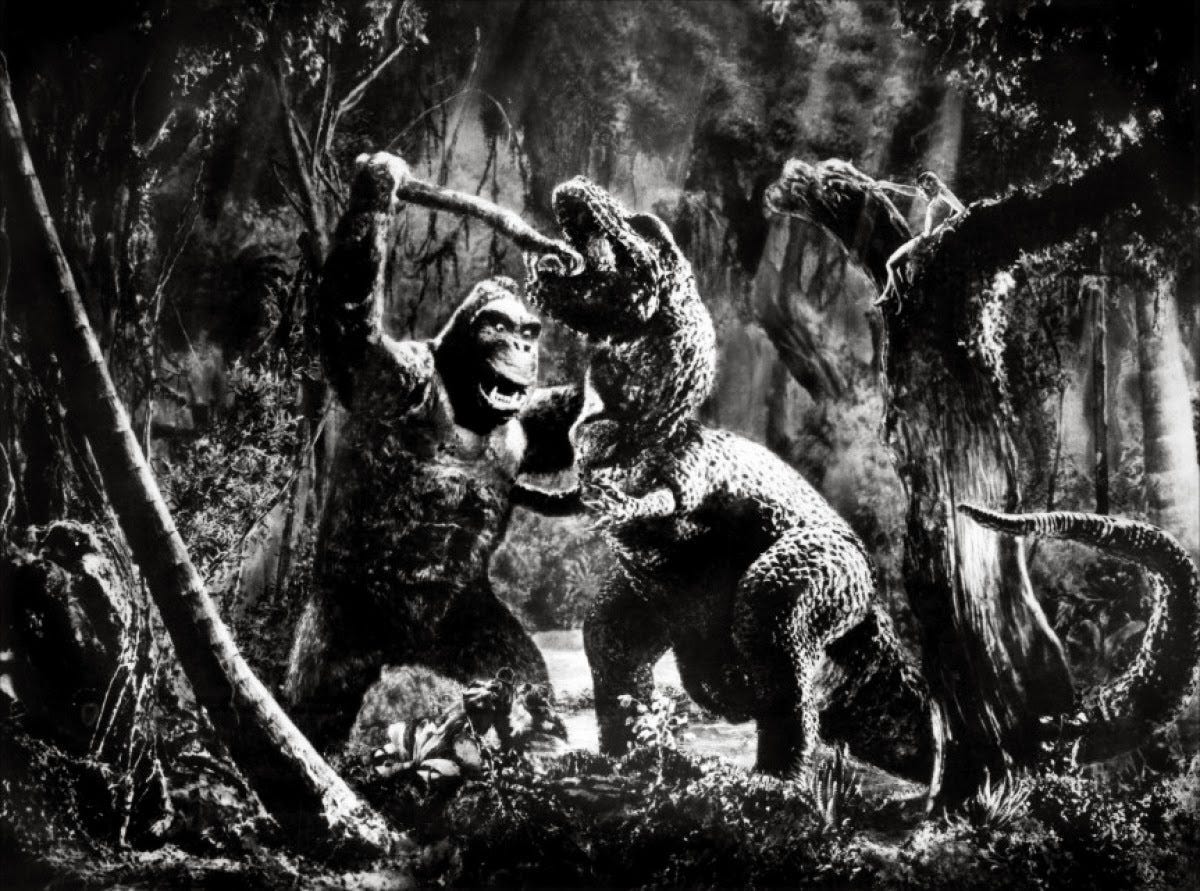
Brought to life through the innovative stop-motion animation of Willis O’Brien, Kong is a marvel of technical artistry. The creature’s expressive movements and soulful eyes evoke both awe and empathy, elevating him far beyond a mere monster. Whether battling dinosaurs on Skull Island or navigating the chaos of New York City, Kong’s tragic arc resonates deeply, making him one of cinema’s most enduring characters.
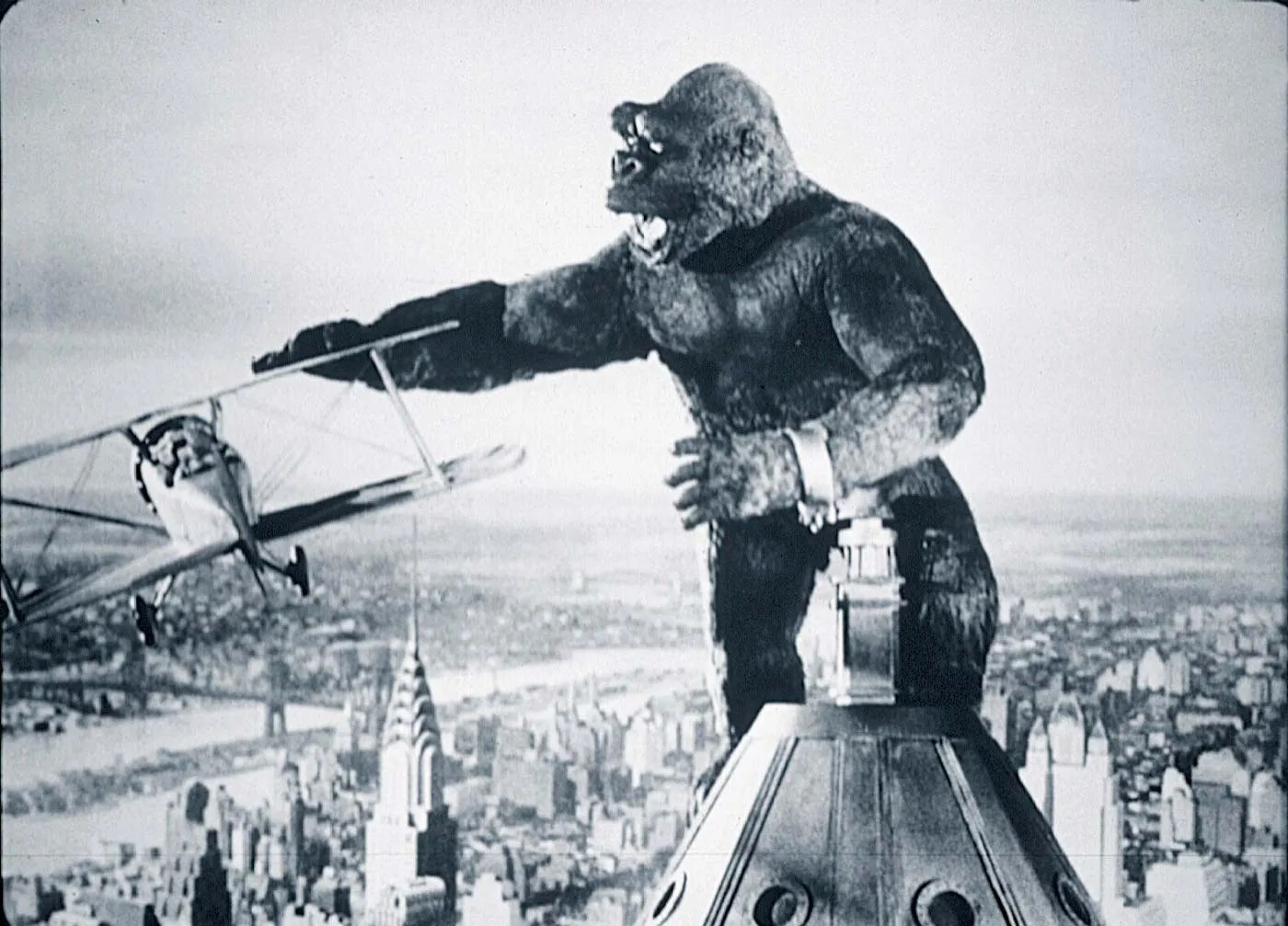
The film’s pacing is relentless, moving from one breathtaking set piece to another, culminating in the unforgettable sequence atop the Empire State Building. Here, Kong’s desperation and defiance are met with humanity’s ruthless pursuit of dominance, creating a climactic moment that is both thrilling and heartbreaking.
Max Steiner’s orchestral score adds a powerful emotional undercurrent, heightening the sense of danger and wonder throughout. The film’s special effects, though understandably dated by modern standards, remain impressive for their ingenuity and ambition, crafting a world that feels both fantastical and tangible.

While King Kong is a towering achievement, it’s not without its flaws. The portrayal of Skull Island’s inhabitants, steeped in colonialist and racial stereotypes, reflects the prejudices of its time, a blemish that cannot be ignored when assessing the film’s legacy.
Nonetheless, King Kong endures as a monumental work of cinema, one that broke new ground in visual storytelling and inspired generations of filmmakers. Its blend of adventure, romance, and tragedy continues to captivate audiences, proving that even a tale as fantastical as this can speak to universal truths about love, loss, and the human condition.
For those seeking the origins of cinematic spectacle, King Kong is an unmissable masterpiece—a film that climbed to the heights of greatness and remains firmly planted there.

 Roses Have Thoughts
Leave a comment