
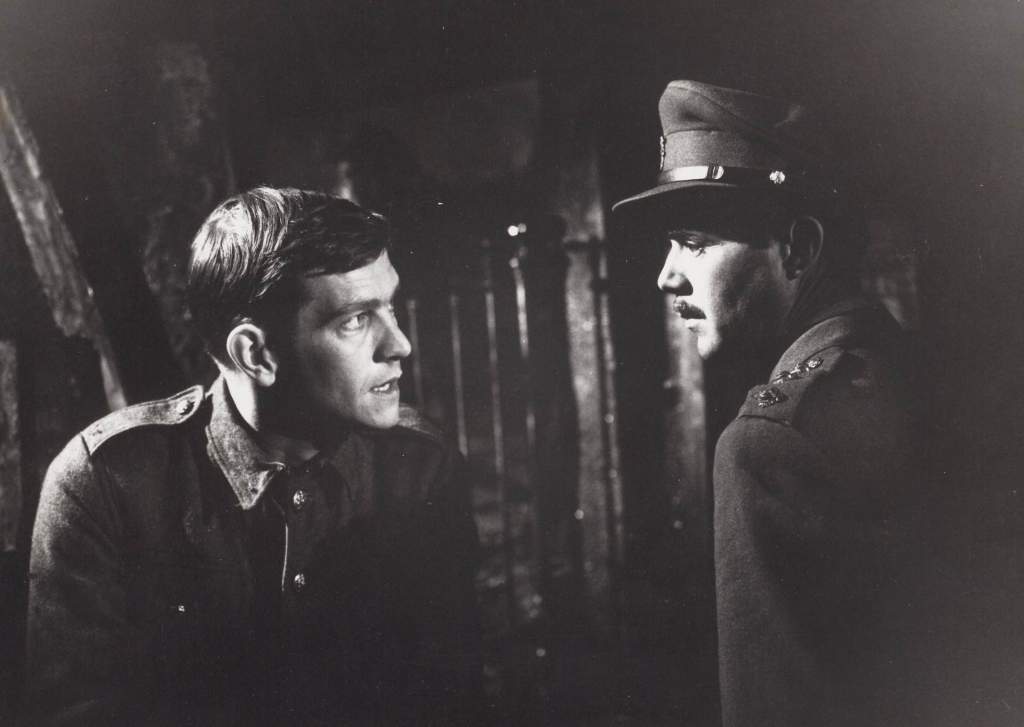

Synopsis- During World War I, a British army officer defends a shell-shocked soldier accused of desertion, uncovering the harrowing human cost of war and the rigid cruelty of military justice.
Director- Joseph Losey
Cast- Dirk Bogarde, Tom Courtenay, Barry Forser
Released- 1964
Joseph Losey’s King and Country is a grim, thought-provoking drama that strips away the romanticism often associated with wartime heroics. This piercing look at duty, justice, and the psychological toll of war combines intimate storytelling with a bleak visual style, offering a poignant critique of the systems that perpetuate conflict.
The story follows Captain Hargreaves (Dirk Bogarde), a British officer assigned to defend Private Hamp (Tom Courtenay), a young soldier charged with desertion during World War I. Hamp, visibly broken and bewildered, is no hardened criminal but rather a casualty of war’s relentless brutality. Hargreaves, initially indifferent, grows increasingly empathetic as he learns about Hamp’s traumatic experiences, only to face the unyielding machinery of military discipline.
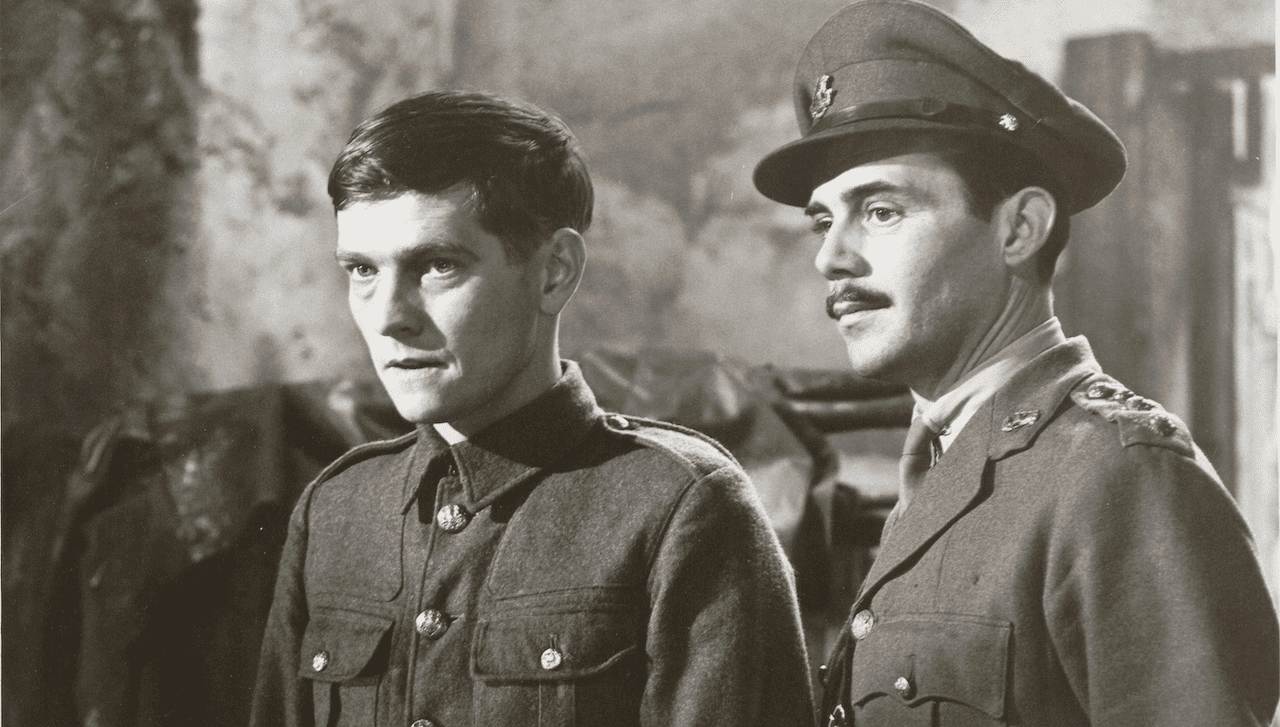
Dirk Bogarde delivers a measured and nuanced performance as Hargreaves, a man caught between his moral conscience and the rigid expectations of duty. Bogarde imbues his character with quiet strength and subtle vulnerability, capturing the internal conflict of a man grappling with the absurdity of war. Tom Courtenay’s portrayal of Hamp is equally compelling, bringing raw emotion and tragic innocence to the role. Courtenay’s Hamp is a symbol of countless soldiers whose humanity is crushed under the weight of war.
Losey’s direction is stark and unflinching, mirroring the desolation of the battlefield with the cold, claustrophobic interiors of the courtroom. The film’s black-and-white cinematography, handled masterfully by Denys Coop, emphasizes the bleakness of the proceedings, with shadowy compositions that reflect the moral ambiguity at the story’s heart.
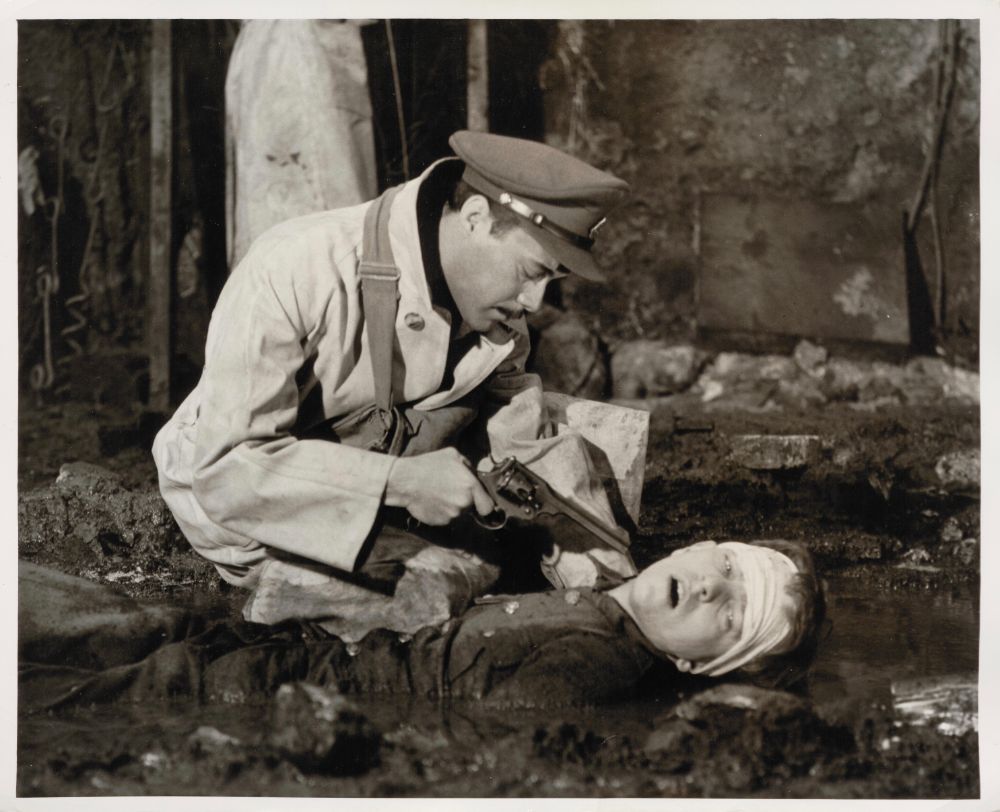
The screenplay, adapted from John Wilson’s play Hamp, retains the intimacy of its stage origins, focusing on character dynamics and dialogue rather than action. This restraint works in the film’s favour, allowing the themes of loyalty, fear, and institutional cruelty to resonate deeply.
However, King and Country is not without its flaws. Its deliberate pacing and sombre tone may feel oppressive to some viewers, and the film’s allegorical nature occasionally risks overshadowing the human drama. Yet, these issues pale in comparison to its strengths as a powerful anti-war statement.
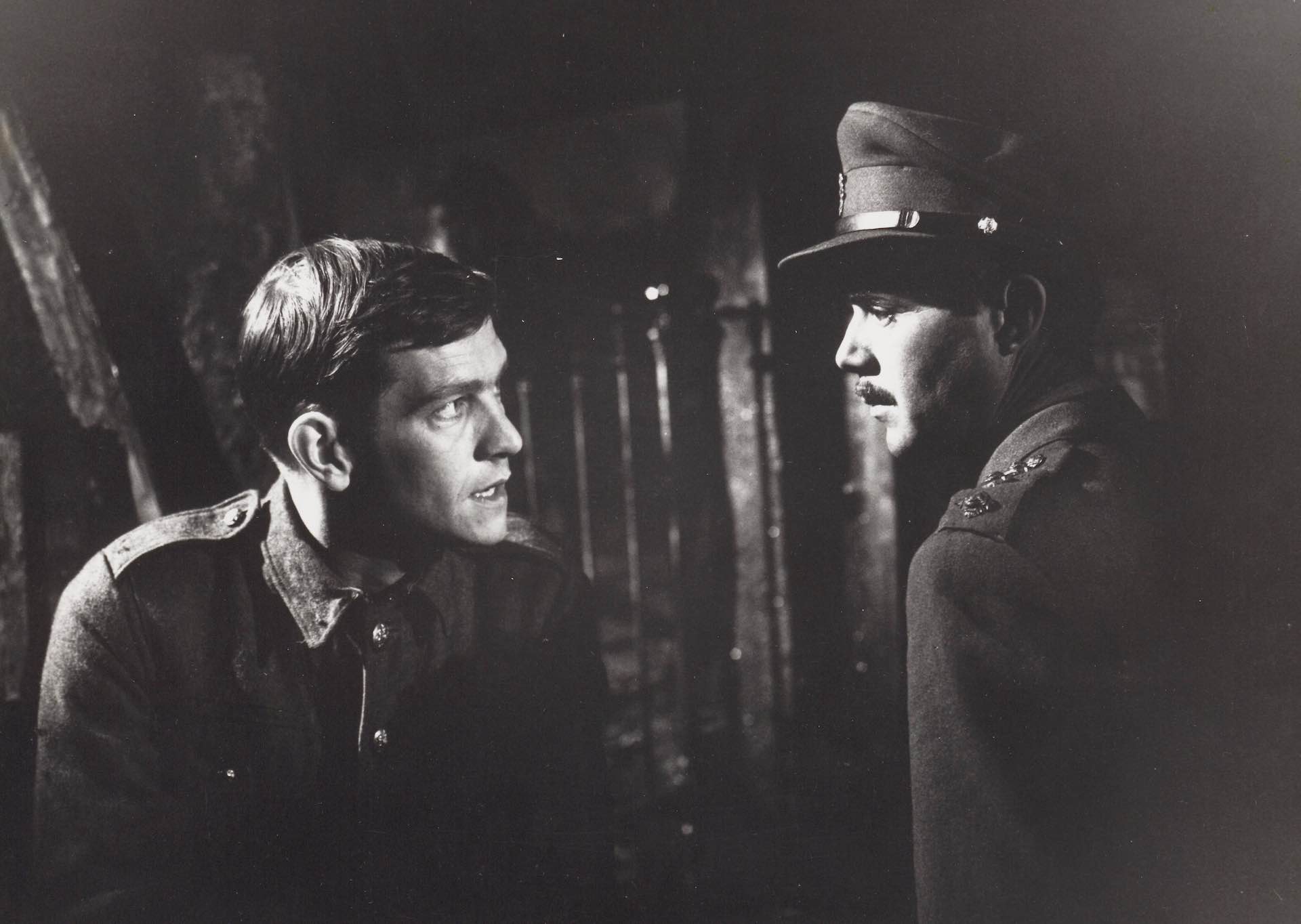
The film’s final act is particularly devastating, delivering a poignant indictment of the military’s dehumanizing bureaucracy. Hamp’s fate feels inevitable, a grim reminder of how individuals are often sacrificed to uphold faceless systems. The emotional weight of these scenes lingers long after the credits roll, underscoring the film’s haunting message.
King and Country is not an easy film to watch, but it is an essential one. With its riveting performances, stark visuals, and unflinching exploration of war’s human cost, it stands as a powerful testament to the futility of conflict. Joseph Losey crafts a harrowing portrait of a system that values obedience over humanity, making King and Country a compelling if sober, cinematic experience.
 Roses Have Thoughts
Leave a comment