
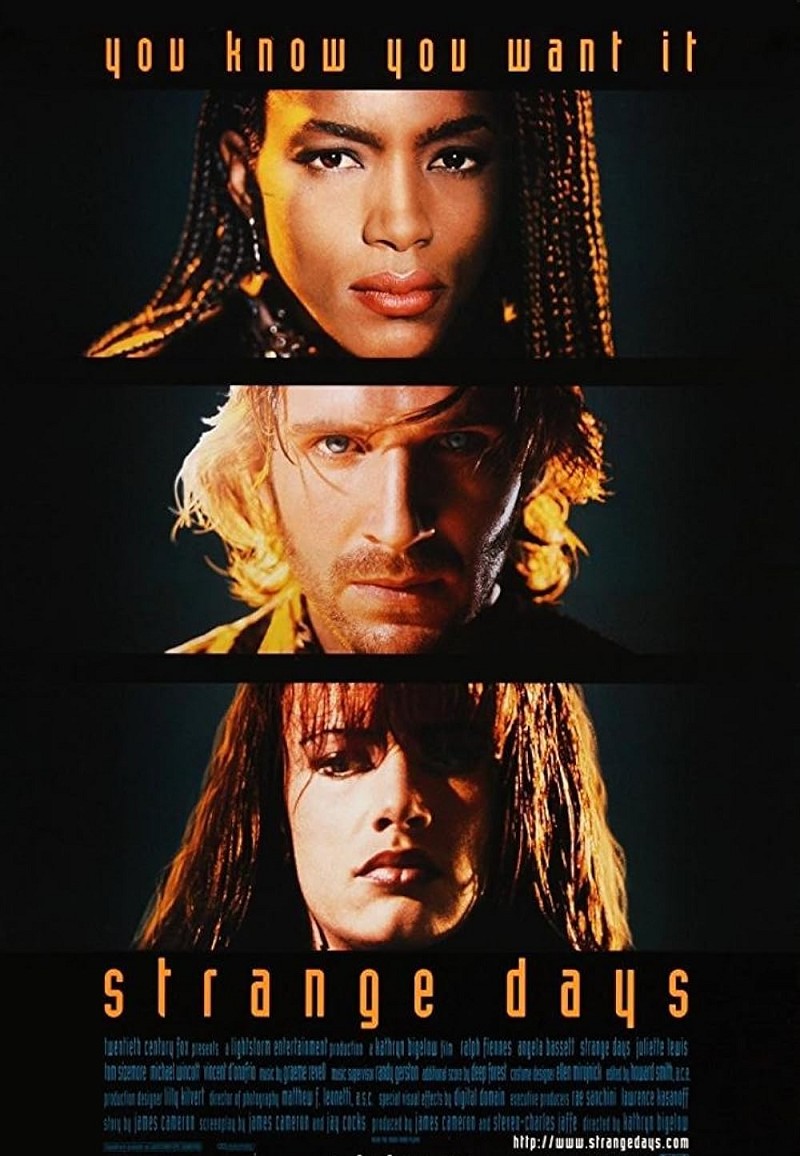
Synopsis- In a dystopian Los Angeles, ex-cop Lenny Nero sells illegal virtual reality recordings. When he uncovers a violent conspiracy, he must navigate a world of corruption, memory, and redemption.
Director- Kathryn Bigelow
Cast- Ralph Fiennes, Angela Bassett, Juliette Lewis
Genre- Science Fiction | Thriller
Released- 1995
Kathryn Bigelow’s Strange Days (1995) is a bold, electrifying thriller that fuses science fiction, noir, and social commentary into a singularly gripping cinematic experience. Co-written by James Cameron, the film combines Bigelow’s muscular direction with an unsettlingly prescient vision of the near future, creating a work that feels both of its time and eerily relevant decades later.

Directed by Kathryn Bigelow
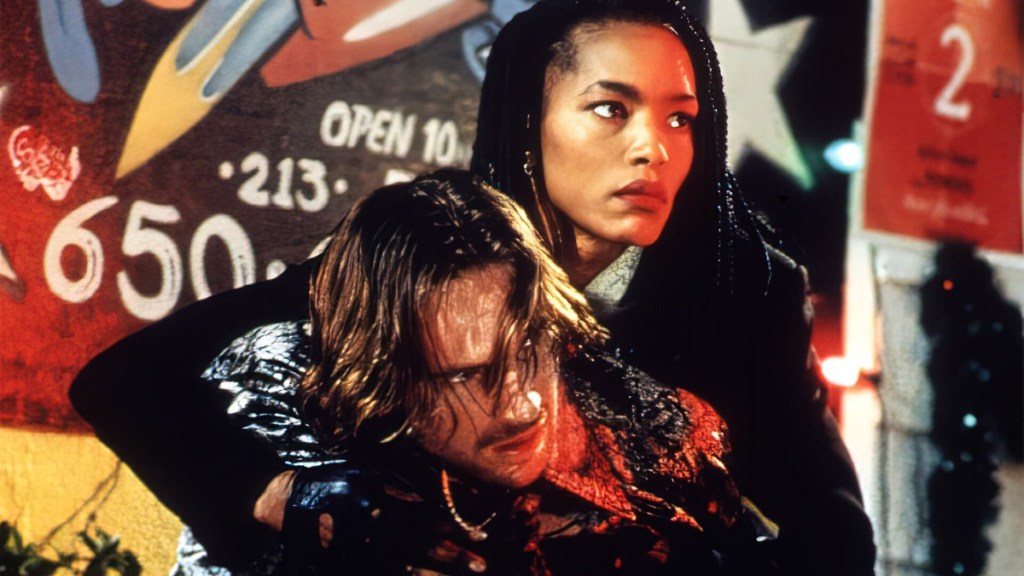
The story is set in the waning hours of 1999 when society teeters on the edge of chaos. Ralph Fiennes stars as Lenny Nero, a down-on-his-luck ex-cop turned black-market dealer of “SQUID” recordings—devices that let users relive others’ experiences, emotions, and memories. Lenny’s life of indulgence and self-destruction takes a sharp turn when he stumbles upon a recording that could expose a powerful conspiracy tied to a high-profile murder.
Fiennes delivers a career-defining performance as Lenny, balancing charm, desperation, and moral ambiguity. His portrayal of a man haunted by his own past and unwilling to face the future is both magnetic and heartbreaking. Opposite him is Angela Bassett as Mace, a fiercely loyal bodyguard and Lenny’s moral compass. Bassett’s commanding performance imbues the film with emotional depth, her strength and vulnerability serving as a counterpoint to Lenny’s self-serving tendencies.

The film’s visual style is nothing short of revolutionary. Bigelow’s use of POV sequences, filmed with cutting-edge technology to mimic the immersive SQUID recordings, creates a visceral, almost disorienting experience for the viewer. These sequences are both thrilling and unsettling, highlighting the dangers of voyeurism and technology’s encroachment on personal boundaries.
Bigelow doesn’t shy away from the darker elements of the story. Strange Days explores systemic corruption, racial tensions, and police brutality with a raw honesty that feels startlingly prophetic. The film’s depiction of a fractured society on the brink of implosion resonates deeply, particularly in its commentary on justice and accountability.

Directed by Kathryn Bigelow
If the film stumbles, it’s in its ambition. The dense, multi-layered plot occasionally overwhelms, with certain subplots feeling underexplored or overly convoluted. Additionally, its relentless intensity might leave some viewers emotionally drained by the end. However, these flaws are minor compared to the film’s achievements.
At its heart, Strange Days is a deeply human story about redemption and the power of connection. Lenny’s journey from selfish opportunist to someone willing to fight for truth and justice mirrors the film’s overarching theme: the possibility of hope in even the bleakest of circumstances.

Directed by Kathryn Bigelow
Strange Days is a cinematic gem that combines audacious storytelling with masterful craftsmanship. Kathryn Bigelow delivers a film that is as intellectually provocative as it is emotionally gripping. For fans of dystopian thrillers and character-driven drama, this is a must-watch, a haunting reminder of cinema’s power to challenge and inspire.
 Roses Have Thoughts
Leave a comment