
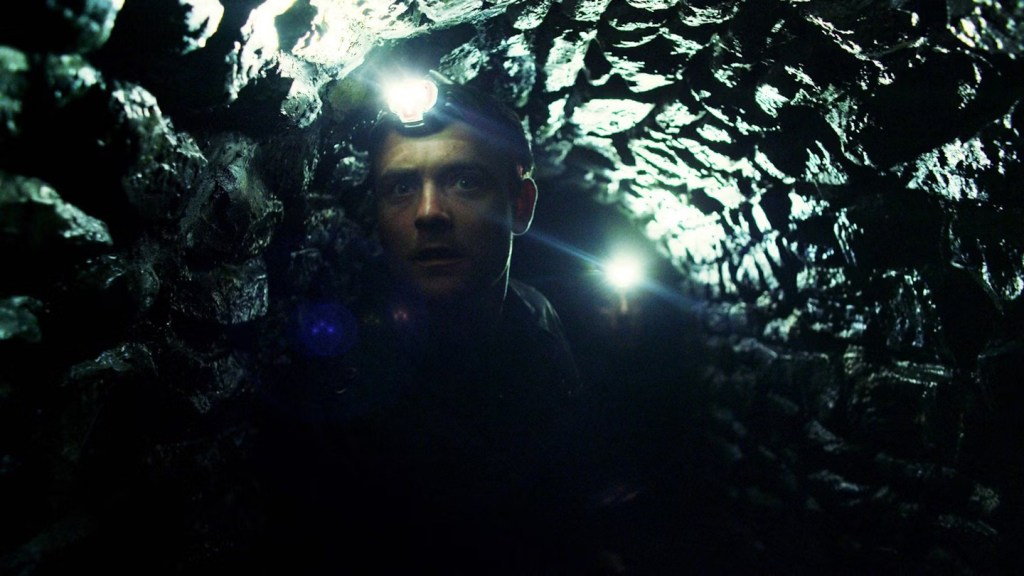
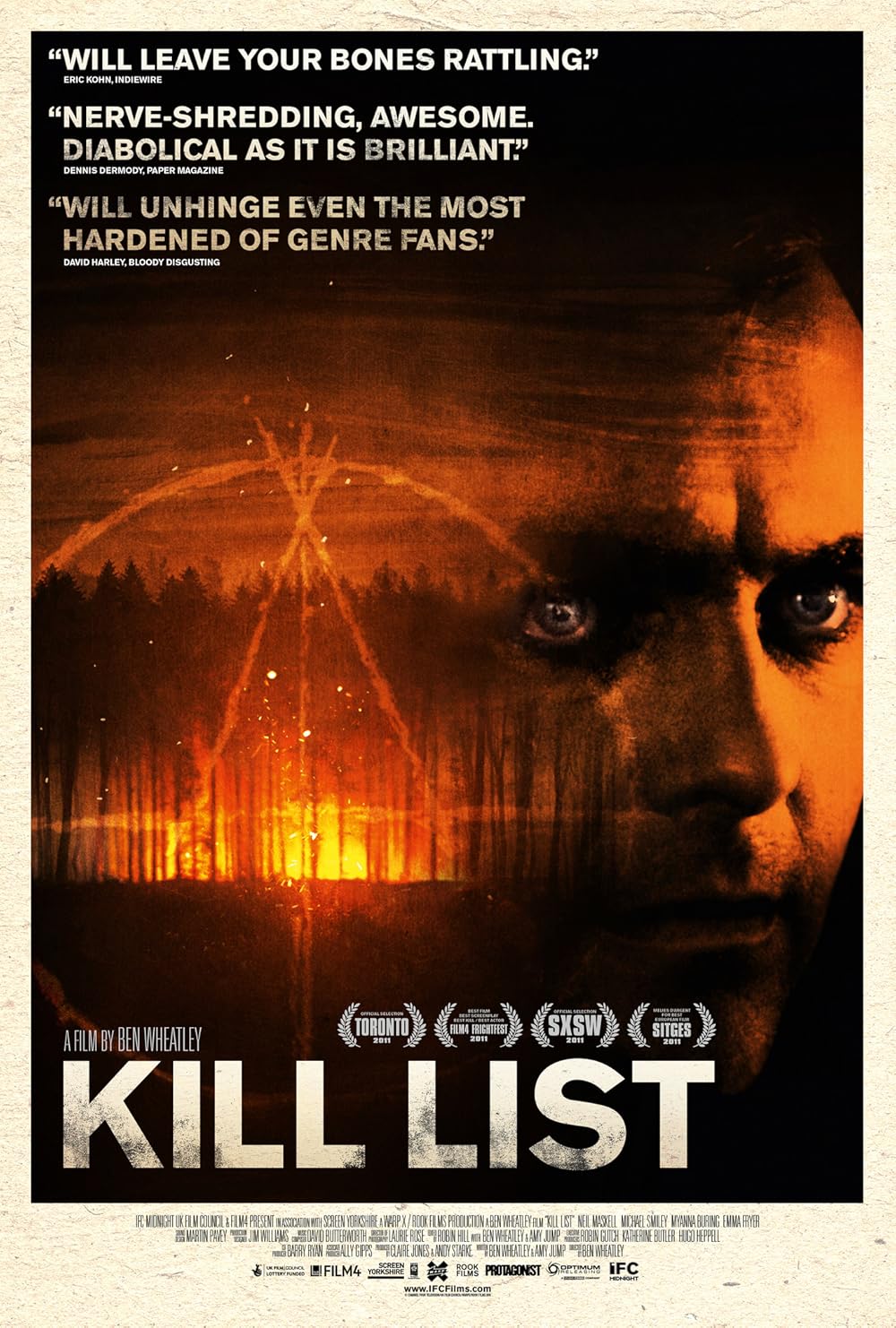
Synopsis- A troubled ex-soldier-turned-hitman accepts a new job with his partner, only to find their assassination assignments leading them into an increasingly nightmarish conspiracy. As the killings escalate, the true nature of their mission takes a horrifying turn.
Director- Ben Wheatley
Cast- Neil Maskell, MyAnna Buring, Michael Smiley
Released- 2011
Ben Wheatley’s Kill List is an unsettling, genre-blurring experience that starts as a gritty crime thriller before plunging headfirst into psychological horror. With its suffocating tension, jarring violence, and eerie ambiguity, this is a film that lingers in the mind long after the credits roll.
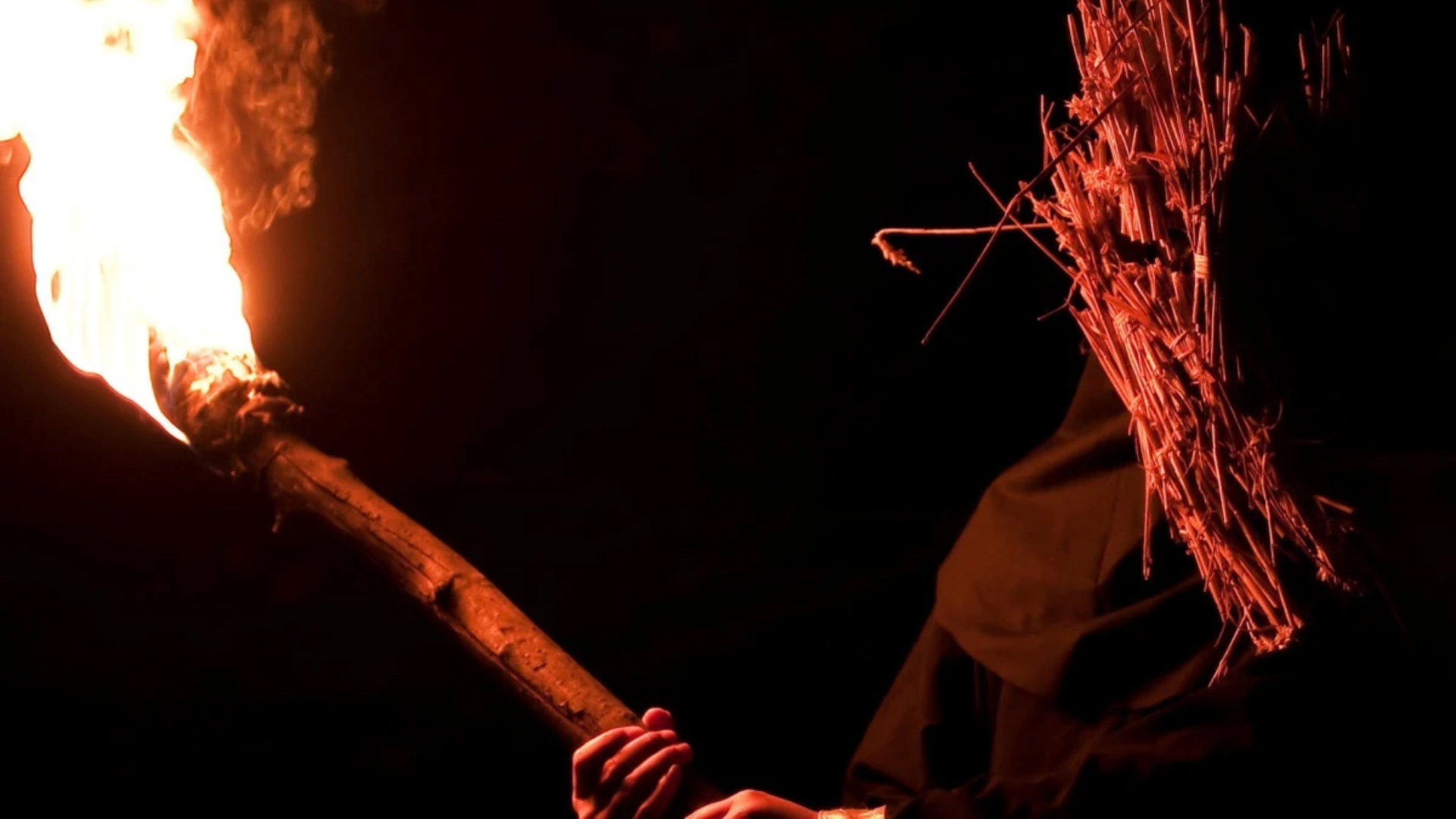
At its core, Kill List follows Jay (Neil Maskell) and Gal (Michael Smiley), two hitmen who take on a new job after Jay’s financial struggles put a strain on his home life. The pair are given a kill list by their enigmatic client, but what begins as a seemingly standard series of contract killings soon reveals itself to be something far more sinister. With each target, the narrative tightens its grip, twisting from crime drama into something akin to folk horror, laced with an ominous inevitability.
Neil Maskell delivers a powerhouse performance as Jay, a volatile and traumatised man whose violent outbursts hint at a deeper psychological fracture. His chemistry with Michael Smiley’s Gal is one of the film’s greatest strengths, their naturalistic banter lending credibility to their friendship while underlining the gulf between Gal’s weary pragmatism and Jay’s unchecked aggression. MyAnna Buring adds depth as Shel, Jay’s wife, whose sharp, frustrated presence makes their home life feel as tense as their work.

Wheatley’s direction is raw and unflinching, favouring a cinéma vérité style that makes the film’s bursts of violence all the more shocking. The hand-held camerawork and fragmented editing create an immersive, almost voyeuristic atmosphere, pulling the audience into the protagonists’ disoriented descent. Scenes are often left to play out in extended, unbroken takes, making the tension feel suffocatingly real.
What sets Kill List apart from conventional crime thrillers is its gradual, almost imperceptible shift into horror. Wheatley seeds eerie details throughout—strange symbols, cryptic dialogue, and an overarching sense of doom—that culminate in a final act that is as shocking as it is inevitable. The film’s climax embraces full-blown nightmare logic, leaving more questions than answers but ensuring an indelible impact.
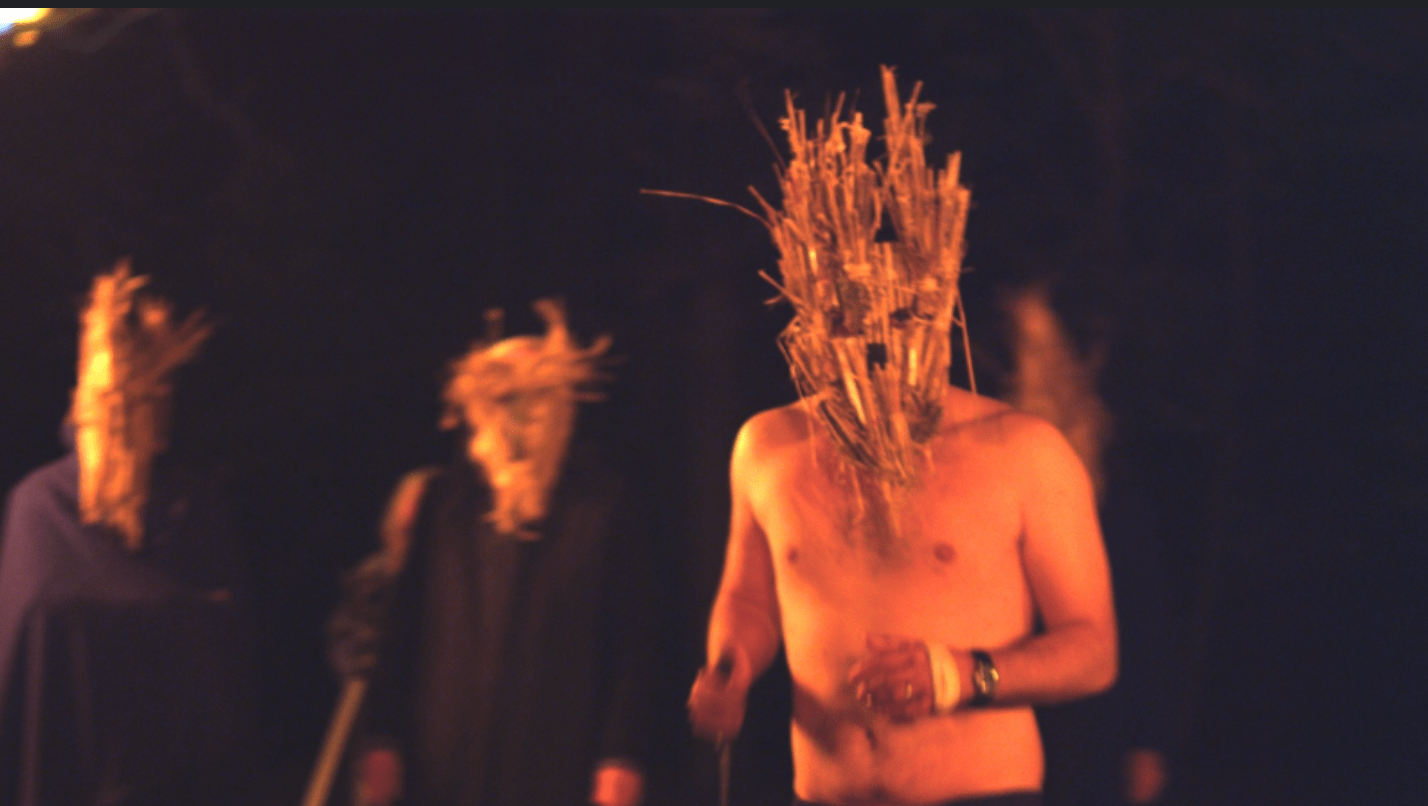
The script, co-written by Wheatley and Amy Jump, is sparse yet loaded with meaning. The dialogue feels improvised at times, heightening the film’s grim authenticity. The violence, when it comes, is brutal and unglamorous, hitting with a rawness that makes it all the more disturbing.
If Kill List has a flaw, it lies in its refusal to provide easy explanations. The film’s elliptical storytelling and abrupt tonal shifts may frustrate viewers expecting a more traditional thriller. However, for those willing to embrace its ambiguity, Kill List is a deeply unsettling meditation on violence, fate, and the horrors lurking beneath the surface of everyday life.

Disturbing, unpredictable, and masterfully executed, Kill List is a film that defies simple categorisation. It’s crime drama, psychological horror, and folk nightmare rolled into one—a truly haunting experience that solidifies Ben Wheatley as one of Britain’s most daring filmmakers.
 Roses Have Thoughts
Leave a comment