
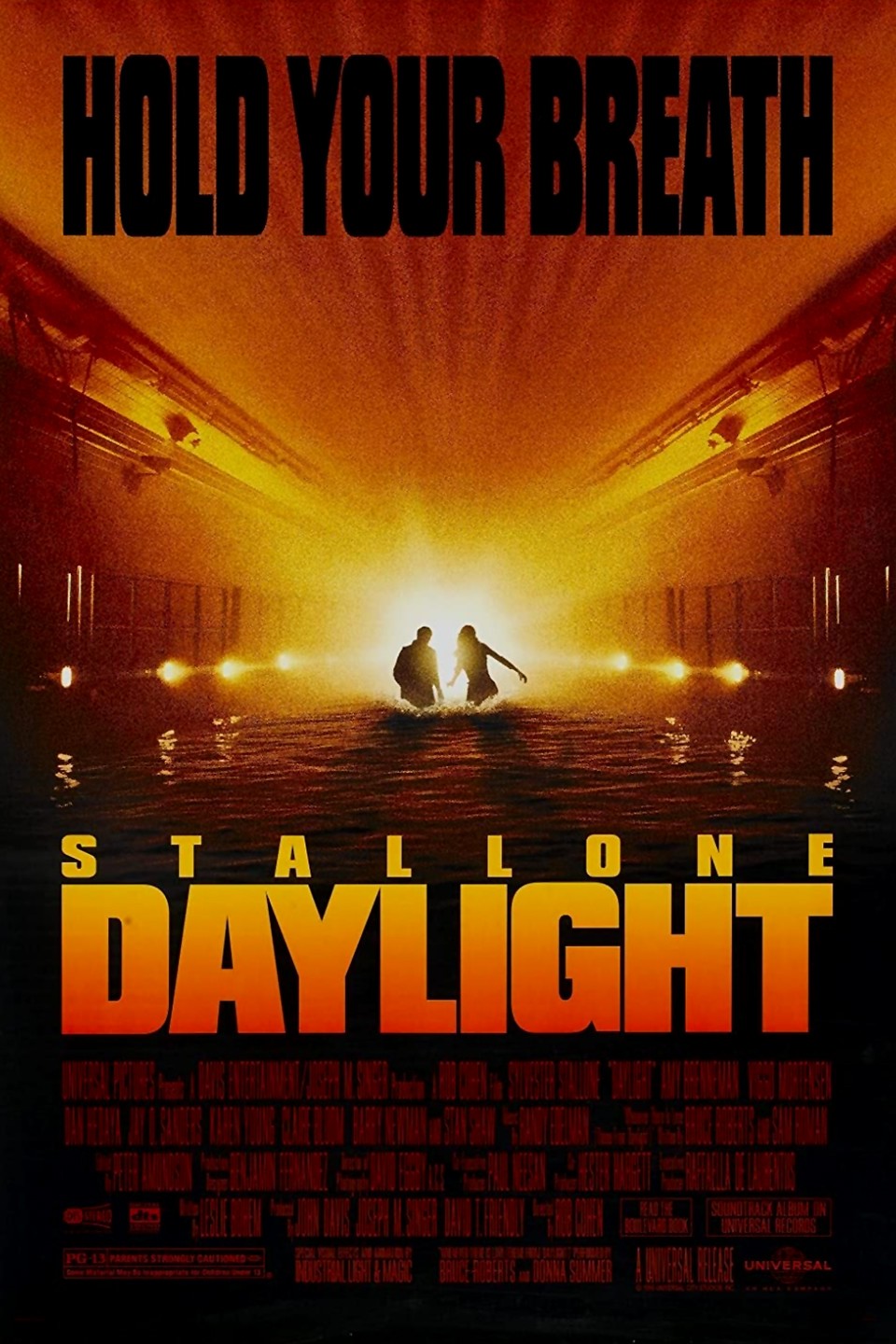
Synopsis- When a tunnel beneath the Hudson River collapses due to a chemical explosion, a group of survivors must navigate treacherous conditions to escape. Ex-EMT Kit Latura (Stallone) leads them, battling time, water, and human desperation.
Director- Rob Cohen
Cast- Sylvester Stallone, Amy Brenneman, Viggo Mortensen
Released- 1996
Rob Cohen’s Daylight is a film that, like its protagonist, is caught between two worlds. On one hand, it aspires to be an adrenaline-fuelled disaster thriller in the vein of The Poseidon Adventure or The Towering Inferno. On the other hand, it leans on Sylvester Stallone’s star power to elevate its simple survival narrative into something more grandiose. While intermittently thrilling, the result is a film that is ultimately predictable and formulaic.
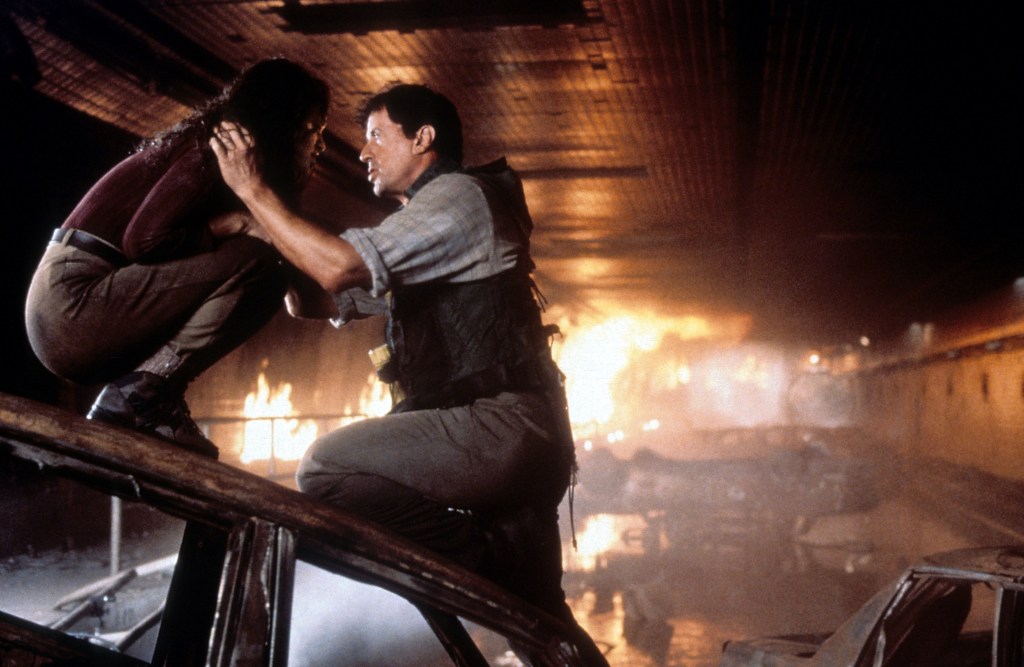
The film’s opening admirably sets the scene. A series of unfortunate events—reckless driving, hazardous materials, and an explosive collision—lead to the collapse of the Holland Tunnel, trapping a disparate group of survivors inside. Stallone’s Kit Latura, a disgraced former emergency services chief, happens to be in the right place at the right time and takes it upon himself to lead the survivors to safety.
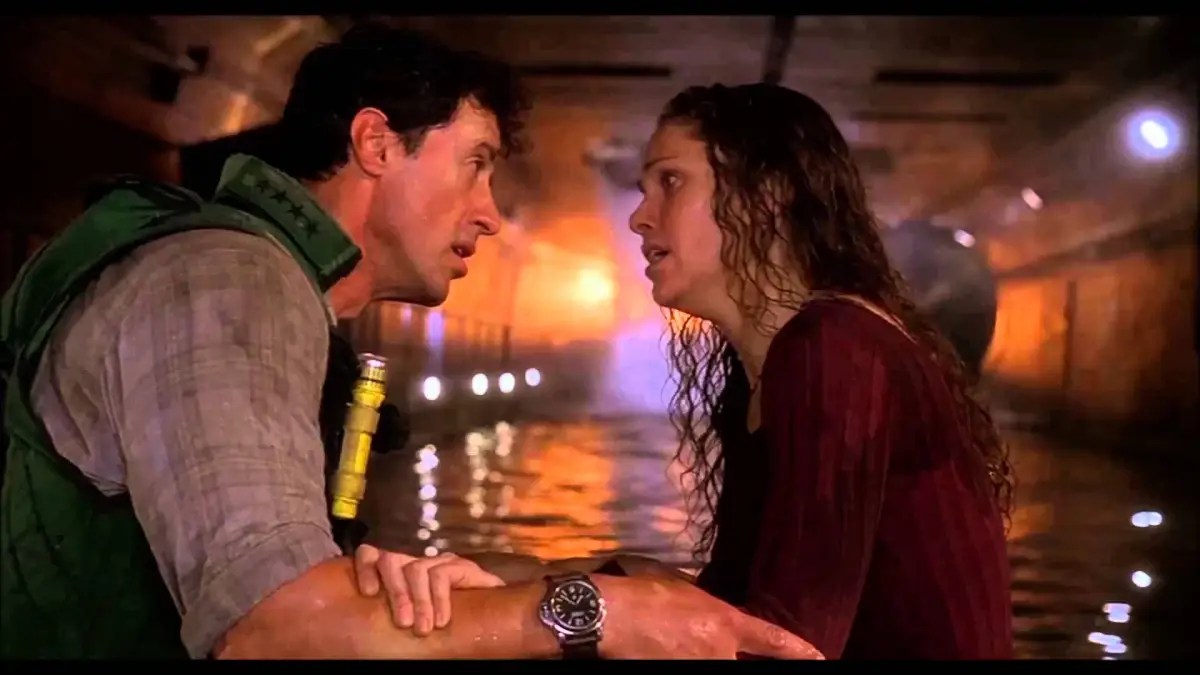
Visually, Daylight is undeniably impressive. The tunnel’s collapsed infrastructure, the rising floodwaters, and the ever-present threat of fire are brought to life with a mix of practical effects and early CGI that, while dated by today’s standards, still hold up reasonably well. Cohen directs with a steady hand, keeping the tension high and the pacing brisk.
Stallone’s performance, however, is serviceable rather than remarkable. Unlike his more charismatic turns in Rocky or First Blood, he plays Latura with a subdued, almost weary resolve. There are moments of genuine warmth—his interactions with Amy Brenneman’s character, for instance—but for the most part, he’s in autopilot mode. Brenneman does well with what she’s given, though the script rarely allows her to be more than the obligatory ‘everywoman’ caught in extraordinary circumstances.

Viggo Mortensen, in an early role as the cocky extreme-sports entrepreneur Roy Nord, injects some much-needed energy into the film, though his character’s arc is frustratingly short-lived. Dan Hedaya and Jay O. Sanders provide dependable support as the token authority figures outside the tunnel, but their roles are primarily perfunctory.
Where Daylight falters is in its predictability. Every beat—from the group’s initial panic to the inevitable human betrayals, and finally to the last-minute escape—feels lifted from the disaster movie playbook. It lacks the emotional heft of Titanic or the sheer spectacle of Twister, settling instead for competent but uninspired thrills.

That said, the film isn’t without merit. Cohen’s direction ensures that, for all its clichés, Daylight remains an engaging ride. The claustrophobic setting is used effectively, and the practical effects lend a tangible, gritty realism to the proceedings. There are moments of genuine suspense, particularly in the film’s latter half, and the predictable finale delivers the necessary catharsis.
Ultimately, Daylight is neither a disaster nor a triumph. It’s a middle-of-the-road thriller that delivers just enough spectacle to be worth a watch, even if it never entirely transcends its genre limitations.
 Roses Have Thoughts
Leave a comment