
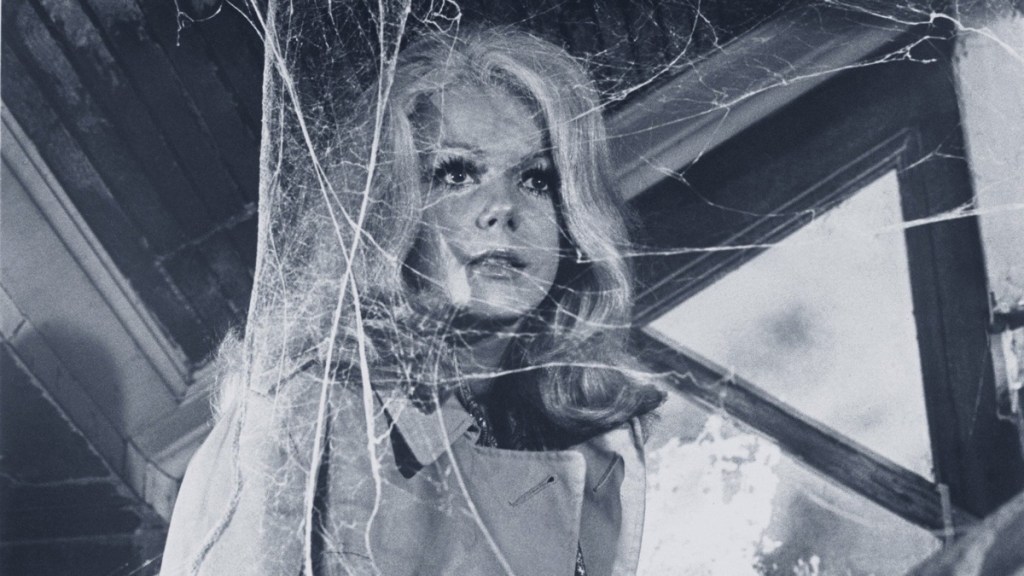

Synopsis – A family travelling through the American Southwest finds themselves trapped in a remote town where children vanish, and the elderly residents seem eerily complicit. As paranoia sets in, they uncover a Satanic cult bent on a sinister ritual.
Director- Bernard McEveety
Cast- Strother Martin, L.Q. Jones, Charles Bateman
Released – 1971
Horror in the 1970s was in the midst of a fascinating transformation. Following the gothic excess of the Hammer era, American cinema embraced the contemporary occult thriller—a genre that thrived on paranoia, isolation, and creeping dread. The Brotherhood of Satan is one such film, attempting to marry small-town suspense with supernatural horror. It is an ambitious, if uneven, effort, offering eerie set pieces and an unsettling atmosphere but ultimately struggling with pacing and coherence.
Directed by Bernard McEveety, the film follows Ben (Bateman), his girlfriend Nicky (Ahna Capri), and his young daughter K.T. (Geri Reischl) as they stumble upon a nightmarish desert town. Here, Sheriff Pete (Jones, also a co-writer) is investigating a series of gruesome murders, while the local doctor, Doc Duncan (Martin), appears to know more than he lets on. Before long, the family realises they are at the mercy of a Satanic cult whose nefarious plot revolves around abducting children for a sinister ritual.
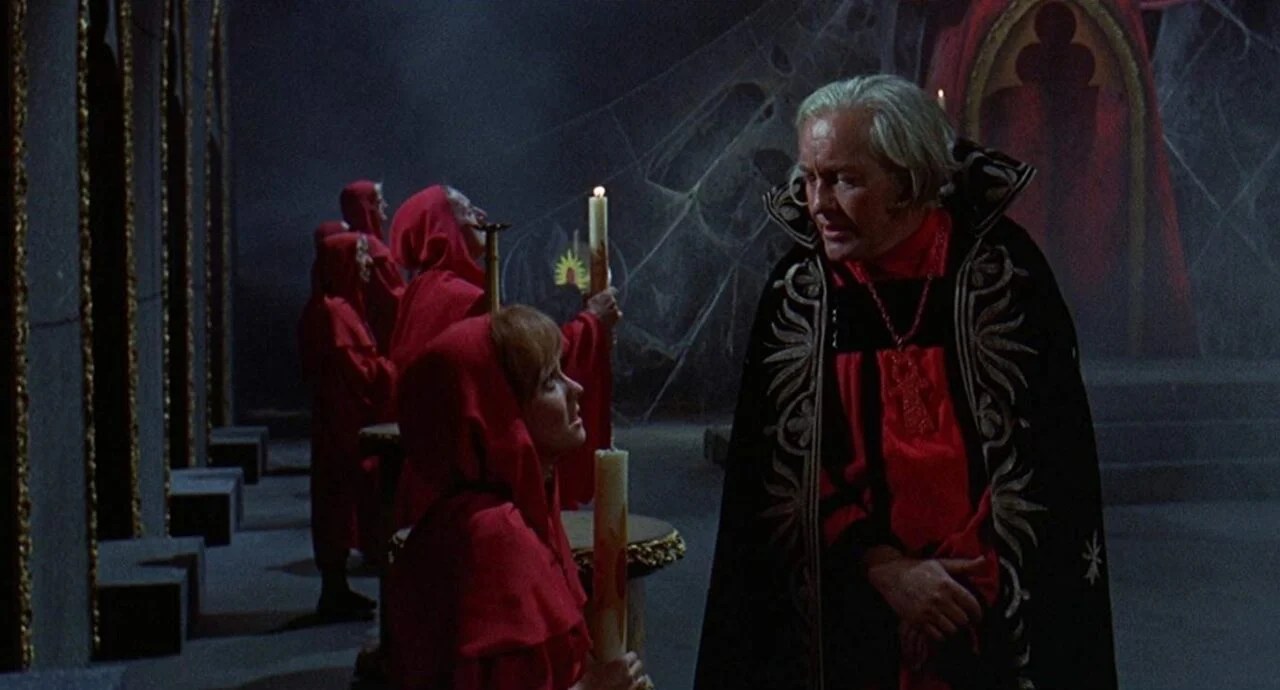
Where The Brotherhood of Satan excels is in its sense of suffocating doom. The town feels inescapable, its inhabitants vacant-eyed and resigned to their fate. The eerie silences, punctuated by strange, half-whispered incantations, contribute to a dreamlike quality reminiscent of Carnival of Souls (1962). There are moments of genuine tension, mainly when the cult’s activities are glimpsed in brief, nightmarish flashes. The decision to focus on the psychology of fear rather than overt gore is commendable, though it sometimes leaves the horror feeling more abstract than visceral.
Strother Martin, best known for his character roles in Westerns, is a highlight, bringing a disquieting geniality to his role as the town doctor. His ability to shift between kindly authority and sinister suggestion lends the film some of its most chilling moments. Playing the harried sheriff, L.Q. Jones provides a grounded counterbalance to the film’s more esoteric elements, though his character is given little room to develop beyond standard-issue scepticism.
Unfortunately, where The Brotherhood of Satan falters is in its storytelling. The script, co-written by Jones and William Welch, meanders in places, dwelling too long on cryptic dialogue without providing enough forward momentum. The editing, too, is choppy, resulting in an uneven flow that detracts from the film’s more successful suspense-building moments. Additionally, the film’s central mystery is telegraphed too early, lessening its impact by the time the final reveal arrives.
For enthusiasts of 1970s cult horror, The Brotherhood of Satan is an intriguing curio—more atmospheric than narratively satisfying, but not without its charms. It’s a mix of esoteric horror and small-town dread hints at the potential for something greater, but it never fully realises its ambitions.
 Roses Have Thoughts
Leave a comment