


Synopsis- An unexpected aquatic creature rises from the waters of Tokyo Bay, quickly turning into a gigantic menace that threatens to level the city. As professionals in bureaucracy race to find answers, a courageous team must navigate a maze of political obstacles and scientific revelations to stop Godzilla’s relentless rampage.
Director – Hideaki Anno, Shinji Higuchi
Cast – Hiroki Hasegawa, Yutaka Takenouchi, Satomi Ishihara
Genre- Science Fiction | Action
Released – 2016
Few cinematic icons have endured the test of time like Godzilla. From his atomic-age origins to his more recent Hollywood incarnations, the kaiju king has seen many reinventions. Shin Godzilla, directed by Hideaki Anno and Shinji Higuchi, is perhaps the boldest of them all—a thrillingly original take that trades traditional monster-movie spectacle for a razor-sharp political satire wrapped in apocalyptic horror.
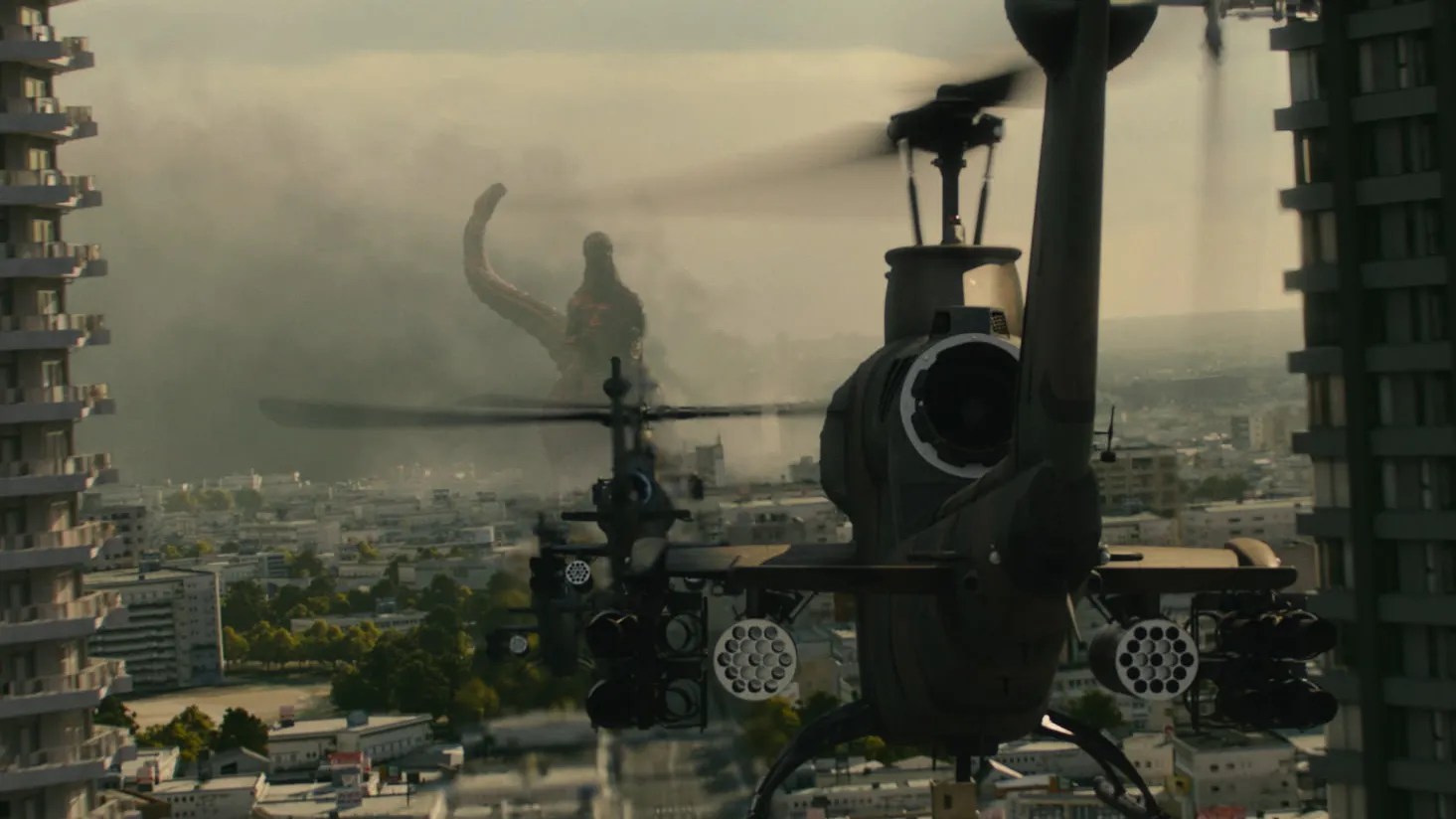
From the outset, Shin Godzilla is an unsettling experience. The film wastes no time in setting up its crisis, as an unusual water disturbance off the Tokyo coast quickly escalates into a full-blown catastrophe. When the monster first appears, it is a grotesque, near-comical mutation—a malformed, writhing creature dragging itself through city streets. But its horrifying rapid evolution is a chilling metaphor for both unchecked natural disaster and bureaucratic paralysis.
Unlike previous Godzilla films, where military might takes centre stage, this one focuses on Japan’s response mechanism. The film’s heroes are not battle-hardened soldiers but civil servants, scientists, and politicians, scrambling to understand and contain the unprecedented threat. Hiroki Hasegawa delivers a compelling performance as the determined Rando Yaguchi, whose pragmatic approach clashes with an outdated system of government shackled by protocol. Satomi Ishihara, as American-Japanese envoy Kayoko Ann Patterson, brings an interesting, if somewhat exaggerated, international dimension to the crisis.
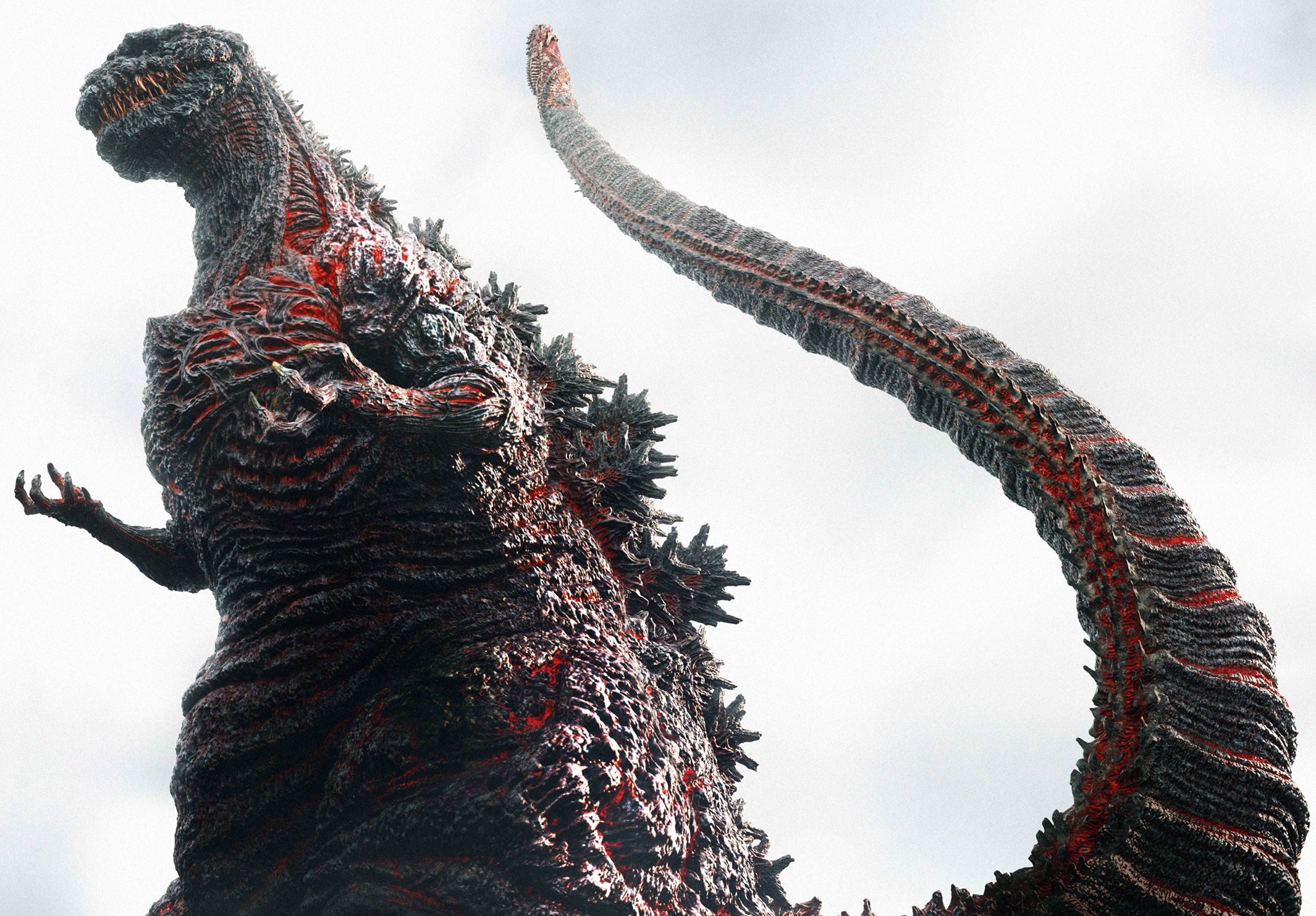
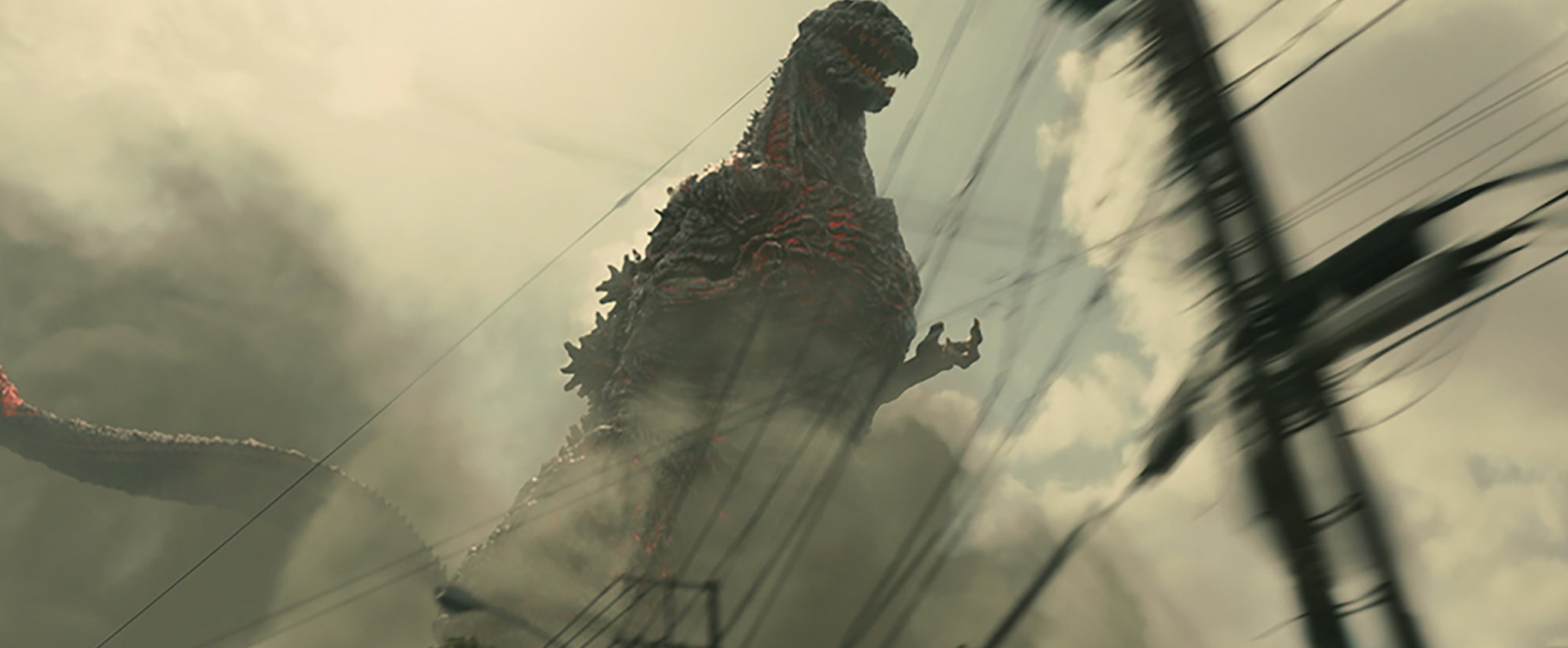
Visually, Shin Godzilla is a triumph. The creature’s grotesque transformation, from an almost pathetic amphibian to a towering, radiation-spewing behemoth, is realised with an eerie blend of practical effects and CGI. Unlike the lumbering situation of yesteryear, this Godzilla is an eldritch horror—its eyes vacant, its body scarred and pulsating, its very presence exuding existential dread. The destruction it unleashes is visceral and unrelenting, with an unforgettable sequence in which the beast unveils its devastating atomic breath, reducing Tokyo to a smouldering ruin.
But it is in the film’s satirical edge where Shin Godzilla truly stands apart. The endless meetings, hesitant leadership, and rigid hierarchy of Japan’s political system are skewered with a sharpness that recalls classic political dramas. The film’s dialogue is fast and dense, at times overwhelming, but this relentless pacing only enhances the sense of urgency. While some might find the procedural elements dry, they add a layer of realism rarely seen in kaiju films.
If there is a flaw, it is that Shin Godzilla is less of a character-driven film and more of an intellectual exercise. The human cast, while well-acted, often feel secondary to the overarching political themes and the film’s terrifying central monster. Yet, this feels intentional—a reflection of humanity’s insignificance in the face of overwhelming catastrophe.
Ultimately, Shin Godzilla is a brilliant reimagining of the franchise, one that pays homage to its origins while forging a bold new path. A film as much about governmental inertia as it is about monster mayhem, it is a must-watch for both Godzilla enthusiasts and fans of intelligent, politically charged cinema.
 Roses Have Thoughts
Leave a comment