

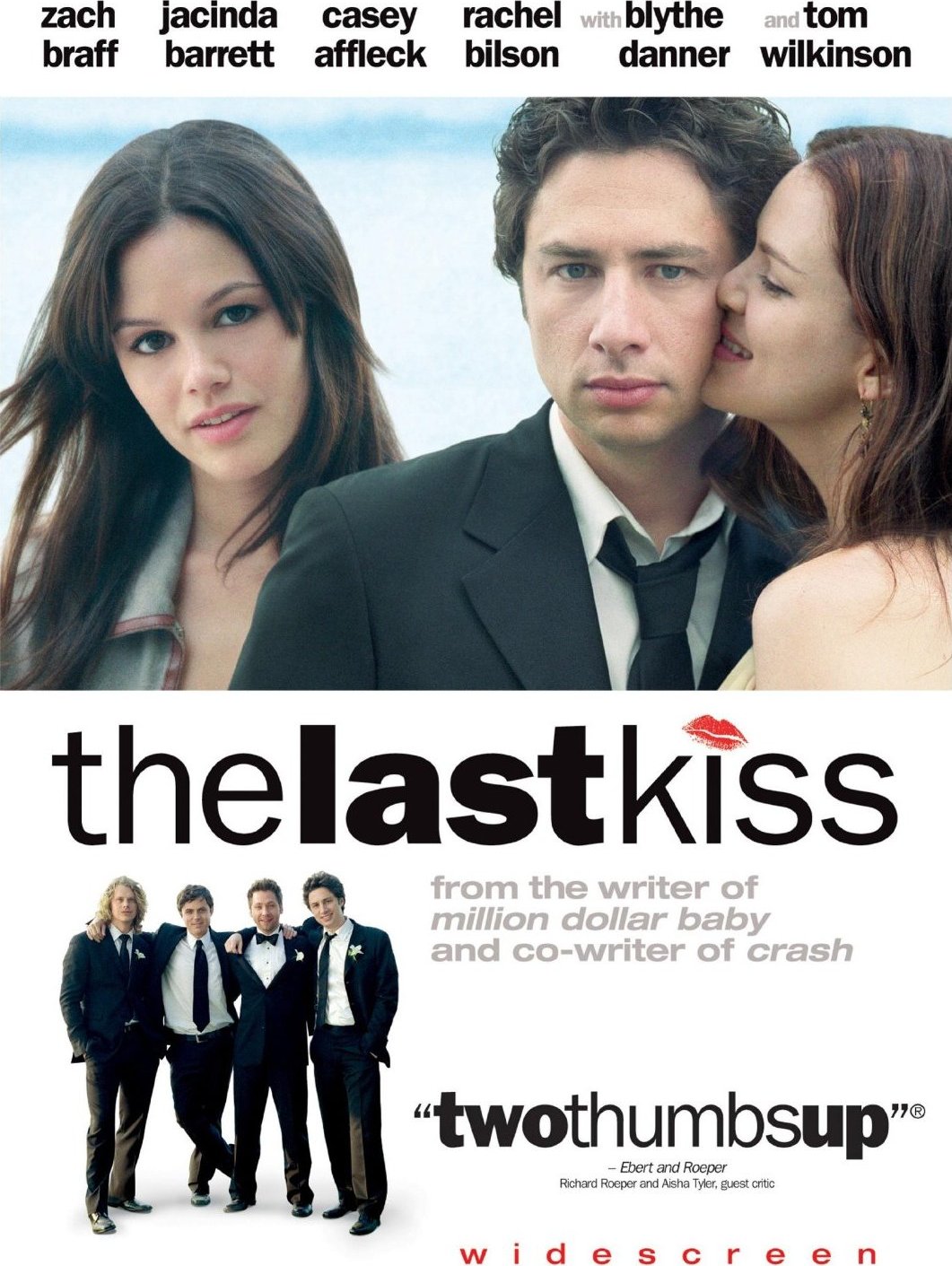
Synopsis- Faced with impending fatherhood and a seemingly perfect life, a thirtysomething man panics and strays, prompting a chain of emotional reckonings among his friends and partner in this reflective, occasionally uneven drama about modern relationships and commitment.
Director- Tony Goldwyn
Cast- Zach Braff, Jacinda Barrett, Rachel Bilson
Released- 2006
The Last Kiss, directed by Tony Goldwyn and adapted by Paul Haggis from the 2001 Italian film L’ultimo bacio, is one of those relationship dramas that tries to hold a mirror up to a generation and ask, “Is this what growing up looks like?” It’s a compelling question, and one that the film approaches with a mixture of honesty, melodrama, and narrative untidiness.
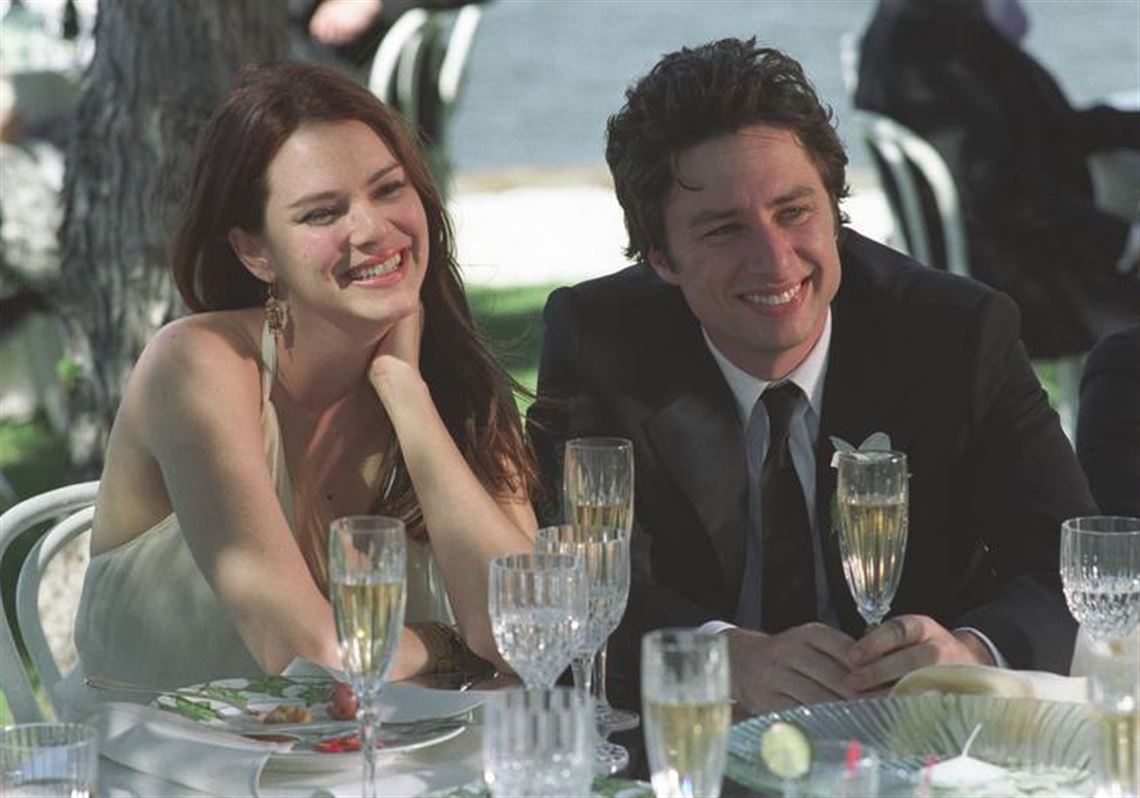
At the heart of the story is Michael (Zach Braff), a man in his late twenties who seemingly has it all: a good job, a tight-knit group of friends, and a loving, pregnant girlfriend, Jenna (Jacinda Barrett). Yet when he meets Kim (Rachel Bilson), a spontaneous and flirtatious university student, Michael is thrown into a spiral of doubt about his future, his freedom, and his maturity. His resulting decisions, and the ripple effect they cause, form the emotional core of the film.
Braff, riding high off the indie success of Garden State, brings a neurotic, restrained vulnerability to Michael. He’s at once sympathetic and frustrating, a character who seems paralysed by the banality of contentment. Jacinda Barrett, meanwhile, delivers the film’s strongest performance as Jenna, whose heartbreak is rendered with quiet depth rather than histrionics. Rachel Bilson, though charming, feels somewhat underdeveloped in her role as the youthful temptation, remember this came during peak manic pixie dream girl and its clear that this is what they were going for with Bilson’s character.
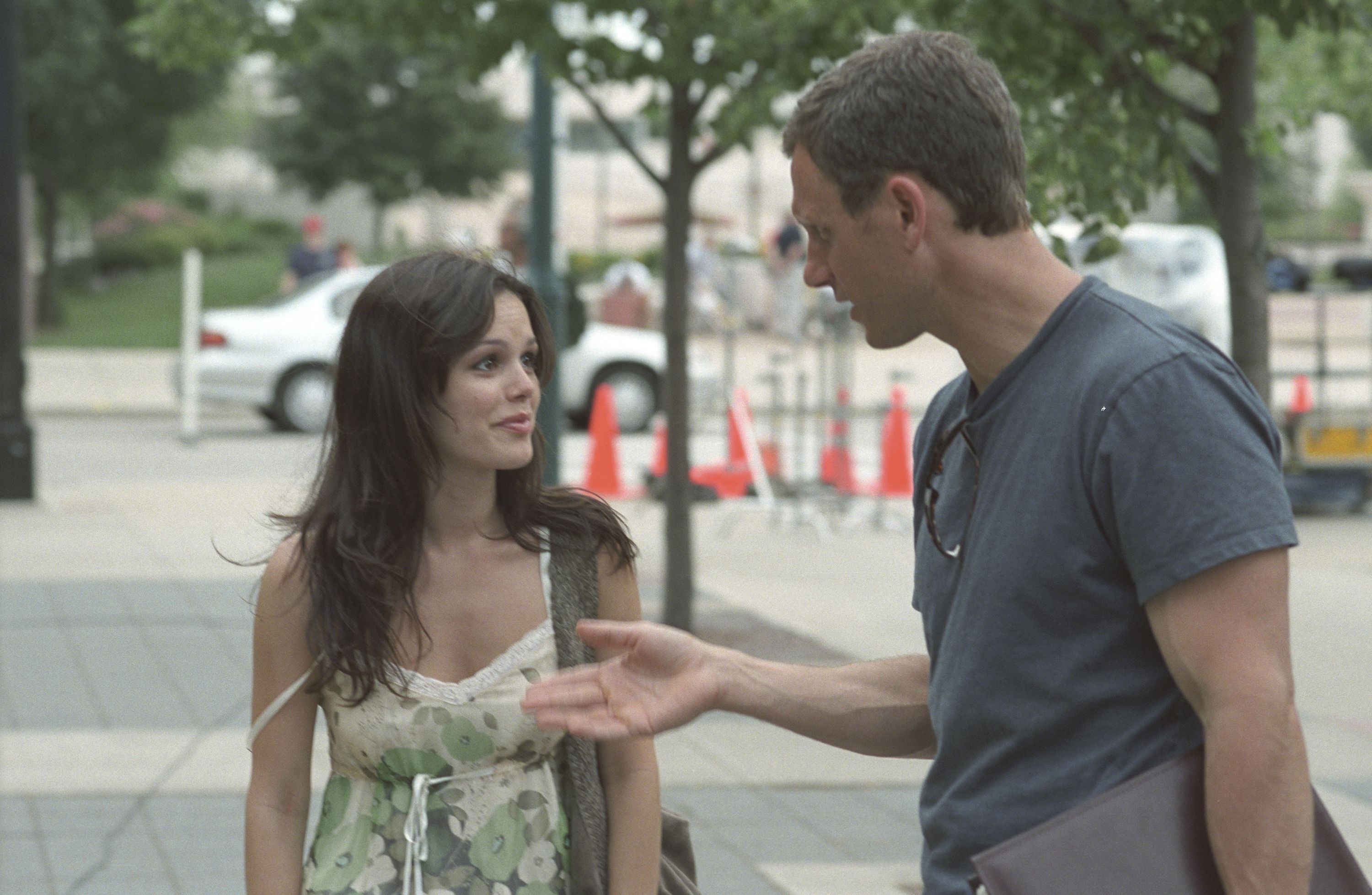
Around this central trio, a constellation of subplots orbit. Michael’s friends are all similarly caught in various stages of disillusionment, Casey Affleck’s Chris is in a crumbling marriage, while Michael Weston’s Izzy refuses to move on from a lost love. These diversions provide texture but occasionally distract from the main narrative. The older generation, represented by Blythe Danner and Tom Wilkinson as Jenna’s parents, offers a parallel glimpse into what commitment looks like decades on. Wilkinson, in particular, is excellent, lending his scenes a weary gravitas.
Stylistically, The Last Kiss is competent, if not especially bold. Goldwyn keeps the visuals understated, allowing Haggis’s script to carry the emotional weight. Sometimes that script leans too heavily on verbal exposition and clichés about maturity, but it’s also peppered with moments of real insight into the anxieties that plague people navigating the messy transition from youthful possibility to adult responsibility.

Ultimately, the film doesn’t provide neat resolutions, nor should it. It acknowledges the complexity of love, the weight of expectations, and the inevitability of mistakes. However, it also feels torn between indie introspection and Hollywood polish, never fully committing to either. That tonal uncertainty slightly blunts its impact.
While occasionally veering into melodrama and suffering from an overcrowded script, The Last Kiss earns its emotional beats through strong performances and a willingness to explore the ambiguities of adult life and love.
 Roses Have Thoughts
Leave a comment