
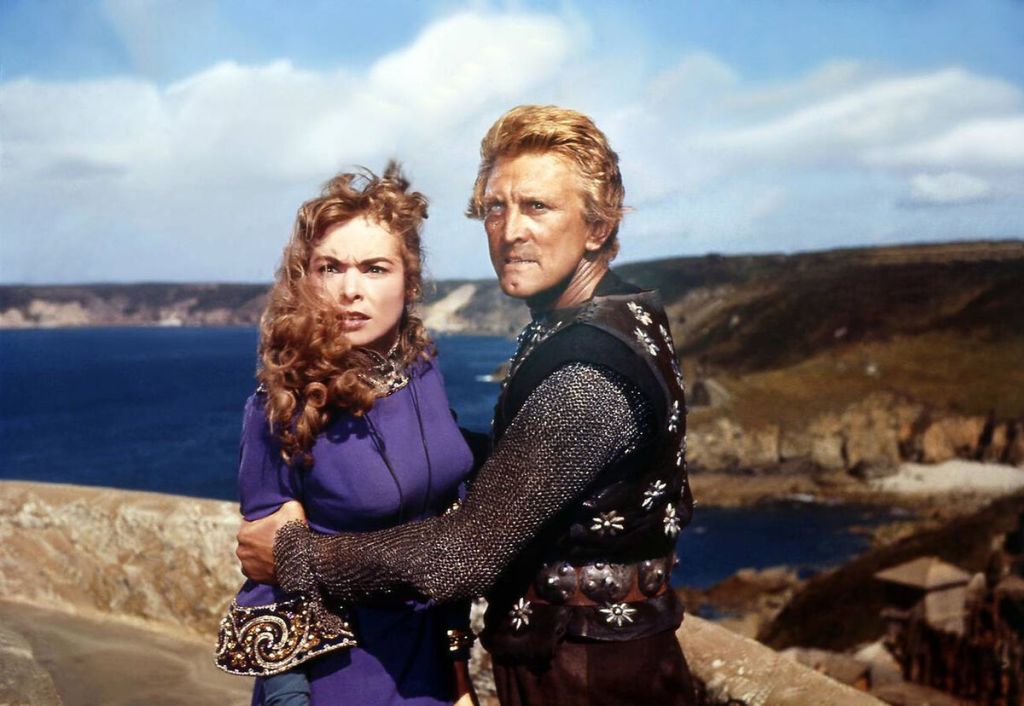
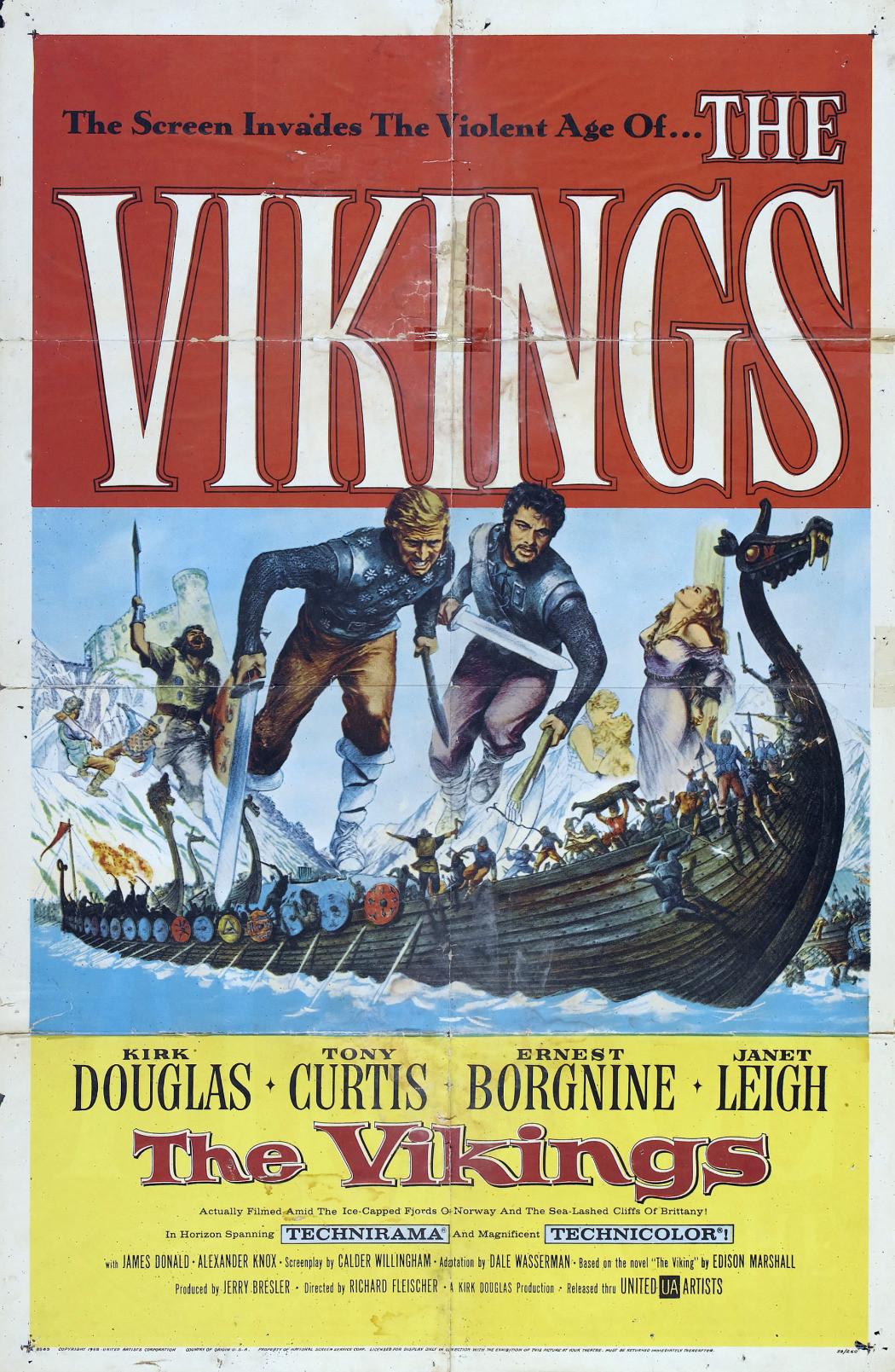
Synopsis- In medieval Britain, a Viking prince and his half-brother clash over power, honour, and a kidnapped princess. Betrayal, revenge, and family secrets culminate in a ferocious battle that pits blood against blood in a land torn by conquest.
Director- Richard Fleischer
Cast- Kirk Douglas, Tony Curtis, Janet Leigh, Ernest Borgnine, James Donald
Released- 1958
Genre- Historical | Action | Adventure
In The Vikings, director Richard Fleischer crafts a robust, if occasionally clunky, historical adventure that revels in macho posturing, mythic grandeur, and the harsh poetry of iron and ice. Anchored by the towering charisma of Kirk Douglas and Tony Curtis, the film remains a muscular, crowd-pleasing spectacle, if not always a nuanced one and certainly not a historically accurate one.
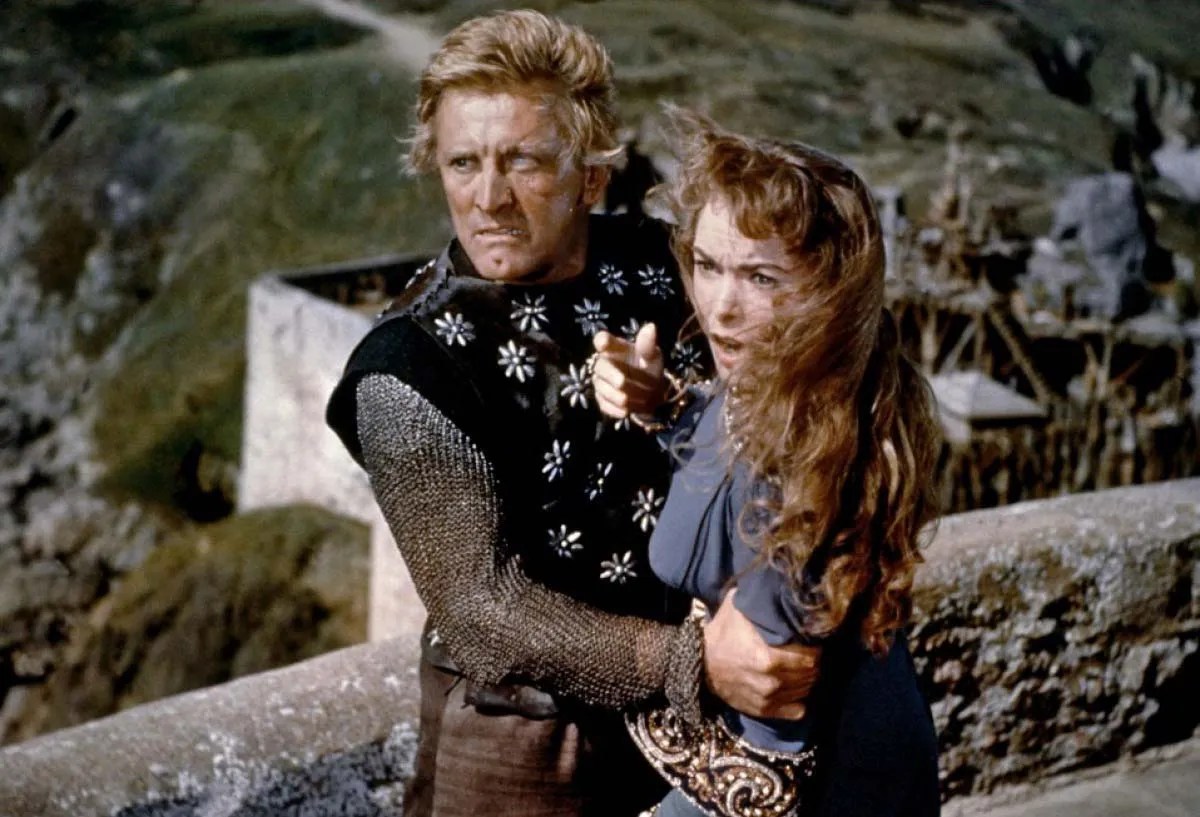
Set in the violent mists of the 9th century, The Vikings is less a meditation on history than a fevered Norse dream of it. With its fjords, longboats, and brutal swordplay, it revels in the kind of epic storytelling that, even when bordering on the absurd, never lacks conviction. The film opens with a blood feud and a prophecy and barrels forward like a longship in full sail, stormy, determined, and often crashing into the rocks of melodrama.
Douglas, all glaring eyes and sinew, plays Einar, a Viking prince born to war and disdainful of anything resembling diplomacy. Opposite him is Curtis’s Eric, a Christian slave with a noble lineage and a brooding conscience. Naturally, they are more than just rivals for the love of the same woman, the luminous and unfortunately underwritten Princess Morgana (Janet Leigh); they are also unwitting half-brothers, a twist that emerges with operatic inevitability.

The central conflict, driven by questions of identity, loyalty, and vengeance, is satisfying in a mythological sense but lacks psychological depth. The script, co-written by Calder Willingham, favours declarations over conversations and brute action over introspection. Characters are types, king, warrior, traitor, maiden, drawn with bold strokes rather than subtle shades. Yet within this framework, there is undeniable energy. Douglas and Curtis spark off one another with genuine chemistry, and Ernest Borgnine brings a gruff warmth to the role of Ragnar, Einar’s fearsome father.
What elevates The Vikings above its pulpier contemporaries is its visual ambition. Shot in Technirama and directed with flair, the film makes excellent use of its Norwegian locations, capturing the stark beauty of the fjords and the grim determination etched into every face. The climactic siege is thrillingly staged, and even the more outlandish moments, hawk attacks, flame-slicked swords, are executed with gusto.
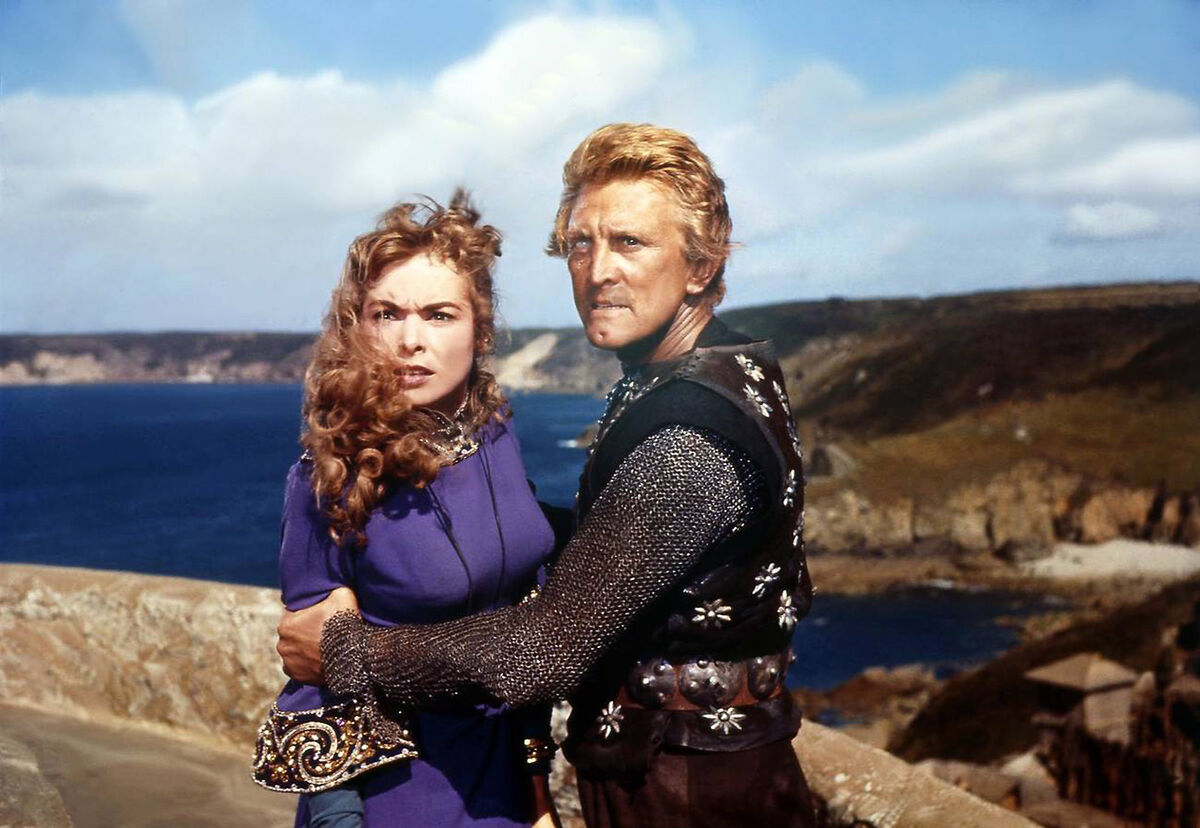
Admittedly, it’s not a film that bears too much scrutiny. Gender roles are firmly trapped in the amber of mid-century Hollywood, and its historical accuracy is sacrificed at the altar of melodrama. Yet as a piece of action cinema, The Vikings delivers what it promises: roaring men, crashing swords, and a grandiosity that feels refreshingly unselfconscious.
More spirited than sophisticated, The Vikings offers a vigorous, old-fashioned adventure with enough star power and cinematic sweep to remain compelling. Not quite a classic, but a fine example of 1950s spectacle done with conviction.

 Roses Have Thoughts
Leave a comment