

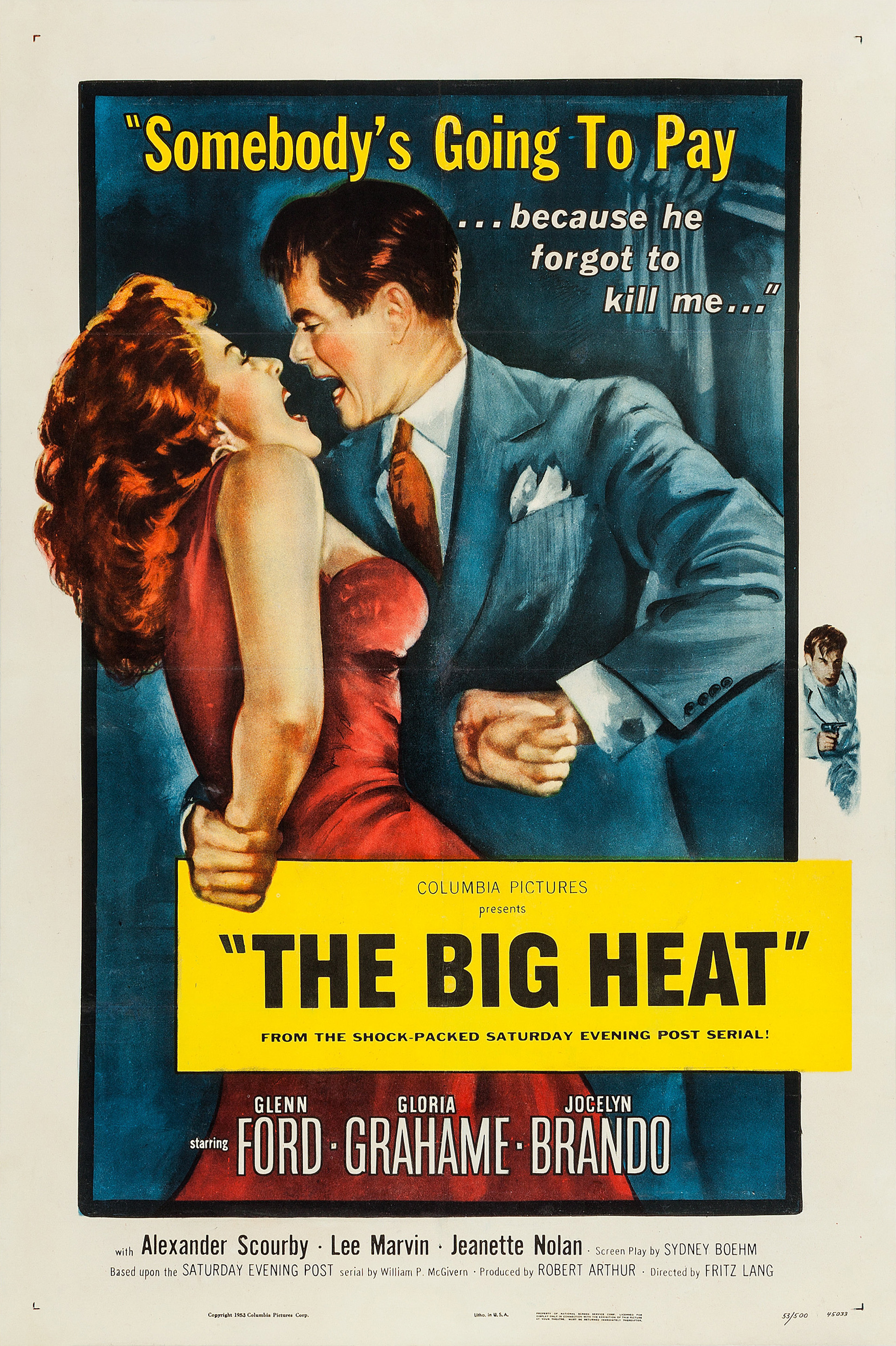
Synopsis- A principled detective uncovers a web of corruption after a colleague’s suspicious suicide. As the investigation deepens, violence erupts and personal tragedy strikes, forcing him to confront the city’s criminal underworld with ruthless determination and a fading moral compass.
Director- Fritz Lang
Cast- Glenn Ford, Gloria Grahame, Lee Marvin
Genre- Crime, Film Noir, Thriller
Released- 1953
There’s a particular kind of cold rage that simmers at the heart of The Big Heat, Fritz Lang’s taut, moody noir that channels post-war anxieties into a bleak portrait of justice under siege. While not as poetically fatalistic as Double Indemnity or as labyrinthine as The Maltese Falcon, it stands as one of the more vicious entries in the noir canon, unflinching, unsentimental, and just restrained enough to make its explosions of violence truly shocking.

At its centre is Glenn Ford, delivering a tightly wound performance as Detective Sergeant Dave Bannion. Initially portrayed as a model cop and family man, Bannion is pulled into a vortex of corruption when a fellow officer apparently takes his own life. The official line doesn’t sit right, and his decision to pursue the truth, against the warnings of his superiors, soon draws him into a tangled web of police silence, mob influence, and moral compromise.
Lang, directing with his usual precision, uses Bannion’s descent as a means to explore the erosion of institutional authority and the price of idealism. The narrative is straightforward, even spartan, but the emotional core is anything but. After a harrowing act of violence against his family (a scene that still feels raw seventy years later), Bannion transforms from a righteous crusader into something more vengeful and morally ambiguous. He’s not exactly corrupted, but he’s certainly compromised.
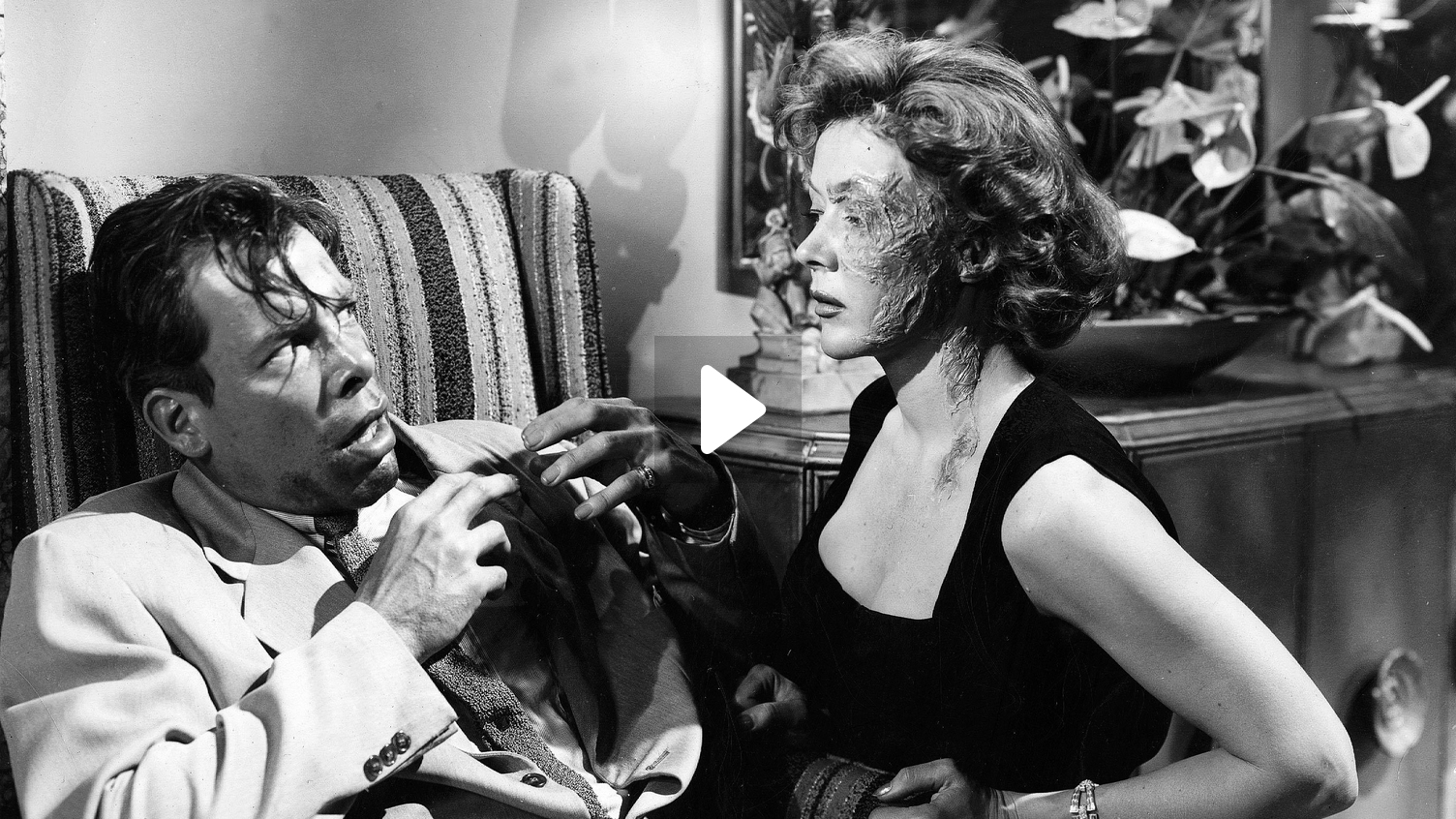
Gloria Grahame, as Debby Marsh, offers the film’s most intriguing performance. Initially introduced as little more than a gangster’s moll, she becomes a tragic, complex figure who ultimately seizes control of her narrative in one of the film’s most quietly radical moves. Grahame’s scenes with Ford are among the film’s few moments of emotional nuance, undercut by a fatalism that feels baked into every frame.
Then there’s Lee Marvin, who steals every scene he appears in as Vince Stone, a brutish mob enforcer with a penchant for sadism. In a film that plays much of its violence offscreen or in implication, Marvin’s scenes, particularly the notorious coffee moment, still land with visceral force.

The Big Heat is, in many ways, a bleak affair. Its world is grey, cynical, and largely devoid of redemptive figures. But Lang’s mastery of tone and shadow gives it a sculpted severity. There are stretches where the procedural elements drag slightly, and Ford’s square-jawed stoicism doesn’t always invite empathy. Yet the film’s commentary on systemic rot, and the thin line between justice and revenge, remains strikingly relevant.
The Big Heat is a slow-burning but powerful noir, elevated by strong performances, brutal twists, and Fritz Lang’s unrelenting directorial hand. Not flawless, but potent, less a whodunit than a what-now, and all the more interesting for it.
 Roses Have Thoughts
Leave a comment