
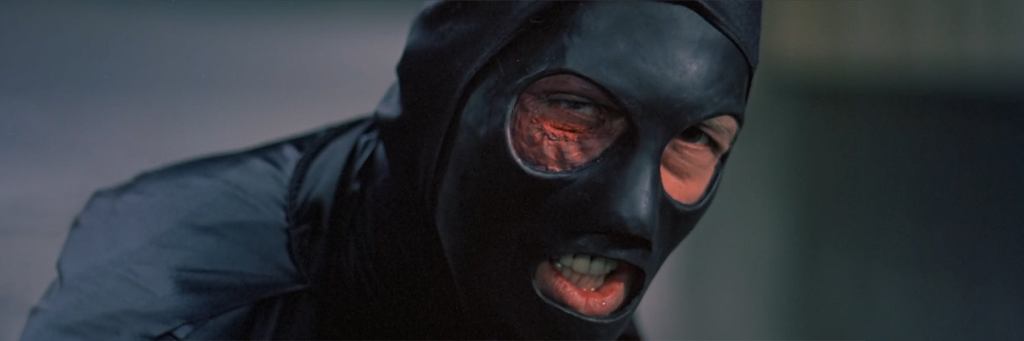
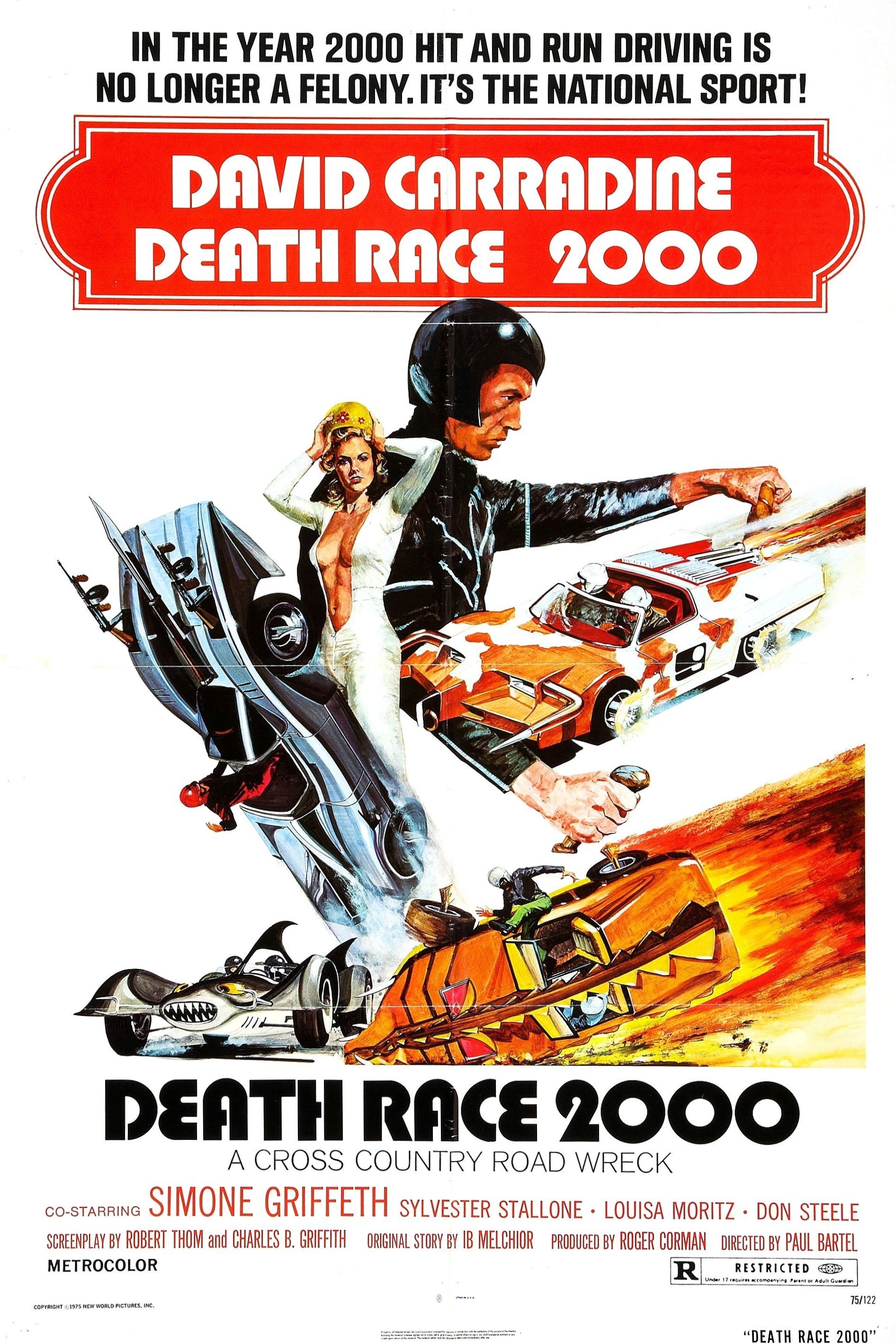
Synopsis- In a totalitarian future, celebrity drivers compete in a cross-country road race. Points are earned by running over pedestrians. This transforms state violence into televised entertainment and an absurdist spectacle.
Director- Paul Bartel
Cast- David Carradine, Sylvester Stallone, Simone Griffeth
Genre- Science Fiction, Action
Released- 1975
Rollerball meets Mad Max, Paul Bartel’s Death Race 2000 (1975) feels less like a movie that was made and more like one that exploded onto the screen. It’s a messy, wild piece of 1970s counterculture, full of paranoia and Grindhouse fun. The film is crude, cheap, and proudly offensive. Yet it also seems strangely ahead of its time. It shows a future where authoritarianism is turned into entertainment. Mass murder is disguised by branding, announcers, and fan loyalty. Watching it today, it feels less like science fiction. It resembles an early, chaotic reality show. It is packed with cynicism and dark humor.
The story takes place in a fascist America where the yearly Transcontinental Road Race has replaced democracy. The film follows celebrity drivers who earn points by running over pedestrians. Bartel directs with obvious humor. It almost becomes a parody. The tone remains light even when the subject is dark. Children, the elderly, and the disabled are worth extra points. This idea is so extreme that it becomes satire. However, it does not always do so smoothly.
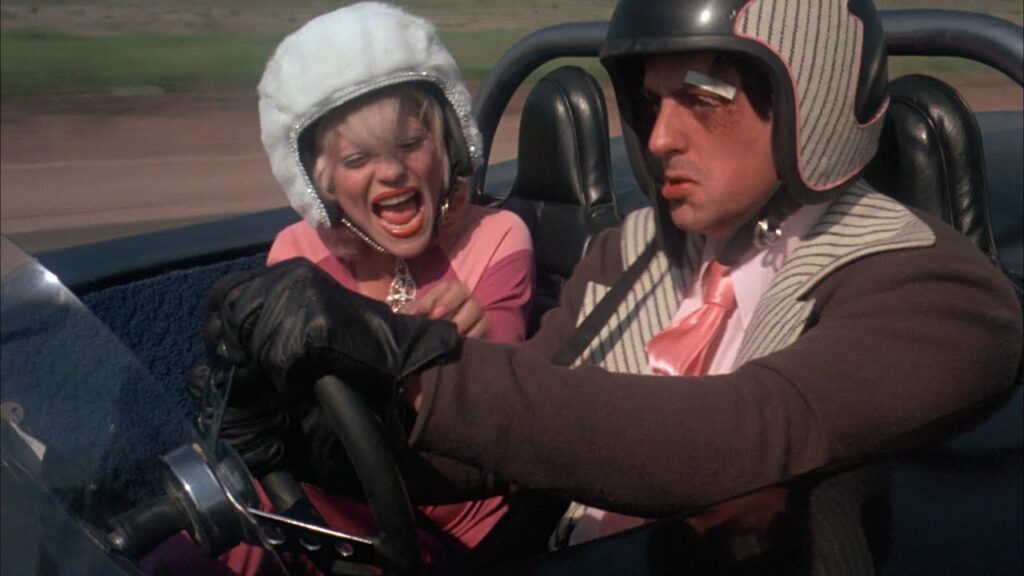
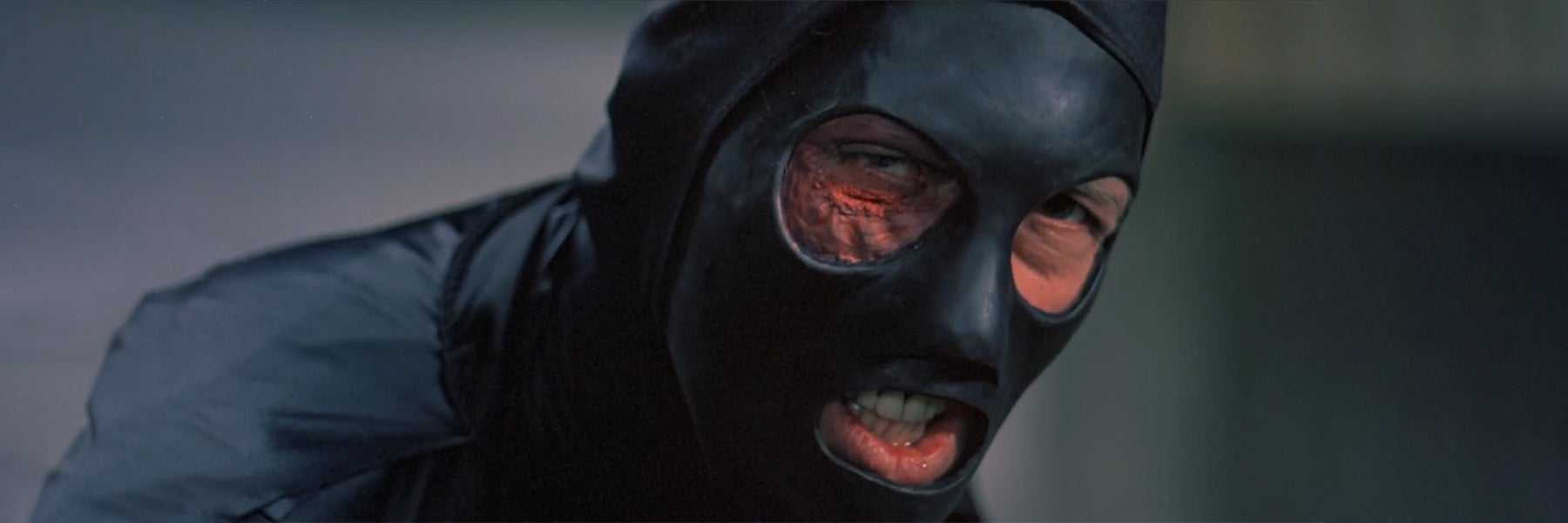
David Carradine’s Frankenstein is at the center of the film. He feels more like a symbol than a real character. He is masked, mythic, and mostly distant. Carradine plays him with a sleepy, detached style. He seems to understand that individuality doesn’t matter in this world of state-run violence. Sylvester Stallone, before his Rocky days and clearly having fun, almost steals the show as Machine Gun Joe Viterbo. He growls through every scene with wild energy and cartoonish menace. Stallone’s performance brings a jolt of excitement to the film whenever it starts to slow down.
Michael Atkinson might say that Death Race 2000 is at its best when it forgets about making sense. It truly shines by just embracing its wild, trashy style. The film jumps from one violent scene to another, creating a feeling of chaos instead of suspense. Bartel’s satire is direct and sometimes childish, but he clearly understands how entertainment can numb people to violence. The film doesn’t just show a violent society; it also challenges the viewer, daring them to laugh at the violence.
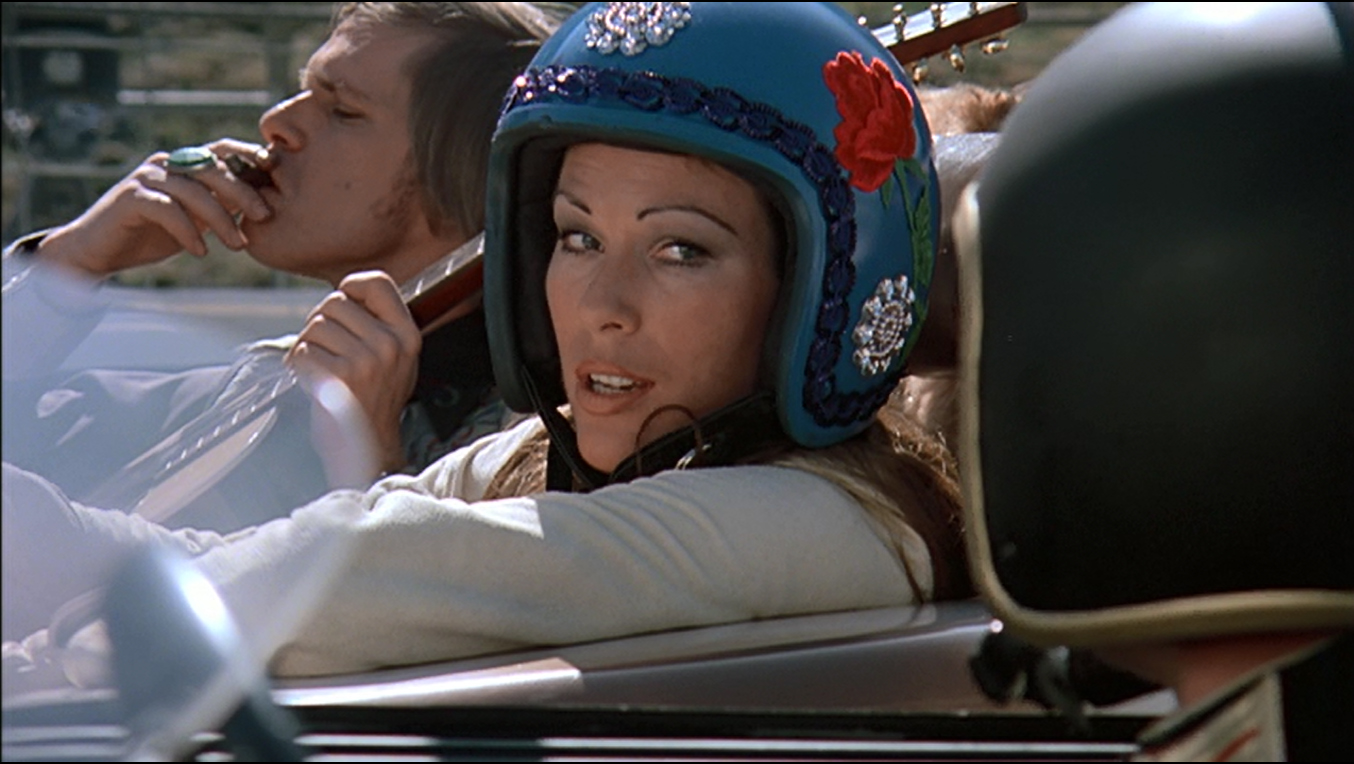
Visually, the film is clearly low-budget. The cars look like rejected Hot Wheels covered in fascist symbols. The explosions are basic. The action scenes are rough around the edges. Still, this roughness adds to the film’s style. This is a dystopia shown as drive-in trash art, where attitude matters more than looks. The cheap feel actually highlights the film’s criticism of spectacle, even as it enjoys being one.
Where Death Race 2000 falters is in its uneven tone. The humor varies greatly. It ranges from sharp media satire to groan-inducing slapstick. The political commentary sometimes collapses under its own smugness. The resistance subplot features Simone Griffeth as a would-be revolutionary. It feels half-formed. The film itself seems unsure whether rebellion is possible or merely another brand.
Still, Death Race 2000 endures not because it’s coherent or sophisticated, but because it’s angry, messy, and perversely honest. It’s exploitation cinema with a conscience buried under tire tracks. As satire, it’s uneven; as a cultural artifact, it’s invaluable. The film doesn’t predict the future. It sneers at the future instead. That sneer still lands. It is crooked, bloodstained, and disturbingly familiar.
 Roses Have Thoughts
Leave a comment