
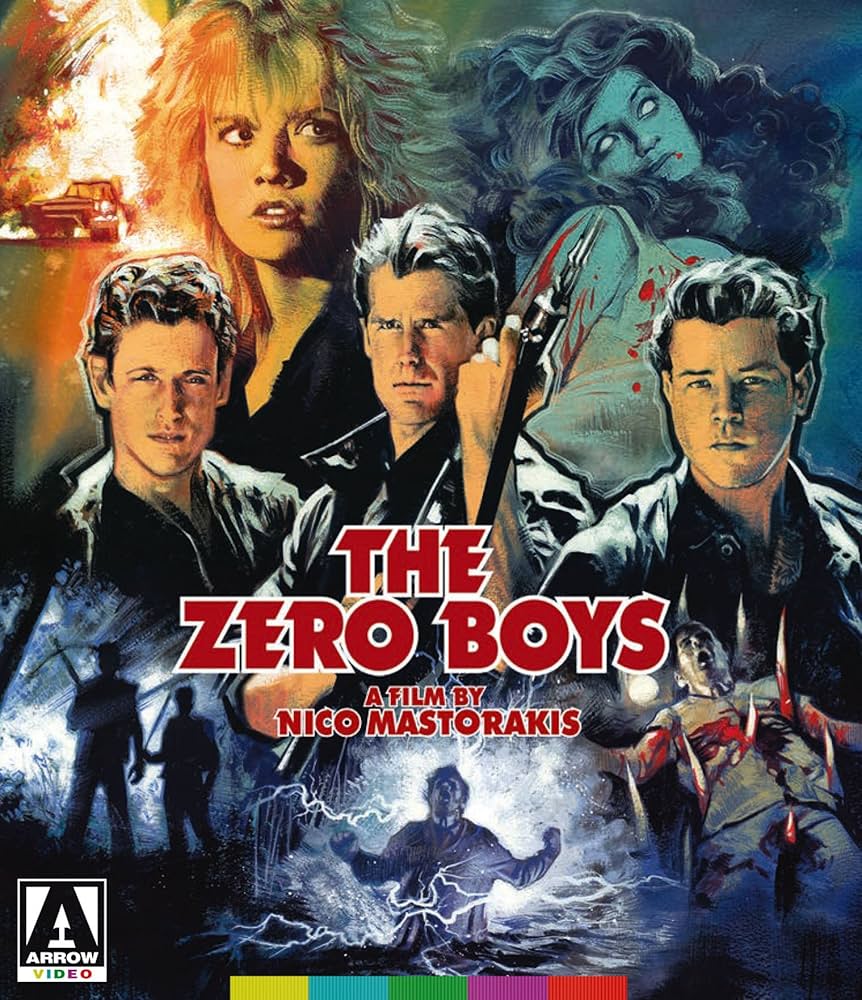
Synopsis- After winning a survivalist war game, three paramilitary-obsessed friends and their girlfriends retreat to a remote cabin, only to find themselves hunted by real killers in the surrounding wilderness.
Director– Nico Mastorakis
Cast– Daniel Hirsch, Kelli Maroney, Nicole Rio
Genre– Action, Horror, Thriller
Released– 1986
The Zero Boys are called a Reagan-era time capsule in disguise. It is packed away with a sweatband and some Soldier of Fortune magazines. At first glance, it seems straightforward. The movie is directed by Nico Mastorakis, known for his work in exploitation films. It promises a backwoods survival thriller. But just when you think you have the premise figured out, hints of something stranger creep in. The tone shifts from familiar territory toward a macho fantasy. This fantasy runs headlong into the slasher craze of the mid-1980s. Like the characters themselves, the viewer is lulled into thinking they know the rules. Then those assumptions erode as the film unspools. It raises the question, what unexpected turn comes next?
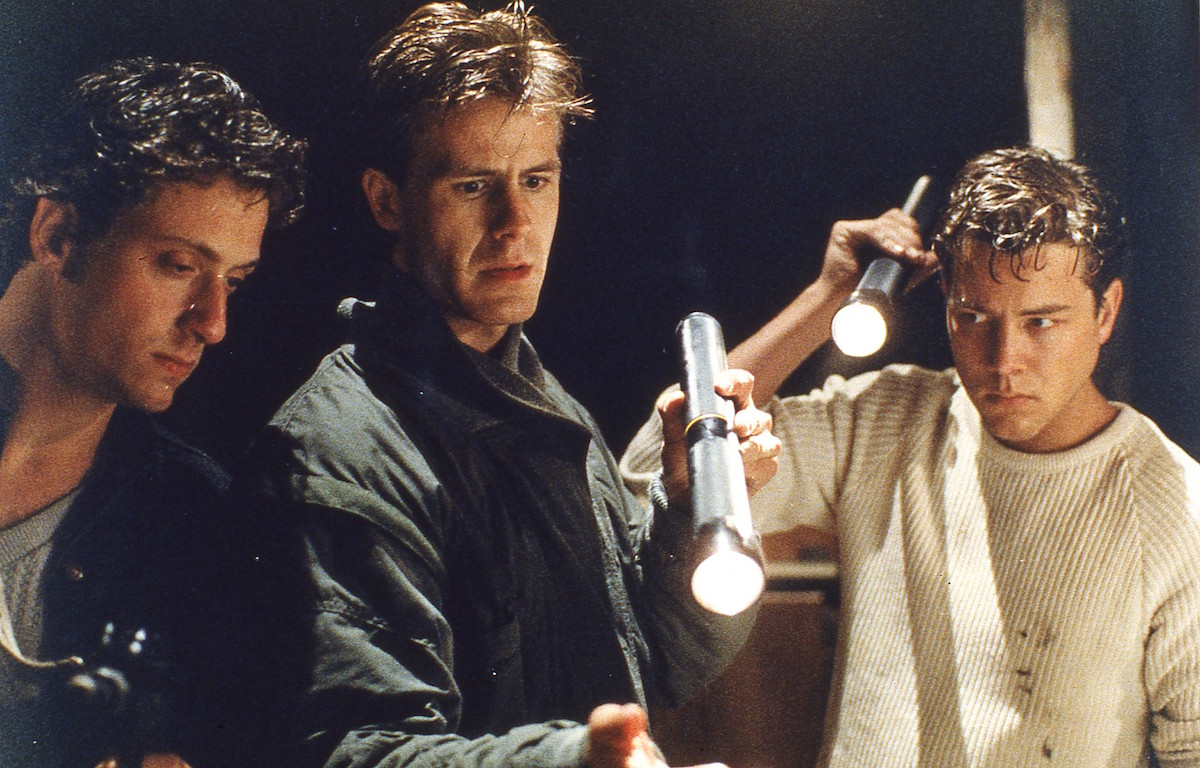
The setup is almost comically specific to its era. Three paintball commandos, fresh from winning a paramilitary war game, celebrate by heading to a remote cabin with their girlfriends. They’re basically walking protein shakes with mullets, showing off Cold War bravado. Early on, they launch into the woods in slow motion with Daniel Hirsch’s Steve barking, “Let’s move out, Zero Boys!” as if the fate of the free world depends on it. One character even executes an absurd combat roll behind a fallen log and triumphantly shouts, “That’s how it’s done in ‘Nam, boys!” The scene is so over-the-top you can almost smell the Mountain Dew and hair gel. Steve leads the group with a serious, no-nonsense attitude, like someone who even irons his camouflage. The funny part is that, whether planned or not, these wannabe warriors quickly end up in a real fight. They are trying to survive. Suddenly, all their tough-guy confidence turns into panic.
Mastorakis films the early scenes with curious attention. It’s oddly fun to watch these characters move through the woods. They move almost like they’re practicing for a sequel to Red Dawn. But when the violence starts, the movie shifts awkwardly into slasher mode. The killers are a messy group of strange outsiders. They hide in the forest with the usual sense of threat. However, their motives seem deliberately opaque. They do not feel like true forces of evil. They aren’t backwoods avengers either. Instead, they fall between the faceless killers of Friday the 13th. They also resemble the hillbilly menace of The Hills Have Eyes. They lack the clarity of either. As a result, the film never quite decides whether its villains are meant to embody generic slasher anonymity. It also struggles with whether they reinforce the trope of rural ‘otherness,’ which muddies the story’s point of view. This ambiguity keeps the movie from fully subverting or embracing the conventions it toys with.
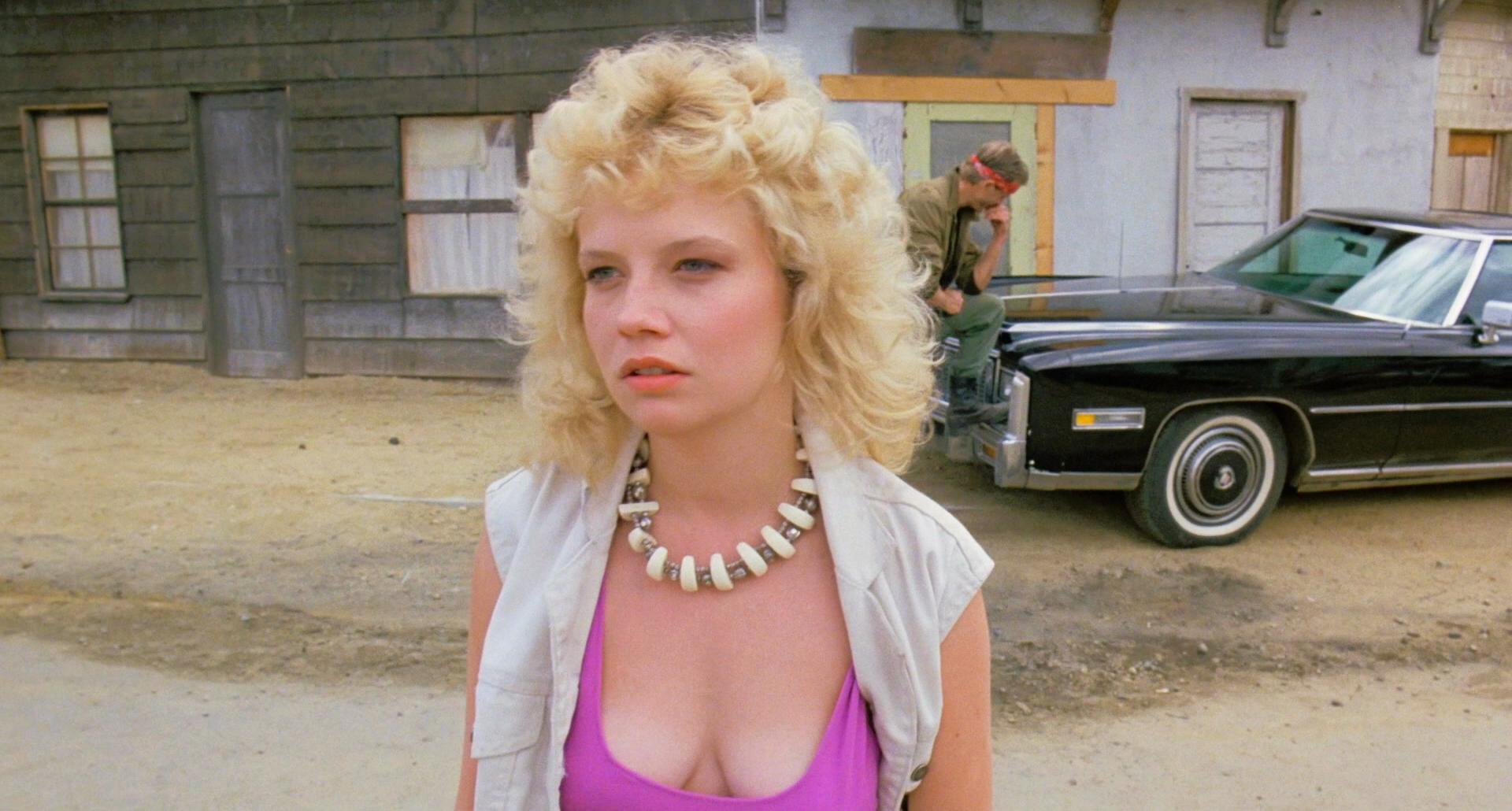
Kelli Maroney and Nicole Rio, as two of the girlfriends, inject the film with some necessary grounding. Maroney, a veteran of genre fare, understands the assignment: wide-eyed alertness mixed with flashes of steel. Yet the screenplay rarely affords the women more than a reactive presence. Still, a scene hints at something deeper. Maroney’s character, Jamie, discovers a hidden storage room in the cabin. She moves ahead of the others, flashlight shaking. She refuses to turn back even as the threat escalates. The moment is tense. For a few seconds, she holds the group’s attention. She directs the search and forces the boys to follow her lead. It is one of the only times the film lets a female character steer the action. Her agency flickers briefly before the movie returns to old patterns. This brief reversal not only complicates who gets to be ‘the hero.’ It also shows how the muted emotional stakes come from the film’s unwillingness to fully invest in these moments. The result is a story more interested in watching its boys recalibrate their masculinity under pressure. It prefers this over building genuine suspense. The women stay just outside the core of its drama, even when they threaten to take charge.
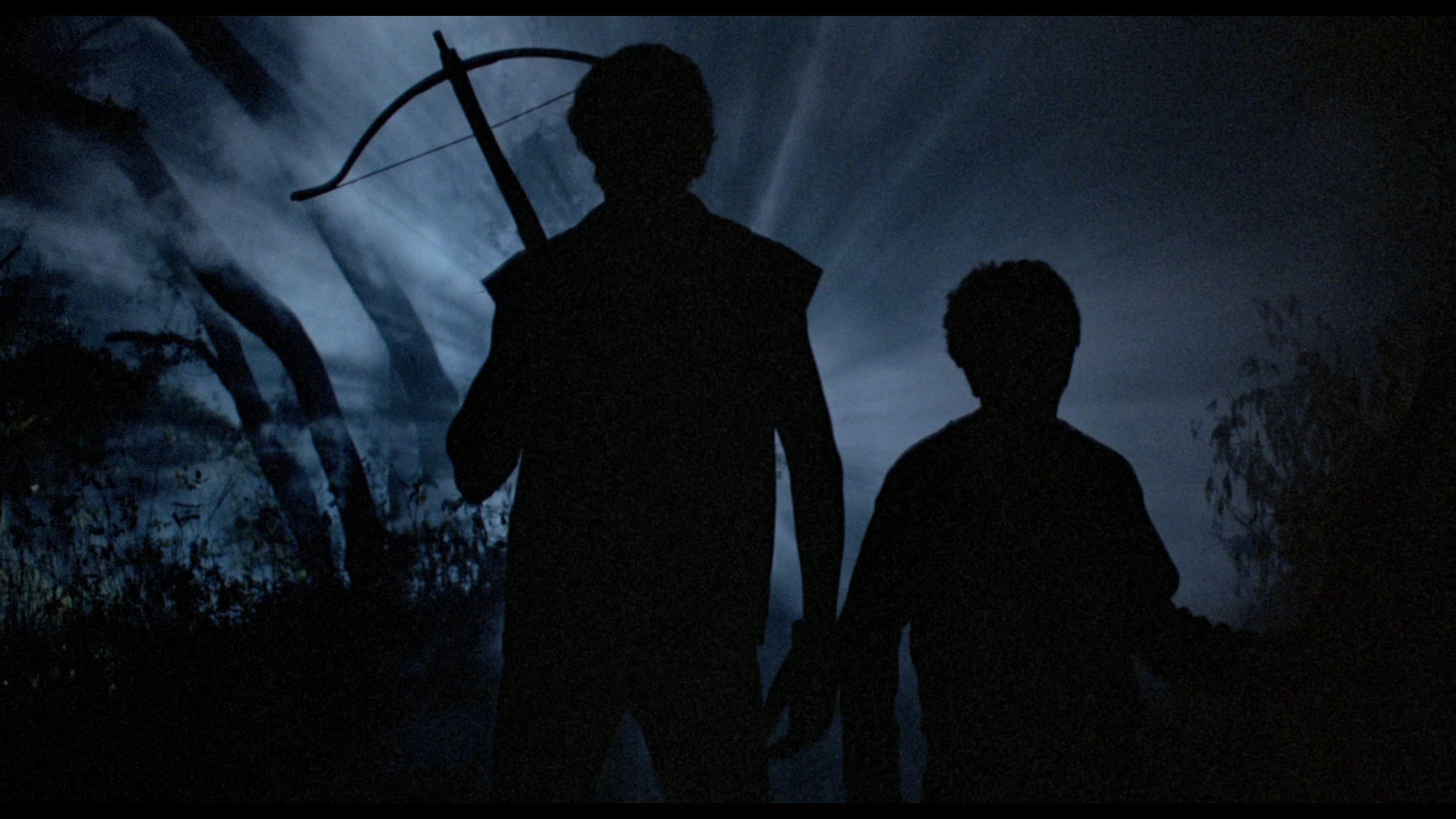
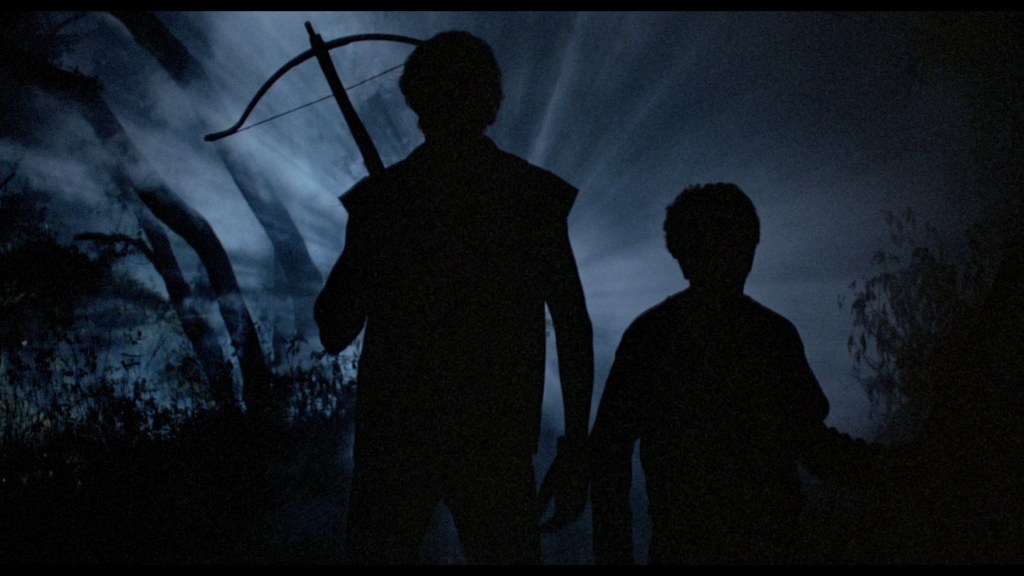
You could say the movie feels like it was pieced together from leftover parts, part action fantasy, part slasher, all held together by a synth soundtrack and a touch of absurdity. Still, its mixed-up tone is oddly interesting. Sometimes, Mastorakis aims his camera for that pumped-up action effect: a low-angle tracking shot charges behind the boys as they sprint through the underbrush, all kinetic movement and bravado, as if teasing a Rambo sequel. Moments later, the film jerks into full slasher mode. Instead of movement, the camera lingers, framing the cabin door in shadowed close-up as a killer’s silhouette hovers just out of sight, letting dread seep in slowly. The result is whiplash: one minute, the woods are a playground for heroics, the next, a trap set for jump scares. Mastorakis, who isn’t known for subtlety, films the woods with a serious attitude, as if it is a big test rather than just a drive-in movie. The violence is sudden and sometimes works, but it never really stands out. Suspense comes and goes, and the pacing feels more like random shocks than a steady build.
What sticks with you isn’t fear, but the sense of a cultural artifact. The Zero Boys shows a time when American movies loved the idea that survival skills define who you are. It taps directly into the broader 1980s mythos of the civilian-turned-soldier. This period was marked by the popularity of magazines like Soldier of Fortune. A flood of militia training ads also stirred the fantasy. With a little weekend effort, anyone becomes a hero. The Cold War era was shaped by anxiety and bravado from films like Rambo. Pretending to be a soldier was more than a game. It was a selling point. It was mainstream escapism bound up in action figures and backyard drills. The film seems a little amused by this idea, but not enough to make fun of it completely.
With a 2.5-star rating, The Zero Boys stands out as an oddity, too strange to ignore, but too awkward to really love. It’s a slasher seen through the lens of an action movie. It shows a Reagan-era dream where the woods are both a battlefield and a joke. It doesn’t quite work, but it’s interesting because of its flaws.
 Roses Have Thoughts
Leave a comment