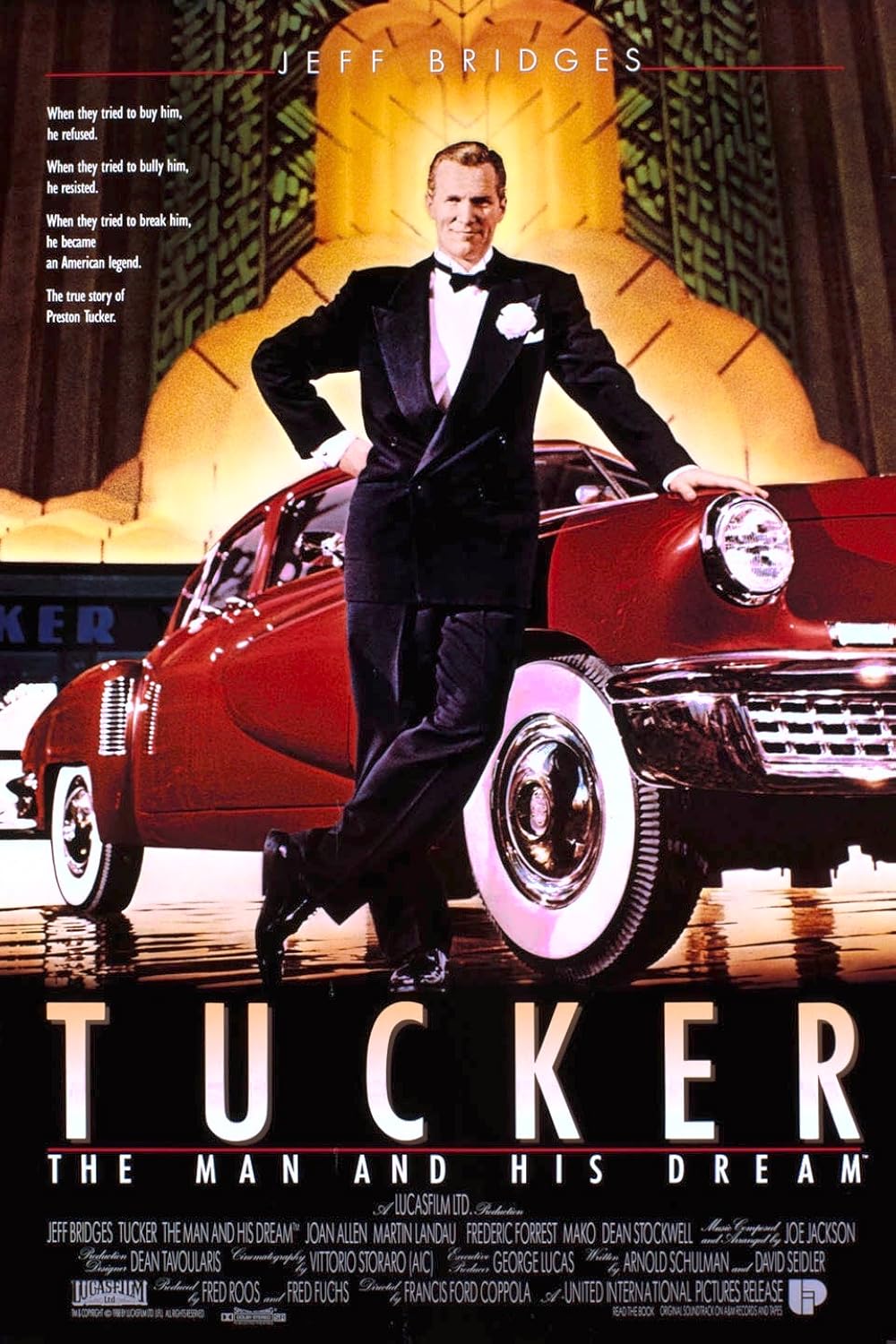
Synopsis– Visionary car designer Preston Tucker battles sceptical investors, Detroit’s automotive giants and government scrutiny while trying to revolutionise the American motor industry forever.
Director– Francis Ford Coppola
Cast– Jeff Bridges, Joan Allen, Martin Landau, Frederic Forrest, Mako, Christian Slater
Released– 1988
Francis Ford Coppola’s Tucker: The Man and His Dream truly feels like a passion project. Not one of his more well-known movies, this film tells the real-life story of Preston Tucker, a charismatic inventor who believed that post-war American cars could be safer, faster, and more innovative than anything Detroit’s big companies were making. This movie celebrates dreamers and ingenuity, while also raising the question of whether progress is ever really welcome when powerful groups want to keep things the same.
Jeff Bridges is a great choice for the role of Tucker. He brings an easy confidence and infectious optimism that make the character believable, even when Tucker’s dreams seem far-fetched. Bridges doesn’t make Tucker out to be a saint or a martyr. Instead, he plays him as a salesman whose biggest strength, and maybe his biggest weakness, is that he truly believes every promise he makes. His energy helps the film through its slower parts, making you really want Tucker to succeed.
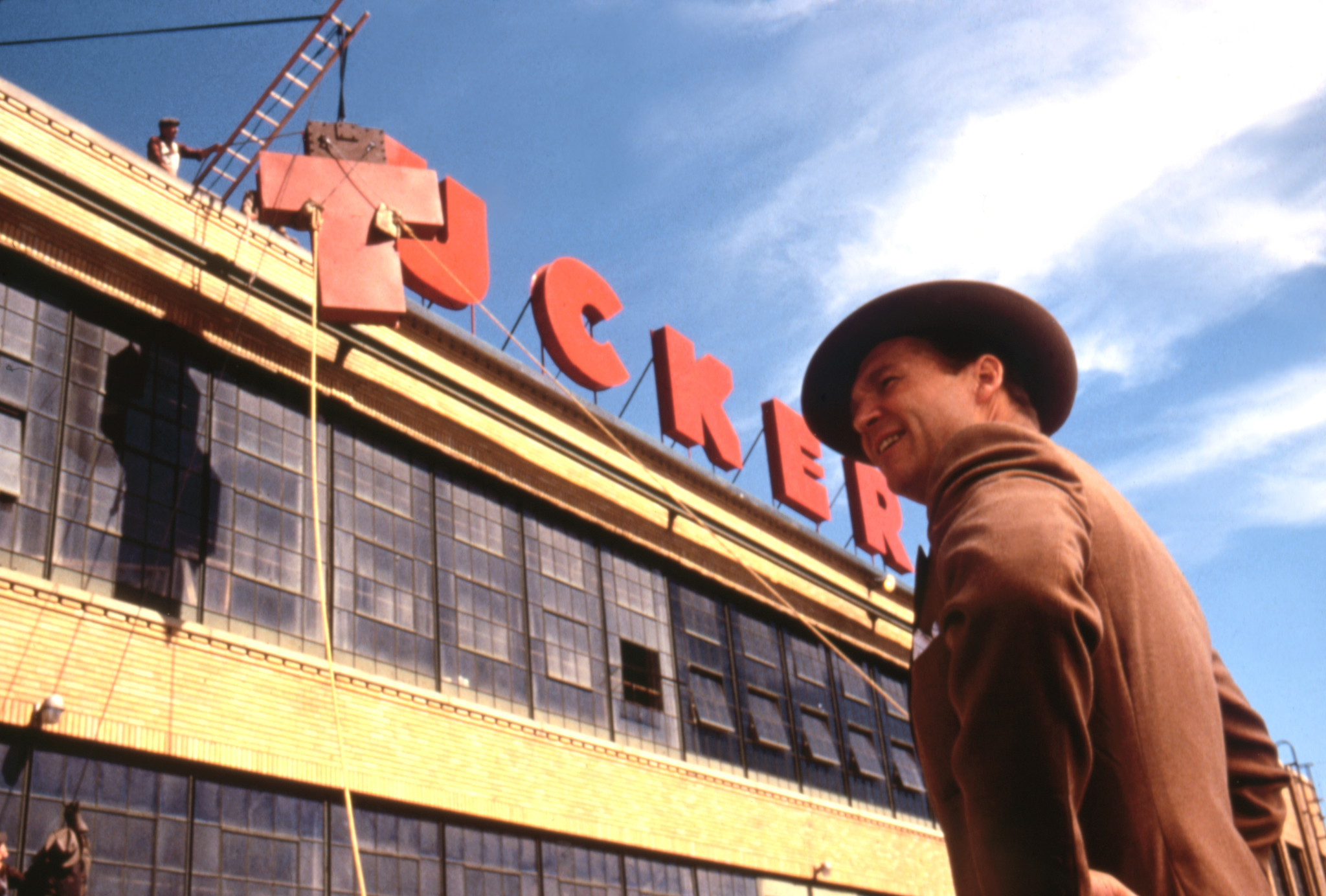
Coppola’s direction is full of obvious affection for the story. Instead of focusing on courtroom battles or corporate conspiracies, he highlights Tucker’s constant optimism and the group of engineers, family, and loyal friends who support his dream. The film ends up feeling warm and is more about celebrating invention than exposing wrongdoing.
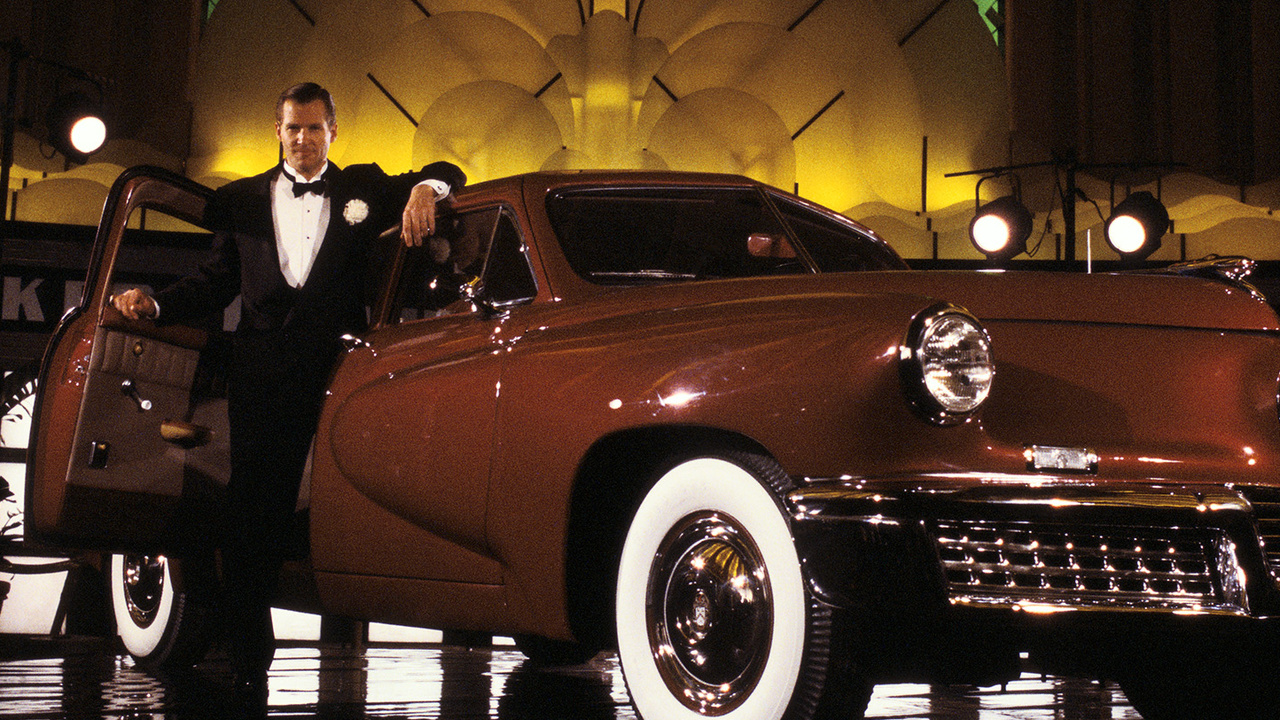
Tucker is a treat to look at. Dean Cundey’s cinematography fills post-war America with rich colours, and the carefully recreated factories and shiny prototype cars show the excitement of a time fascinated by new technology. Coppola makes the unveiling of the Tucker car feel like a real event, reminding us that innovation can be inspiring even before the car is driven.
Martin Landau gives solid support as Abe Karatz, adding gentle humour and quiet wisdom to the cast. Joan Allen brings warmth and dignity to Tucker’s wife Vera, though the script mostly keeps her in the background as the supportive spouse. This is one of the ways the film sometimes chooses to build up the legend rather than explore its characters more deeply.
The film’s biggest weakness, and what made the second half drag for me, is that it doesn’t fully explore the darker side of Tucker’s downfall. There are hints of corporate interference and government overreach, but these parts are kept pretty mild. If you’re expecting a tough exposé like All the President’s Men, you might find the conflict here a bit soft. Instead, Coppola focuses on inspiration, showing Tucker’s story as proof that bold ideas can last even if they don’t succeed in business.
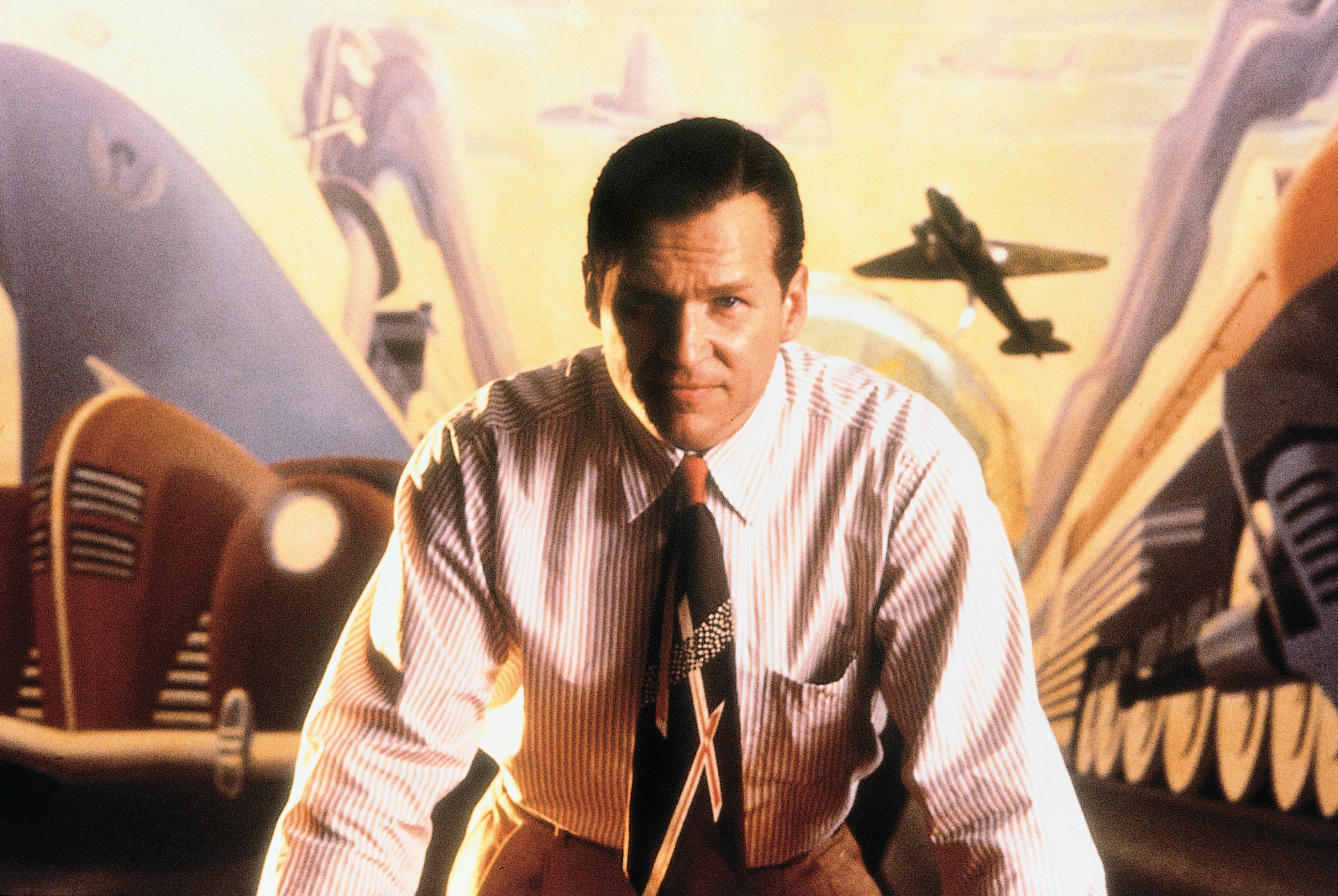
This optimistic style is both the film’s best quality and its main drawback. It makes Tucker very likeable, but it also means the movie doesn’t always have the emotional depth the story could have. Sometimes the pace slows down during the legal scenes, and a few supporting characters come and go quickly, with none of the characters, even Tucker, getting any real development.
Even with its flaws, Tucker: The Man and His Dream is still an engaging and well-made biographical drama, thanks to Jeff Bridges’ sincere performance and Coppola’s heartfelt direction. It might not be Coppola’s best work, but its message about innovation, perseverance, and challenging the norm is truly uplifting.
Similar films
- The Founder (2016)
- Flash of Genius (2008)
- The Aviator (2004)


Leave a comment