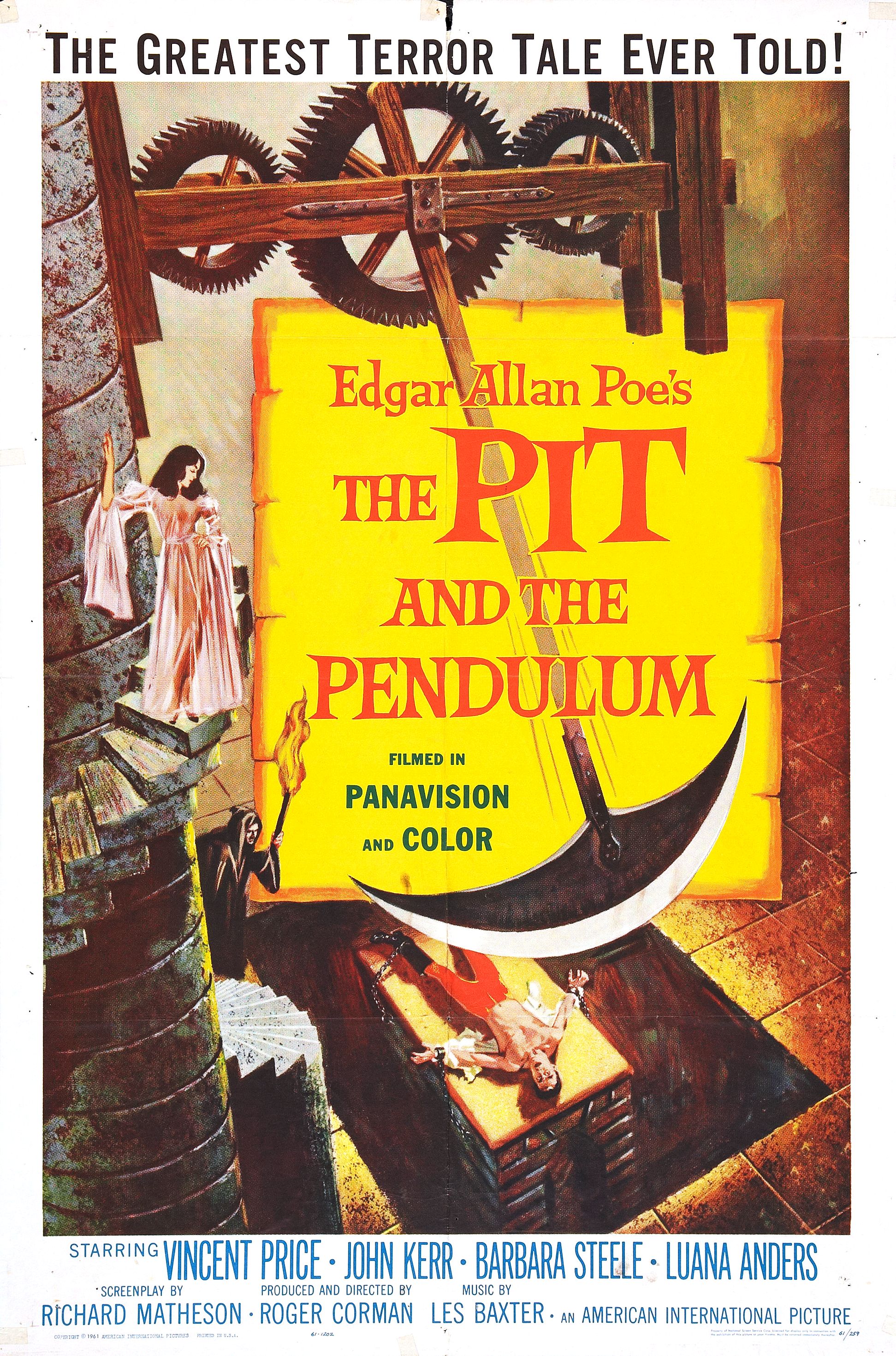
Synopsis– A nobleman who is grieving is tormented by his family’s history of murder when his dead wife seems to come back to life, causing madness and terror to spread throughout his Spanish castle.
Director– Roger Corman
Cast– Vincent Price, Barbara Steele, John Kerr, Luana Anders, Antony Carbone, Patrick Westwood
Genre– Gothic Horror, Mystery, Psychological Horror, Thriller
Released– 1961
There are few things more reliably satisfying than a classic Gothic horror film on a cold autumn evening, and The Pit and the Pendulum is one of the best. Roger Corman’s 1961 adaptation of Edgar Allan Poe is not, in the ordinary sense, an adaptation; Richard Matheson’s screenplay uses the title, the scenes of torture, and the general atmosphere of Poe’s work to construct a completely new story around them. And what a story it is!
John Kerr portrays Francis Barnard, a man who goes to Spain after the mysterious death of his sister Elizabeth, who is played by the wonderfully sinister Barbara Steele; Nicholas Medina, Elizabeth’s husband, resides in a large and dismal castle in which almost every corridor appears to have been the scene of some terrible event, and Vincent Price is superb in the role of the tortured nobleman at the heart of the story.
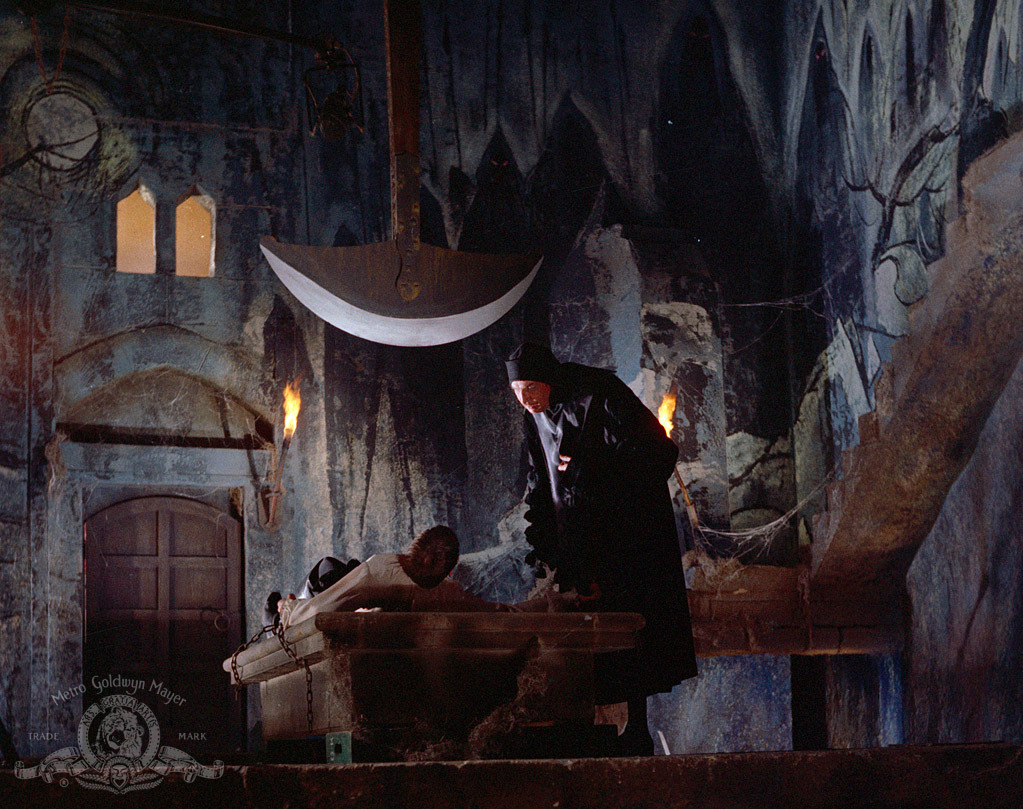
Nicholas claims that Elizabeth died of a mysterious illness, but Francis isn’t convinced. Eventually, inquiries into the circumstances of Elizabeth’s death take the group to the castle’s torture chamber, where Nicholas exposes the terrifying history of his family. His father had been a cruel Inquisitor, and Nicholas had seen things during his childhood as a result of which he has suffered severe psychological damage. As odd noises and clear signs of the supernatural begin to disturb the castle, it becomes increasingly difficult to tell whether one is remembering, going mad, or experiencing reality.
The reason the film is so atmospherically successful is that Corman manages to make a production with a modest budget seem much more grandiose. The castle, the shadows, the huge torture chamber, and Floyd Crosby’s cinematography all contribute to the film’s wonderfully oppressive atmosphere. It has an almost dreamlike quality, especially in the flashback sequences, as the use of color and distorted imagery makes the memories feel like nightmares.
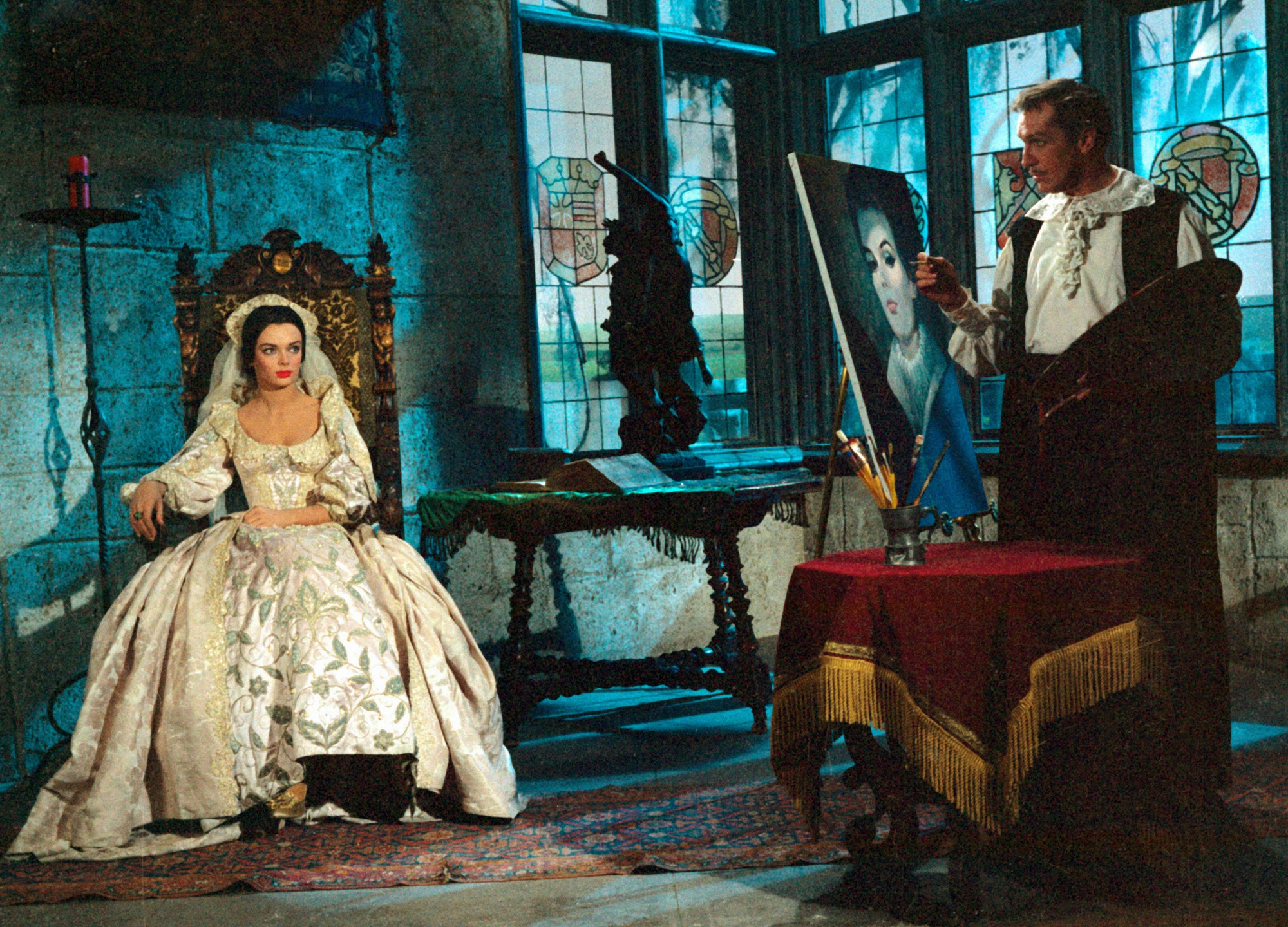
It is Vincent Price who made this film. He knew better than nearly anyone else how to make Gothic melodrama entertaining without it descending entirely into self-parody. Throughout much of the film, Nicholas is a tragic figure, and Price shows him real vulnerability before slowly letting his character’s tortured mental state break down. But when the final act comes, all restraint is gone, and Price lets himself loose in a spectacular manner. The way he transforms from a grieving husband into something far more terrifying is one of the great examples of horror acting and remains extremely enjoyable.
Barbara Steele is just as impressive. The way she appears lends the film a rather vampiric atmosphere, even though it is not actually about vampires. She has the ideal face for Gothic horror, beautiful, mysterious, and slightly terrifying. The scene in which she emerges from the coffin is one of the film’s most powerful images, and the final revelation about Elizabeth adds another delightful layer of deception to the tale.
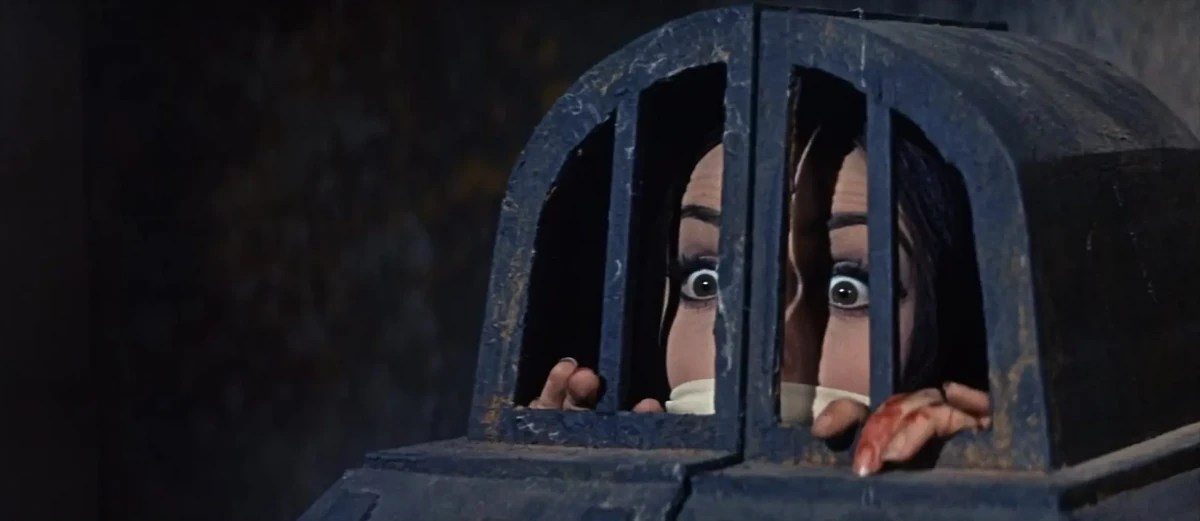
There’s also the pendulum. It takes a while to get there, but once it does, Corman knows exactly how to make the most of it. The extended finale is a pure example of Grand Guignol, featuring screams, madness, intricate production design, and a huge blade that slowly descends towards its helpless victim. The sequence is wonderfully excessive without ever becoming completely ridiculous, a feature which is exactly what makes it so much fun.
The weakness is that the middle part sometimes progresses slowly. The film takes a long time to set out Nicholas’s painful past before the plot finally bursts into the delirious final act. Nevertheless, even the slower sections contain sufficient Gothic atmosphere to make the experience interesting.
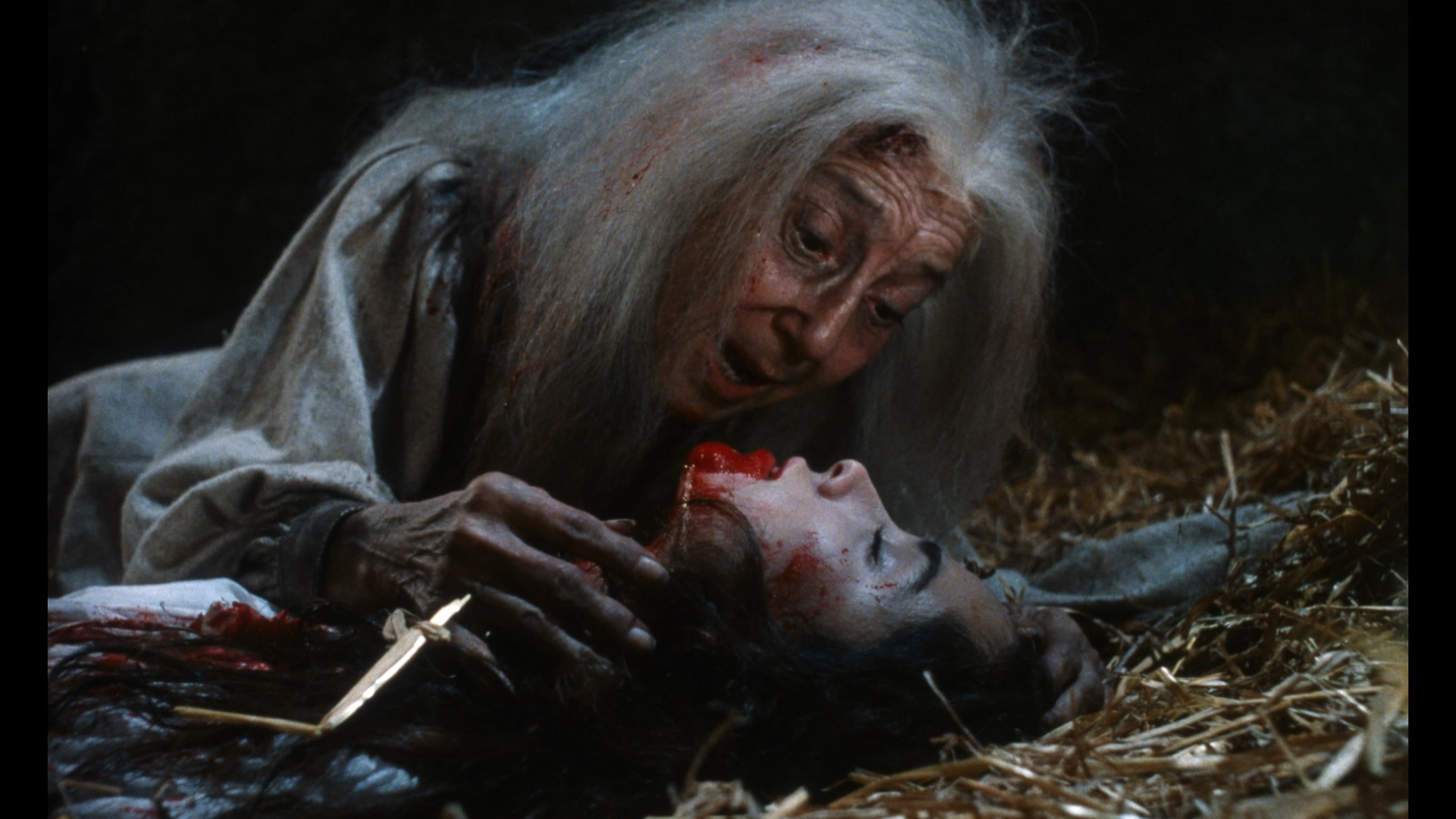
This is horror filmmaking presented as a theatrical show, vivid, melodramatic, sinister, and entirely unashamed of its sensational delights. Although it has only a weak connection to Poe’s original story, Corman and Price produced something fully self-sufficient.
The Pit and the Pendulum is a splendid example of 1960s Gothic horror, enhanced by Vincent Price’s performance, Barbara Steele’s remarkable presence, and Roger Corman’s atmospheric direction.
Similar films: The Fall of the House of Usher (1960), The Masque of the Red Death (1964), Black Sunday (1960).


Leave a Reply