

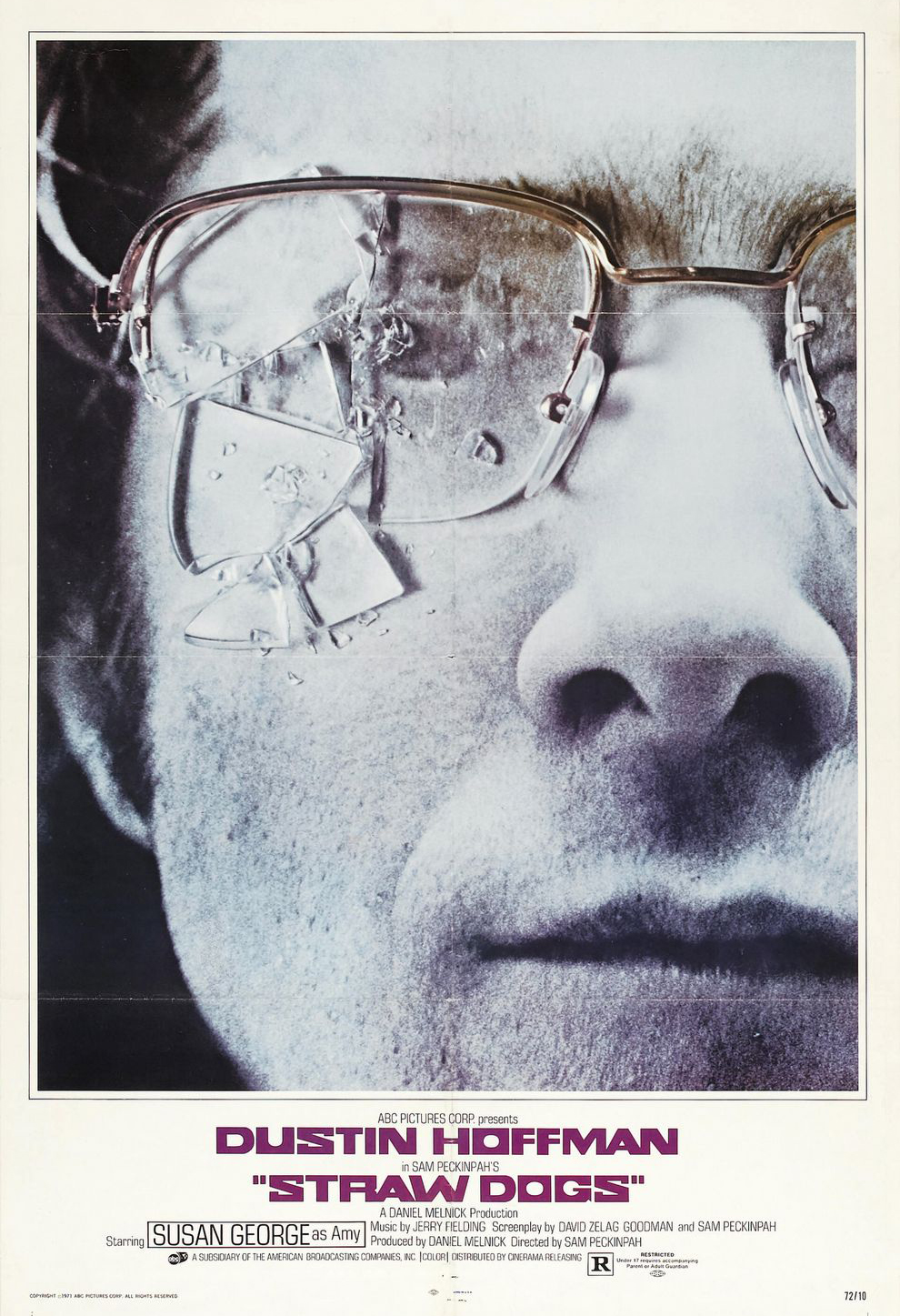
Synopsis- A young American man marries an English wife and relocates to the interiors of Cornwall, a place where she was raised. However, an unfortunate event changes the course of their lives.
Director- Sam Peckinpah
Cast- Dustin Hoffman, Susan George, Del Henney
Genre- Thriller
Released – 1971
Accused of glamorizing rap and chauvinism by some critics upon its release, “Straw Dogs” can safely be said to be a Marmite movie in that you’ll either love it or hate it. For me “Straw Dogs” emerges as a raw, unflinching exploration of human savagery. Directed with audacious precision by Sam Peckinpah, this cinematic odyssey delves deep into the recesses of the human psyche, unearthing primal instincts and societal veneers with equal fervour, however, I can see how some will never wish to watch it again.

From its opening frames, “Straw Dogs” grips the viewer in a vice-like hold, refusing to relinquish its grip until the closing credits roll. Set in the rural Cornish countryside, the film introduces us to David Sumner, portrayed with enigmatic intensity by Dustin Hoffman, a bookish and withdrawn American mathematician seeking solace in the countryside alongside his more outgoing wife, Amy, played with captivating fashion by Susan George. Yet, beneath the tranquil facade of their new home lies a simmering cauldron of tension, ready to boil over at the slightest provocation.
Peckinpah’s masterstroke lies in his deft manipulation of atmosphere, transforming the quaint village of Wakely into a powder keg of repressed desires and simmering resentments. Every frame pulsates with an undercurrent of unease as if the very air itself crackles with latent aggression. The cinematography, bathed in sepia tones and drenched in sunlight, serves as a stark juxtaposition to the darkness lurking within the human soul, casting long shadows that stretch across the narrative landscape.
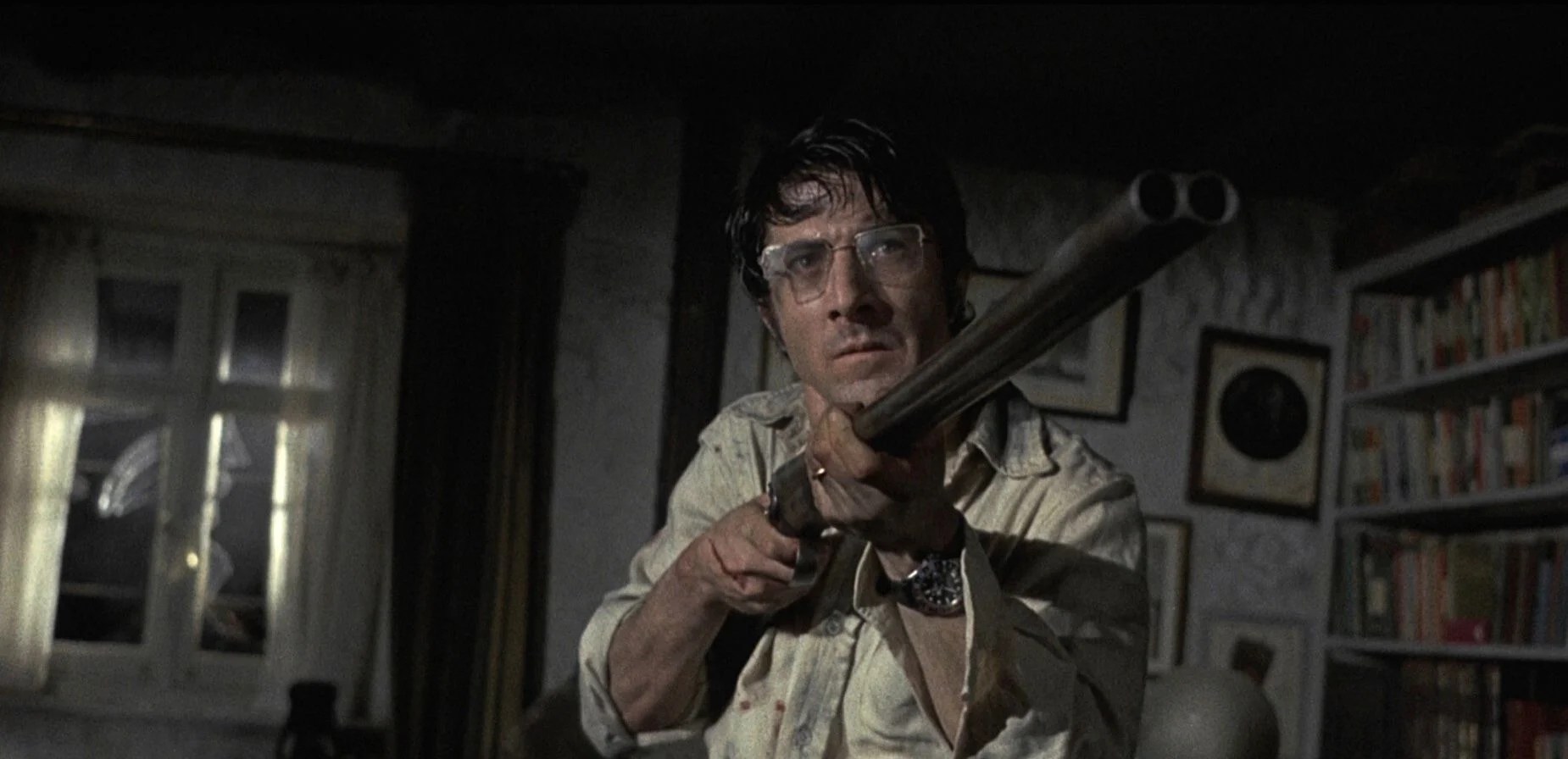
As the narrative unfurls, “Straw Dogs” eschews conventional morality in favour of a morally ambiguous terrain, where the line between victim and aggressor blurs into obscurity. The arrival of Amy’s former lover, the menacing Charlie Venner, portrayed with chilling charisma by Del Henney, serves as a catalyst for the film’s descent into chaos, as simmering tensions erupt into a maelstrom of violence and retribution. Peckinpah’s unflinching depiction of brutality is both harrowing and hypnotic, forcing the viewer to confront the primal instincts that lie dormant within us all.
At the heart of “Straw Dogs” lies a meditation on the nature of masculinity and power, as David is forced to confront his own inadequacies in the face of overwhelming adversity. Hoffman delivers a tour de force performance, imbuing his character with a quiet resilience that belies a tempest of emotions raging beneath the surface. Likewise, George captivates as Amy, a woman torn between loyalty and desire, her vulnerability masking a steely resolve that proves to be her greatest weapon, though this may be one of the film’s only real weaknesses, with the plot firmly viewed through the male gaze, with the biggest injustices being done to Amy, yet it’s David that is framed as the one out for revenge.
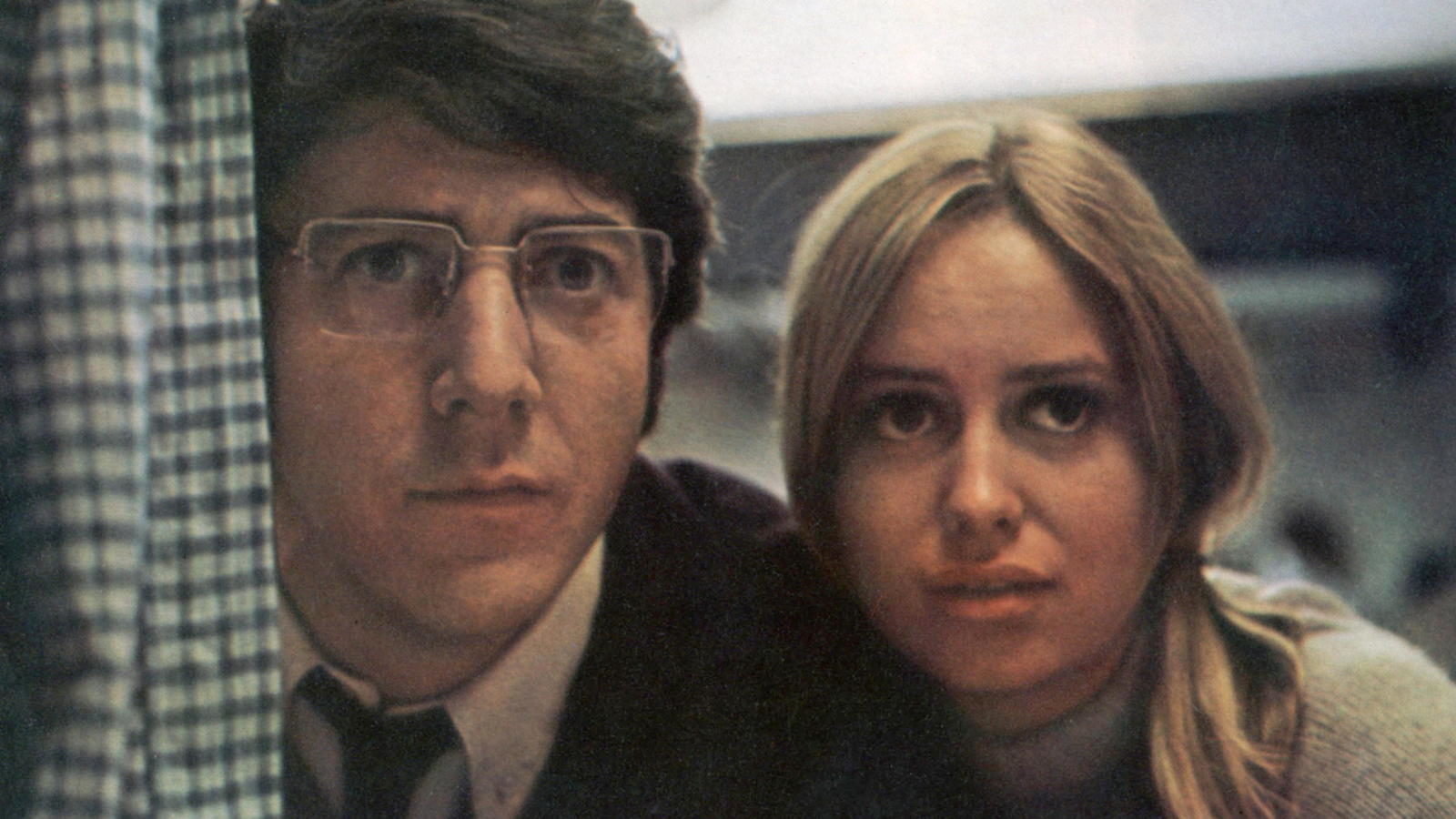
Yet, for all its visceral intensity, “Straw Dogs” is not merely a treatise on violence, but a poignant exploration of human frailty and the desperate lengths we will go to to protect that which we hold dear. Peckinpah’s direction is assured and uncompromising, refusing to pander to audience expectations or conventional narrative tropes. Instead, he invites us to bear witness to the darkness within ourselves, daring us to look away even as we are transfixed by the horrors unfolding onscreen.
In conclusion, “Straw Dogs” stands as a towering achievement in the annals of cinema, a film that defies categorization and demands to be reckoned with on its own terms. Equal parts exhilarating and unsettling, it is a testament to the power of cinema to provoke, challenge, and ultimately, illuminate the darkest recesses of the human soul.

 Roses Have Thoughts
Leave a comment