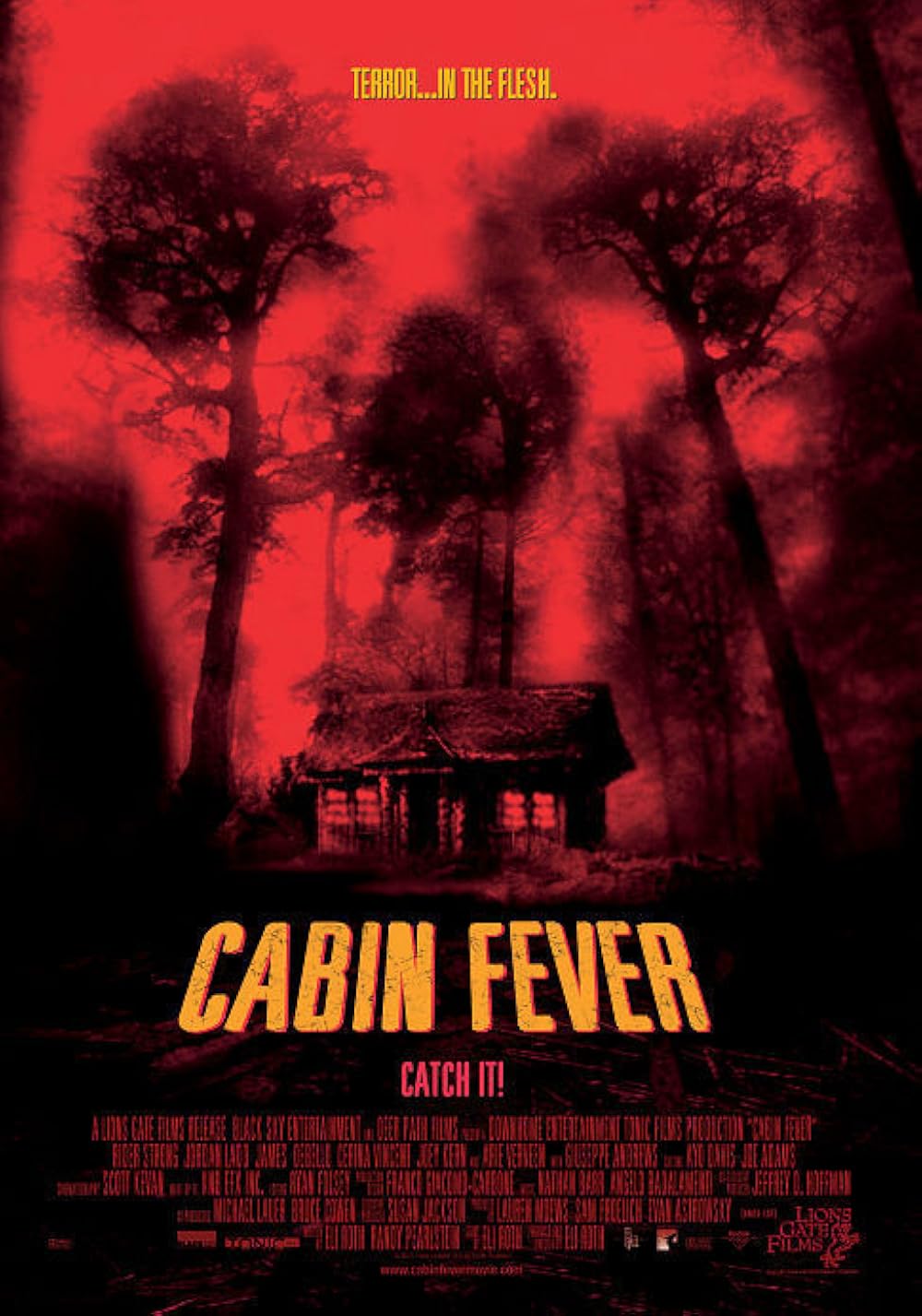
Synopsis- A group of college graduates rent a remote cabin where a flesh-eating virus spreads, paranoia grows, and survival instincts turn friends against each other quickly.
Director- Eli Roth
Cast- Rider Strong, Jordan Ladd, James DeBello, Cerina Vincent, Joey Kern
Genre: Horror, Black Comedy, Thriller
Released- 2002
Cabin Fever makes a strong impression, mixing teen-horror nostalgia with a twisted sense of humour that plays with viewers’ expectations. As part of the early 2000s American splatter film trend, it introduced Eli Roth as a director drawn to shocking, darkly funny stories about the body. The film sometimes gets carried away with its own desire to shock, but it stays focused and unexpectedly playful.
The story starts with a familiar setup: five friends head to a cabin in the woods for one last carefree trip before adulthood. Instead of a typical slasher, the film slowly breaks down both their bodies and their friendships. When a flesh-eating virus appears, the real fear comes from watching their manners and trust fall apart, especially since they were never that close to begin with.

Roth’s direction is more confident than many expect. He builds tension gradually, letting the discomfort grow rather than relying on jump scares. The well-known “skin peeling” scenes are more than just gory; they show how powerless the characters feel. Still, the film’s tone isn’t always steady. Sometimes it tries to be funny in a way that lessens the suspense, and other times it focuses so much on being gross that the humour seems out of place.
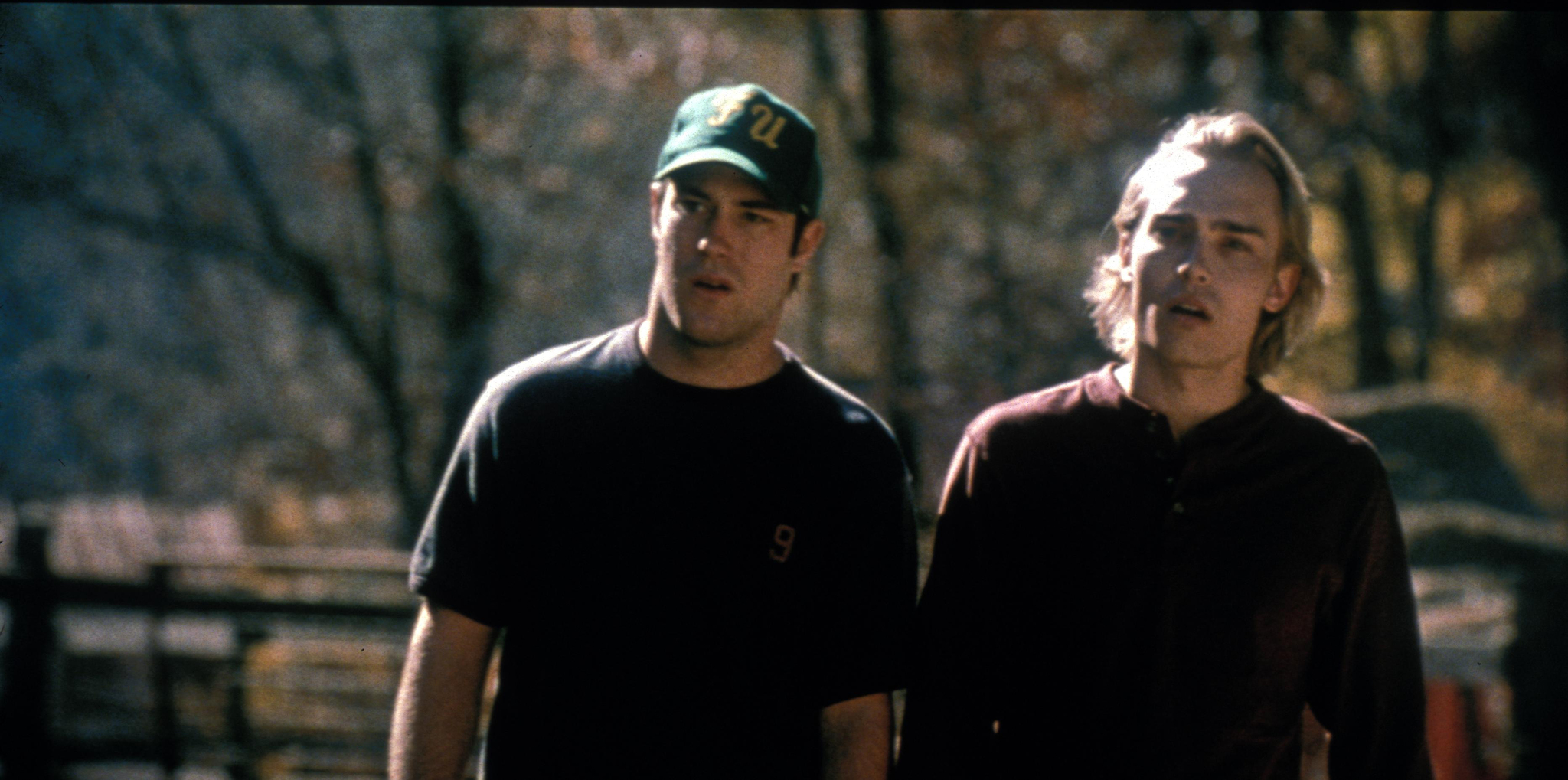
The cast gives solid performances, even if their roles are intentionally typical. Rider Strong plays Paul with nervous honesty, making him the group’s anxious centre. Jordan Ladd’s Karen stands out as she shifts from a relaxed guest to someone at the heart of the horror. James DeBello, Cerina Vincent, and Joey Kern round out the group, but their characters sometimes feel more like outlines than real people. That might be intentional, since the film focuses more on what happens to their bodies than their personalities.
There is a layer of satire in the film, even if it’s sometimes hidden by all the gore. It plays with classic youth horror clichés like sex, drugs, bad decisions, and isolation, pushing them to the extreme. The virus is both a plot tool and a symbol for panic, spreading fear faster than reason. Roth avoids explaining too much, keeping the horror direct, physical, and hard to ignore.
The film’s main weakness is that it repeats certain moments too often, diminishing their impact over time. Because it doesn’t explore a wider range of emotions, the second half can feel a bit limited. Still, this focus on being trapped adds a sense of claustrophobia that many slicker horror movies miss. You feel stuck in the cabin with the characters, with no way out.

What stands out most isn’t the gore, but the film’s unusual confidence. It doesn’t try to make viewers comfortable or smooth out its rough edges to please everyone. Instead, it uses its harshness as a style. This will turn off some people and attract others, but it helps the film stand out in a crowded genre.
Watching Cabin Fever now, it feels like a mix of tribute to 1970s rural horror and a preview of Roth’s later, more extreme films. It’s messy and sometimes immature, but it’s almost never boring. In horror, being boring is the worst thing a film can do.
If you liked:
- The Evil Dead
- 28 Days Later
- The Ruins


Leave a Reply