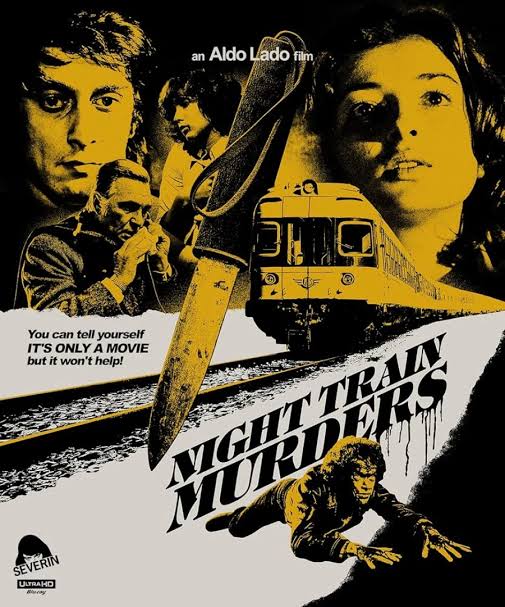
Synopsis: Two young women on their way home for Christmas are victims of three vicious thugs on a train. The situation becomes truly horrific when the criminals come into contact with one of the victims’ family.
Director: Aldo Lado
Cast: Flavio Bucci, Macha Méril, Gianfranco De Grassi
Genre: Horror, Thriller, Crime, Exploitation
Released: 1975
There’s something very unpleasant about the idea of Christmas travel going wrong, and Aldo Lado’s Night Train Murders (1975) uses that very effectively. It’s a nasty little piece of Italian exploitation cinema that takes a perfectly innocuous journey home for the holidays and turns it into a film about cruelty, desperation, and revenge. It’s a very uncomfortable film to watch, and one you wouldn’t want to recommend over a meal, yet Lado clearly knows how to build that sense of increasing unease.
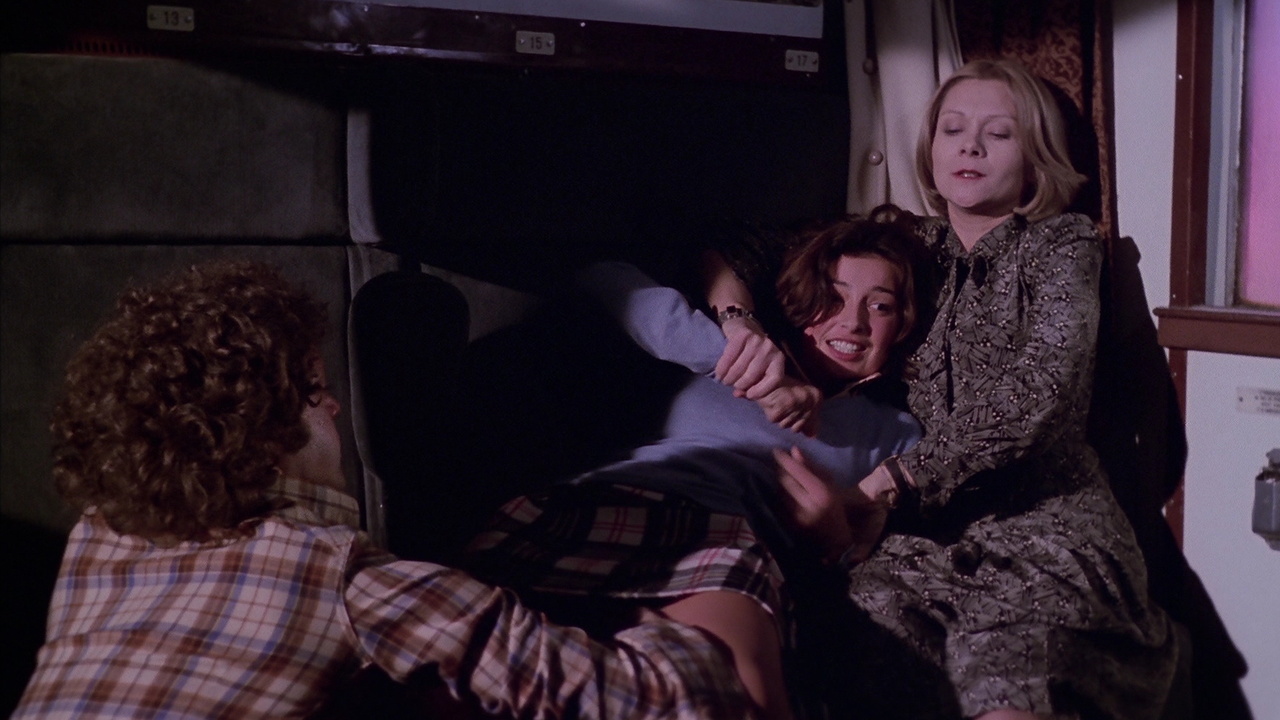
Night Train Murders clearly owes a debt to Wes Craven’s The Last House on the Left (1972). The parallels are hard to miss: two young girls end up in the hands of a pair of brutal criminals, go through a horrific experience, and the criminals in turn find themselves at the mercy of the victims’ family. The film is so much in the same mould that it could easily be seen as an Italian version of Craven’s film. Of course, there are some differences, and Lado brings a distinct European flavour, particularly in his concern with class, respectability, and the unsettling implication that monsters can exist within respectable society.
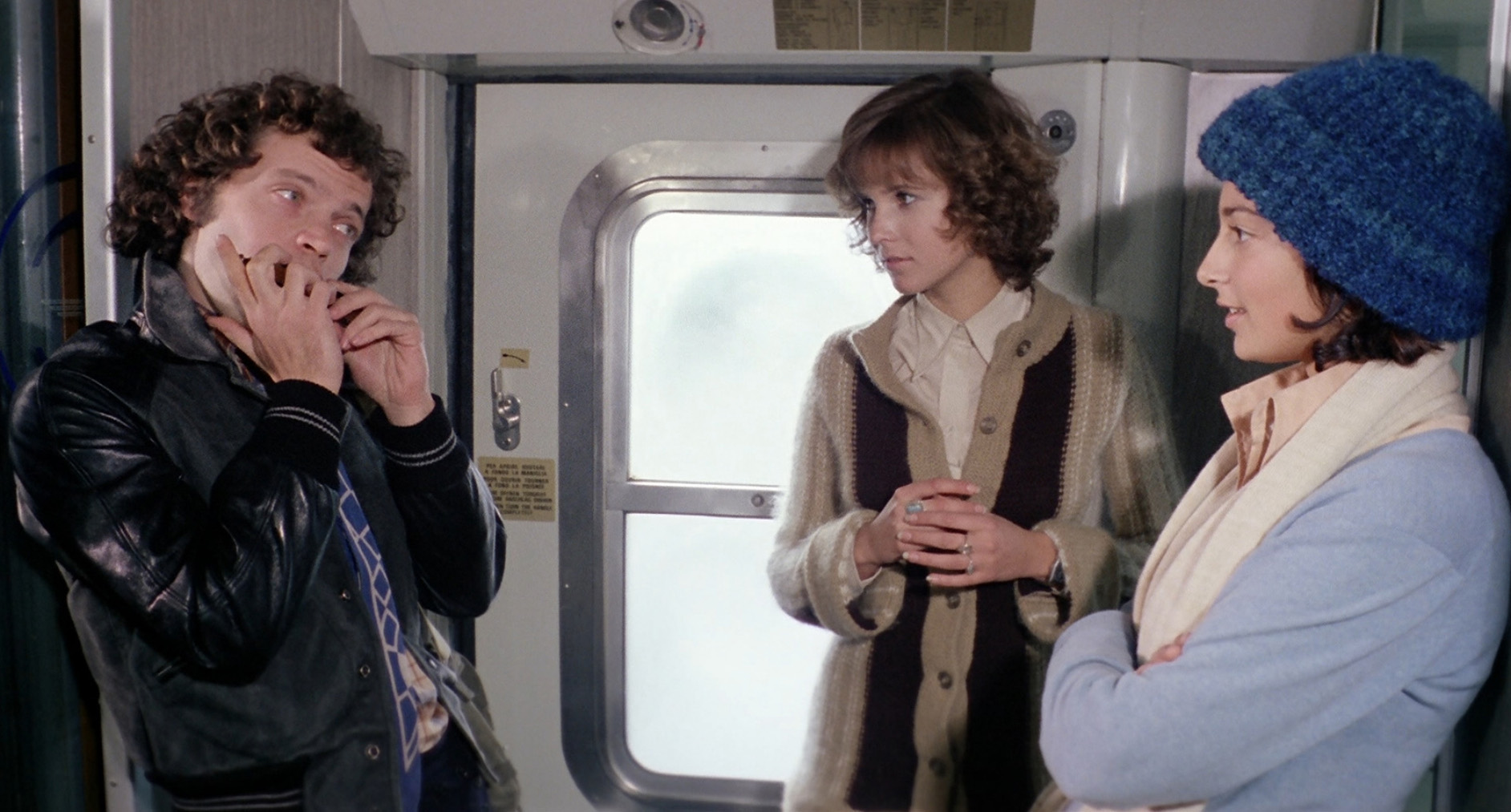
The story follows Margaret (Irene Miracle) and Lisa (Laura D’Angelo) as they travel back to Italy for Christmas. They meet Blackie (Flavio Bucci) and Curly (Gianfranco De Grassi), who are absolutely dreadful young men, plus a very odd older woman (Macha Méril). It starts off as fairly benign conversation but very quickly takes a much more sinister turn.
Lado takes his time getting to the really unpleasant bit. The train is an effective setting, with its narrow corridors and compartments giving a real sense of helplessness. The girls have nowhere to go, and the apathy of the other passengers only heightens their discomfort. It’s very good filmmaking, though the first half wanders at times, spending far too long on conversations and encounters that do nothing to move the plot forward.
When the violence actually comes, it’s absolutely horrific. Lado isn’t in the slightest bit interested in making you feel comfortable, and the treatment of sexual violence is going to be very difficult to watch for a lot of people. It’s rather different from some of the more infamous entries in the exploitation cycle, in that it attempts to place the material in a wider social context. There’s one particular sequence which juxtaposes the sheer brutality of the violence with a discussion of violence and morality amongst what are presented as perfectly respectable people. It’s a fairly obvious device, but it does make its point.
The performances are largely effective. Bucci and De Grassi are an unpleasant pair of villains, and Méril is unnerving as the woman who joins them in their little game. Her character has a genuinely disturbing edge (partly because she seems to enjoy others’ suffering). Enrico Maria Salerno is very much the man in the film’s later stages as Professor Giulio Stradi, a man whose comfortable life is about to be completely upended.
The film is far more accomplished than the rather pedestrian Last House on the Left imitation it’s generally regarded as. Gabor Pogany’s cinematography makes excellent use of the train setting, and Ennio Morricone’s score provides an unexpectedly elegant counterpoint to the sheer ugliness of what’s going on. The music and the film’s brutality are a strong match.
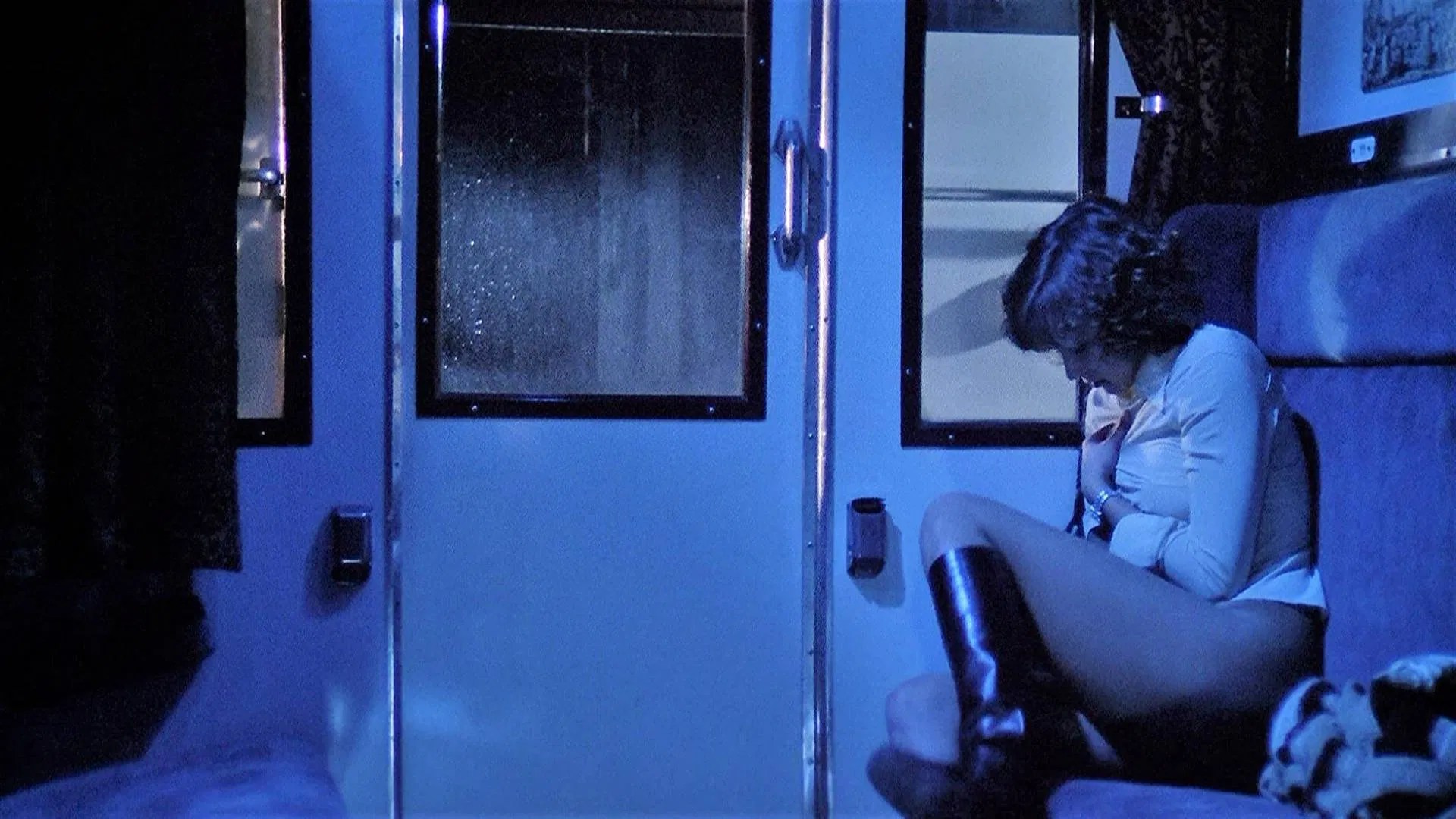
The final act delivers the revenge the audience has been waiting for, though it does so in a way that raises uncomfortable questions about justice and whether violence can ever really settle anything. Lado offers no particularly reassuring answers, and that may be to his credit.
Night Train Murders is an unpleasant but certainly a worthwhile addition to the Italian exploitation canon. It’s derivative, it’s occasionally slow, and it’s by no means for the faint of heart. The atmosphere, performances, and social commentary give it more weight than you’d expect from such a blatantly derivative film. It doesn’t quite hit the same nerve as The Last House on the Left, but it does make a decent effort.
A grim journey, really, but one genre fans might well be prepared for. Night Train Murders is a rather interesting example of how an Italian exploitation film could take a fairly well-established concept and give it a very different twist. Not quite a success in the end, but definitely interesting.
Three Similar Films
The Last House on the Left (1972): Wes Craven’s bleak original, the two young women being attacked and then their attackers finding themselves at the mercy of their parents.
House on the Edge of the Park (1980): Ruggero Deodato’s very unpleasant exploitation thriller (David Hess again in another absolutely superb performance as a particularly nasty piece of work).
The Virgin Spring (1960): Ingmar Bergman’s harrowing exploration of faith, violence, and revenge, and the far more serious source Craven later reworked.


Leave a Reply